Theopolis Logo

Writing

Explore our collection of theological essays, biblical studies, and reflections on faith and culture.

See all
31-03-0213
Hermeneutics

Apocalyptic Eyes

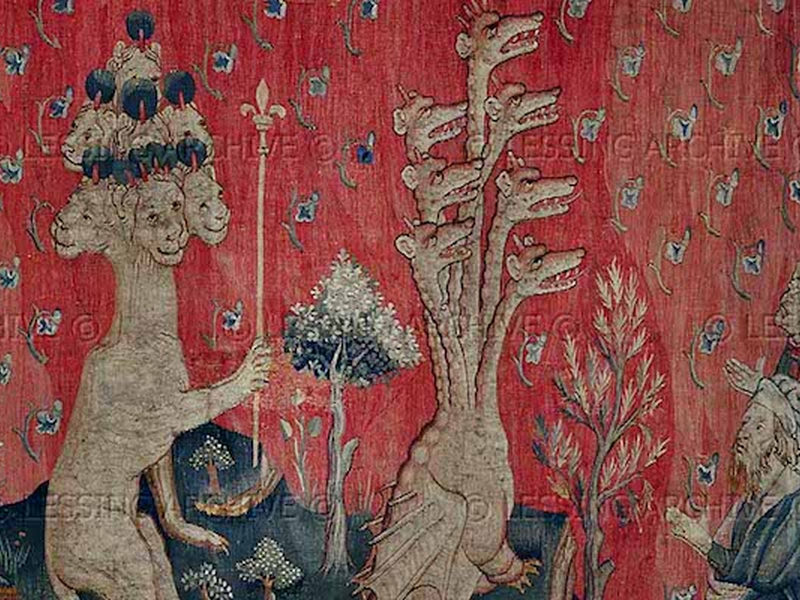
Flying scrolls. Red horses. Beasts coming out of the sea. Winged women. The list goes on. Apocalyptic literature in the Bible is like a cross between science fiction and Marvel comics. And the Bible has a fair bit of this sort of thing. Daniel sees visions in Babylon, Zechariah sees…

by Toby SumpterNovember 4, 2014

bhm-skyline-2
Theopolis News

New Name, New Look

Trinity House Institute has taken a new name, the Theopolis Institute. This striking new name expresses our unique vision and mission and captures the unified purpose behind all our specific programs and activities. We still have Bible, liturgy, and culture in our tagline. We still offer the same courses on…

by TheopolisNovember 4, 2014
istock_000012860926small
Atonement

Not Fearing the Devil

Adam Kotsko offers a socio-political variation on the Christus Victor atonement theory in his 2010 study, The Politics of Redemption: The Social Logic of Salvation . He does this by explaining "the devil" in terms of the Hegelian concept of "objective spirit," Geist . As Kotsko puts it, Geist "refers…

by Peter LeithartOctober 13, 2014
jez-timms-8muutamcwu4-unsplash
Leviticus

The Meaning of Sacrifice

Two factors keep Nahtali Meshel from discussing the meaning of sacrifice until late in his The "Grammar" of Sacrifice . The first has to do with the texts he draws from: "P says little about the meaning of its rituals" (174). The other has to do with the grammatical theory…

by Peter LeithartOctober 8, 2014
jez-timms-8muutamcwu4-unsplash
Leviticus

Praxemics

Chapter 5 of Naphtali Meshel's The "Grammar" of Sacrifice focuses on "praxemics," the physical actions of sacrificial ritual. Praxemes are constituted by six elements: an "atomact," an elementary physical act or gesture; an actor; an object that is acted up; a target for the action and often for the object…

by Peter LeithartOctober 6, 2014
markus-winkler-aid-xyrtlec-unsplash
Leviticus

Jugation and Hierarchy

Two chapters of Naphtali Meshel’s The “Grammar” of Sacrifice cover what he calls “jugation” and “hierarchies.” The first involves the addition of other materials to an animal offering. Jugates include wine, cereal, and oil that are added to the animals (zoemes) that are offered in sacrifice. Some jugates are coordinated…

by Peter LeithartOctober 1, 2014

Showing page 167 of 309

See all
See all
History

Chromosomes or Culture?

Stanford’s Carl N. Degler’s In Search of Human Nature tells the story of the contest between biological and cultural determinists in the social sciences. Much of late 19th-century social science was shaped by a crude Darwinian paradigm. Biological factors like race and sex were considered to be the chief determinants…

December 28, 2005
History

Malthus and Conservatism

One of the many ironies of contemporary political discourse is the co-option of Malthus by the political left, for the Rev. Thomas Malthus was undoubtedly a man of the right. His Essay on the Principle of Population was an anti-utopian tract designed to refute what Malthus called, in his original…

December 28, 2005
Theology

Aesthetic apologetics

Christian apologetics tends to focus on ethical or rational arguments. Questions such as “Can we be good without God?” and “Does that being exist than which nothing greater can be conceived?” and “What are the transcendental conditions of knowledge?” have dominated the field. A good historical argument can be made,…

December 28, 2005
History

Medieval Technology

A number of years ago, Stanley Jaki, a Roman Catholic historian of science, published an article in Modern Age defending the technological acumen of medievals. He cited three medieval inventions that provide evidence “of the striking modernity ofthe Middle Ages.” So many innovations came from the Middle Ages that “as…

December 27, 2005

Sermon Outline, Sunday After Christmas

Much of the following is borrowed from James Jordan’s lectures on Ecclesiastes given at the 2005 Biblical Horizons Summer Conference. INTRODUCTION Life in the twenty-first century is frantic and ever-changing. Today’s styles quickly become passé, old skills are soon useless, nothing holds still long enough to harden into habit. Ecclesiastes…

December 27, 2005

Change and Permanence

In Ecclesiastes, Solomon offers intriguing, somewhat paradoxical reflections on the problems of change and permanence. On the one hand, the reality that provokes his opening lament that the world is “vapor” is the apparently unchanging permanence: The sun rises and sets day after day, the rivers flow into the seas…

December 27, 2005

Showing page 1907 of 2212

Browse by Category

In Medias Res

Your weekly digest for all things Theopolis.

Donate

Theopolis is nearly 100% donor-supported. Consider joining us on our mission.