Theopolis Logo

Writing

Explore our collection of theological essays, biblical studies, and reflections on faith and culture.

See all
tanner-mardis-xuxghzhibn4-unsplash-1-2
Biblical Studies

Tweets-turned-Notes on the Bible’s Chronology

Summary In what follows, I will consider the “year-stamps” employed in Scripture, i.e., statements of the form, “Such-and-such an event took place in the Xth year of Y.” In the process, I will suggest some ways in which the Biblical narrative might relate to events in the extra-Biblical world, though…

by James BejonJuly 16, 2019
durer-prodigal-son-2
Luke

Perspectives on the Prodigal, (Part 2)

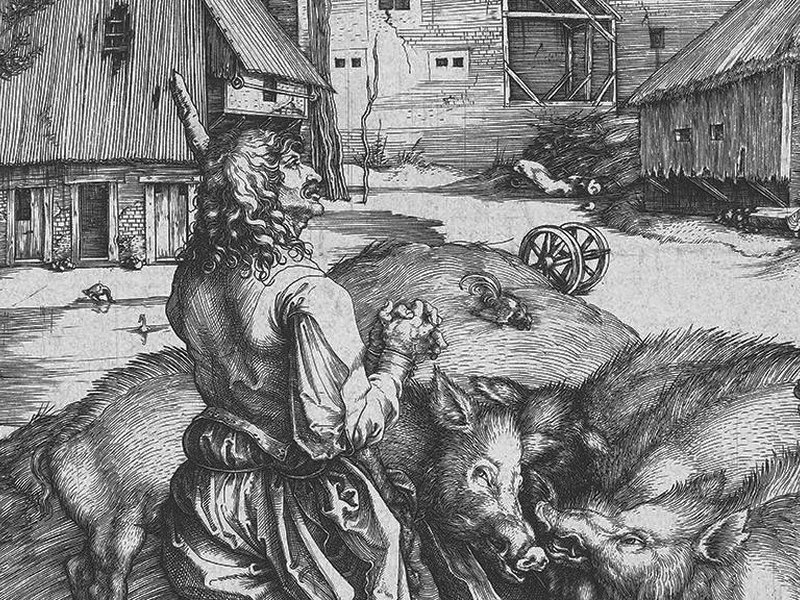
In the first essay on the parable of the Prodigal Son, I suggested that the problems commentators and others encounter in interpreting Jesus three-part parable are not accidental. These are not just problems in our ignorance of cultural background. They are intentional features of the stories —stories designed to poke…

by Ralph Allan SmithJuly 11, 2019
durer-prodigal-son-2
Luke

Perspectives on the Prodigal, (Part 1)

The story of the Prodigal Son is perhaps the most well-known story in the Bible. As others have observed, it may also be one of the most misunderstood. In two short essays, I will point out features of this story that are commonly neglected, aspects of Jesus’ parable that might…

by Ralph Allan SmithJuly 9, 2019
de-rijke-man-en-de-arme-lazarus-by-jacopo-da-ponte-16th-century
Luke

Lazarus and the Rich Man

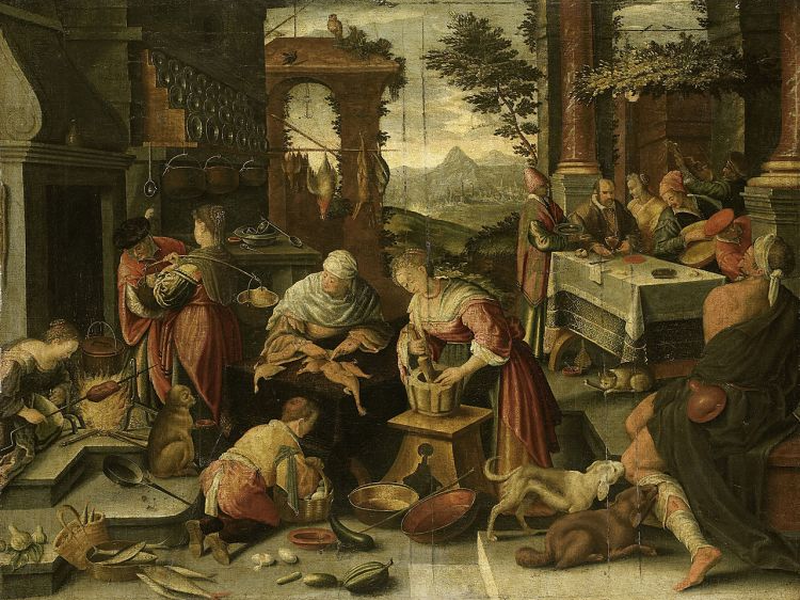
The parable of Lazarus and the nameless rich man is not an independent story. It is part of a long context that begins in Luke 15:1, where Jesus is eating with tax collectors and sinners and the scribes and Pharisees grumble. In response to their hardheartedness, Jesus tells a three-part…

by Ralph Allan SmithJuly 4, 2019
aaron-burden-uynrnfdkjwg-unsplash
Luke

Everybody has Dropsy - Luke 14:1-24

The Bible is written so that even when a reader cannot pick up on what might be deeper or more detailed aspects of a text, there is virtually always a message to be heard. In the ancient world, where the “reader” of Scripture would likely be a church official facing…

by Ralph Allan SmithJuly 2, 2019
communion
Biblical Theology

Fruit Trees and Grain Plants

The distinction between garden (or vineyard) and field begins in Genesis 2. This relates to the ordering of the formless world. Plants of the field are contrasted with the garden planted by God in Genesis 2:5&8. Later on, under the Old Covenant the Israelites will be required to keep their…

by James B. JordanJune 27, 2019

Showing page 77 of 309

See all
See all

Eucharistic meditation, Fourth Advent

John 6:35: Jesus said to them, I am the bread of life; he who comes to Me shall not hunger, and he who believes in Me shall never thirst. Throughout the centuries, Christians have thought about the Lord’s Supper by analogy with the incarnation. Just as God became man in…

December 18, 2005

Baptismal meditation, Fourth Advent

Luke 2:6-7: And it came to pass that while they were there, the days were accomplished that she should be delivered. And she brought forth her firstborn Son, and wrapped Him in swaddling clothes, and laid Him in a manger, because there was no room for them in the inn.…

December 18, 2005
Theology

Exhortation, Fourth Advent

Christmas is a joyful season, but for many it turns into something else. Instead of joy, it is full of disappointment and unhappiness. Instead of an occasion for family fellowship, it becomes an opportunity for opening old wounds, reigniting old arguments, giving new life to rancor that should have died…

December 18, 2005

The Island

In many ways, The Island is a silly movie: Long, repetitive, boring chase scenes, inexplicable explosions, impossible escapes, gaping holes in the plot, all filmed with MTV quick-cuts and apparently lit with strobe lights. Somewhere on the far side of the silliness, however, is a welcome indictment of the dehumanization…

December 18, 2005

Athanasius and the Humanity of Christ

RPC Hanson, among others, argued that Athanasius’ Christology minimizes the humanity of Jesus: “We must conclude that whatever else the Logos incarnte is in Athanasius’ account of him, he is not a human being.” Not so, argues Khaled Anatolios in his 1998 study of the theology of Athanasius. In appropriating…

December 17, 2005

The Nestorian Shuffle

In his book on Saint Cyril of Alexandria and the Christological Controversy (St. Vladimir’s, 2004), John McGuckin describes the Nestorian reading of the gospels. The gospels describe the birth and growth of the man Jesus, and also describe a person whose powers are beyond human powers - the power to…

December 17, 2005

Showing page 1911 of 2212

Browse by Category

In Medias Res

Your weekly digest for all things Theopolis.

Donate

Theopolis is nearly 100% donor-supported. Consider joining us on our mission.