Theopolis Logo

Writing

Explore our collection of theological essays, biblical studies, and reflections on faith and culture.

See all
cloister

Gatekeepers

1 Chronicles 9:1 seems to bring the genealogies of 1 Chronicles to an end. The Chronicler has recorded the genealogy of the human race from Adam, focusing on the descendants of Abraham through Jacob. Summing it all up, he says, “So all Israel was enrolled by genealogies; and behold, they…

by Peter LeithartJune 21, 2016
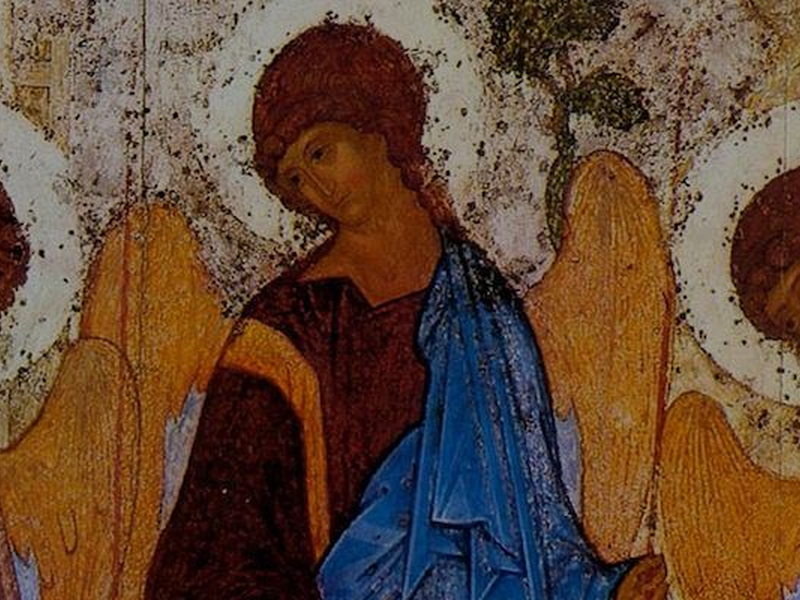
trinity-1-2
Trinity

Are the Divine Persons Persons?

The “personalist” understanding of the Trinity, articulated most influentially in the work of John Zizioulas, has fallen on hard times. Recent scholars have attacked Zizioulas’s idea that Cappadocian Trinitarianism represented an ontological revolution, hammering on the distinction between divine and human personhood. Michel Barnes’s conclusion is the most drastic of…

by Peter LeithartJune 16, 2016
img_4660-2
Architecture

On Biblical Theology

Biblical Theology is often defined as the historical unfolding of God’s revelation, or of God’s revelation and of the history of his covenantal redemption and transformation of humanity and the world. In practice, Biblical Theology is usually broader than this, and also includes the study of literary structure and of…

by James B. JordanJune 14, 2016
laughing_statue_by_xxbobbiie-d5f0meh-2
Humor

Wise Laughter

We are made to be happy. Created to enter into the eternal joy of God, our whole being inclines to that end, but the fallen world has put forth barriers and by our own sin we bar ourselves from that endless delight, and death blinds us to that reality. Yet…

by Remy WilkinsJune 7, 2016
img_7664
Liturgy

Why Theopolis? Take Two

At the end of Revelation, John sees the heavenly city descending to earth. The city shines with the brilliance of God's glory, which lightens the nations, so that kings bring their glory to the city. This is not a vision of the final new heaven and new earth. It's a…

by Peter LeithartJune 2, 2016
trinity-1-2
Attributes of God

How Can We Talk About God?

“No one has ever seen God,” writes John (John 1:18). If this is the case, then how can we speak about God? Some people say we actually cannot. Or at least we cannot speak about God positively, i.e. who He is. We can only say who or what God is…

by Bogumil JarmulakMay 31, 2016

Showing page 130 of 309

See all
See all

Turn of civilization

At the end of his wonderful essay on “Art and Sacrament,” the Welsh poet and painter David Jones included a fragment that he wrote and rewrote over several decades. Here is wisdom: I said, ah! what shall I write? I inquired up and down (he’s tricked before with his manifold…

September 14, 2005

The Pianist and the Nazis

In a 2003 TNR review of Roman Polanski’s Oscar-winning film, The Pianist , Michael Oren gives information about Wilm Hosenfeld, the German officer who assists Szpilman: “while scrounging in an abandoned house for food, Szpilman comes face-to-face with a German officer. Instead of drawing his revolver, the officer asks Szpilman…

September 14, 2005
Literature

Marilynne Robinson

Here are a couple of selections from a September 2004 New Yorker interview with Marilynne Robinson: Q. “In your nonfiction collection, ‘The Death of Adam: Essays on Modern Thought,’ you wrote about the sixteenth-century theologian John Calvin, and about his strong sense of humanism and tolerance and his importance to…

September 14, 2005

Odysseus’ return to himself

Charles Segal argues in his Singers, Heroes, and Gods in the Odyssey that Odysseus’ return to Ithaca is a return to himself. This works in several dimensions. Through the second half of the epic, various characters reconstruct the story of Odysseus’ life - the story of his naming and the…

September 14, 2005

Odysseus’ return to himself

Charles Segal argues in his Singers, Heroes, and Gods in the Odyssey that Odysseus’ return to Ithaca is a return to himself. This works in several dimensions. Through the second half of the epic, various characters reconstruct the story of Odysseus’ life - the story of his naming and the…

September 14, 2005
Theology

Matter and spirit

Discussing the question of the corporeality of angels, Herman Bavinck argues that angels cannot have bodies because that would imply they are material and “matter and spirit are mutually exclusive.” He charges that “it is a form of pantheistic identity philosophy to mix the two and to erase the distinction…

September 13, 2005

Showing page 1946 of 2212

Browse by Category

In Medias Res

Your weekly digest for all things Theopolis.

Donate

Theopolis is nearly 100% donor-supported. Consider joining us on our mission.