Theopolis Logo

Writing

Explore our collection of theological essays, biblical studies, and reflections on faith and culture.

See all
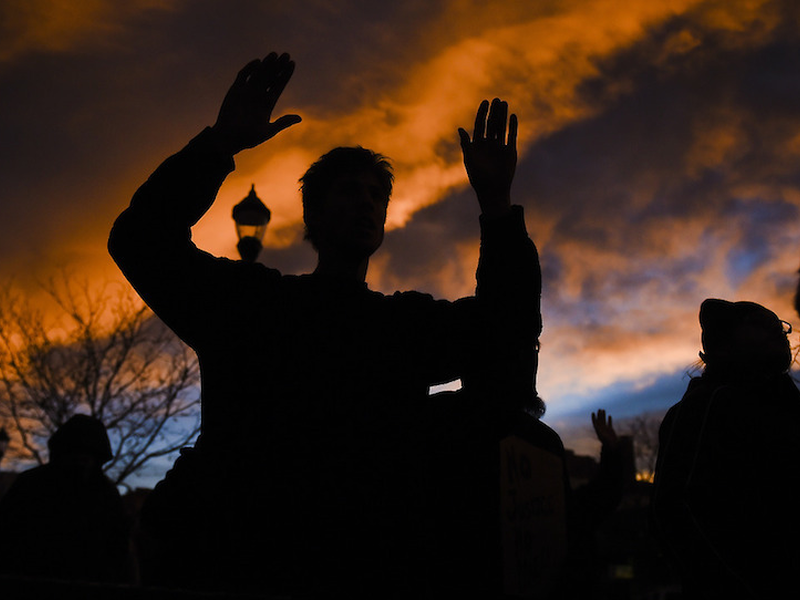
indiana-protests
American Politics

In Whom Do We Trust?

"Put not your trust in princes, in a son of man, in whom there is no salvation. When his breath departs, he returns to the earth; on that very day his plans perish. Blessed is he whose help is the God of Jacob, whose hope is in the Lord his…

by Gregory LaughlinMarch 31, 2015

macbeth
Literature

Macbeth and Nihilism

When it comes to the interpretation of Shakespeare, Harold Bloom is my favorite enemy. His writing is brilliant, his knowledge of things Shakespearean encyclopedic, and the insights he offers may puzzle, startle, or amaze, but they always educate. How then can he be an enemy? Because his anti-Christian bias is…

by Ralph Allan SmithMarch 31, 2015
london
Theopolis News

Theopolis in the UK

Theopolis President Peter Leithart spent the last week of March lecturing on worship and sacraments in England. He delivered four lectures on liturgy in Bolton, a town north of Manchester, arguing that Christian worship must be worship fit for the king and fit for the kingdom that has come in…

by TheopolisMarch 31, 2015
claudel-rheault-zvbv1aka-l4-unsplash
Creation

Heavenizing Earth: Eschatology in the Beginning

When we think about eschatology, we think immediately of Daniel, of Matthew 24-25, of 1 Corinthians 15 and 2 Thessalonians 2, and of course of Revelation. We don’t, I suspect, think about Genesis. Perhaps Genesis 3:15, with its promise of the woman’s seed, would come to mind. So might the…

by John BarachMarch 26, 2015
baptism
Baptism

Baptism as Exorcism

Alexander Schmemann in his book, Of Water and the Spirit, expounds the question that appears in nearly all the older baptismal liturgies, “Do you renounce the devil and all his works, the vain pomp and glory of the world and all sinful lusts of the flesh.” This renunciation, according to…

by Steve WilkinsMarch 24, 2015
day-2-ferguson-protests-nationwide
American Culture

Franklin Graham and the Problem of Reaction

Franklin Graham recently posted the following statement on his Facebook page: “Listen up—Blacks, Whites, Latinos, and everybody else. Most police shootings can be avoided. It comes down to respect for authority and obedience. If a police officer tells you to stop, you stop. If a police officer tells you to…

by A. K. ShaukuMarch 20, 2015

Showing page 157 of 309

See all
See all

Exhortation, August 28

Hope is one of the traditional “theological virtues” – faith, hope and love. Hebrews 11 defines faith as hope, and for Paul “hope,” like Victor and Faith, is another name for Jesus (1 Timothy 1:1). In our sermon text, Paul encourages hope by saying God is able to do “exceeding…

August 28, 2005
Philosophy

Transcendence and Immanence

There’s a slight false step, in the midst of a very helpful point, in Bruce Ellis Benson’s superb Graven Ideologies : He has been explaining the “double transcendence” of Platonism - metaphysical (Truth’s being is beyong the sensible world) and epistemological (human beings can get beyond the sensible world to…

August 28, 2005
Music

But for Luther

In his Teaching Company tapes on Bach and the Baroque (recommended), Robert Greenberg suggests an historical sequence that accounts for the development of German music: Music for singing, which in the period was largely church music, must take account of the language in which the music is sung. German is…

August 27, 2005

Mystery of Christ

Is the “mystery of Christ” in Ephesians 3:4 a mystery about Christ or is Christ Himself the mystery? Let’s take the latter option - Christ Himself is the mystery (cf. Colossians 1:27). How does that connect with the way Paul unpacks the mystery in terms of Jew/Gentile union (v. 6)?…

August 27, 2005

Gifts of men

NT Wright points out that the ascent and descent language in Ephesians 4:7-10 is reminiscent of Moses ascending Mount Sinai and then descending with the tablets of the Ten Commandments. Jesus ascends to heaven, and when He returns He does not bring the law of commandments on tablets of stone,…

August 27, 2005
Literature

Tragedy and Time

Macbeth hopes that his one act of regicide will stop the flow of time - “if ‘twere done when ‘tis done, then ‘twere well it were done quickly.” But it can’t be done when it’s done; actions provoke reactions. He ends tragically because he cannot trammel up the consequence. Time…

August 27, 2005

Showing page 1951 of 2212

Browse by Category

In Medias Res

Your weekly digest for all things Theopolis.

Donate

Theopolis is nearly 100% donor-supported. Consider joining us on our mission.