Theopolis Logo

Writing

Explore our collection of theological essays, biblical studies, and reflections on faith and culture.

See all
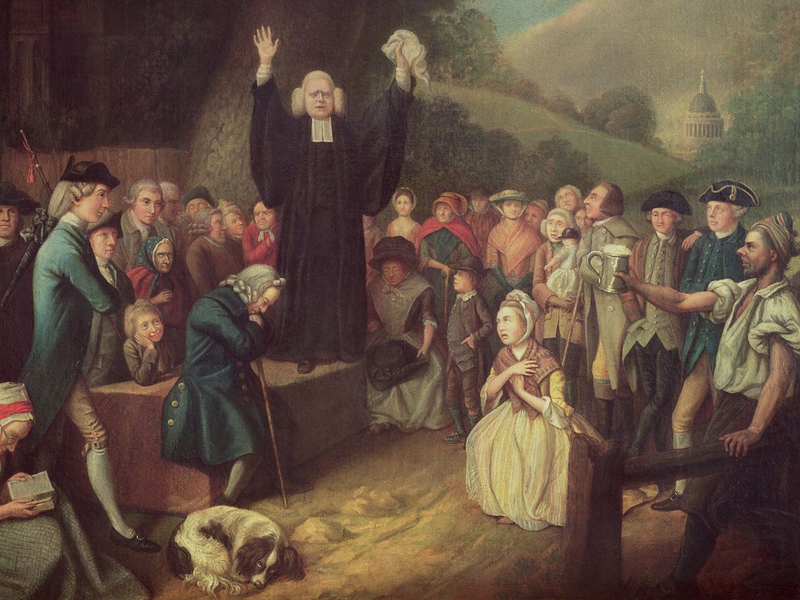
georgewhitefield-71901184-de237affa7764d6e95818a589190adf7
Biblical Horizons

The Great Awakening: A Critique

The following material was published in 1984 in Christianity and Civilization No. 4: The Reconstruction of the Church, pages 6-9, and are reprinted here as grist for the mill of the discussion of “evangelicalism.” Footnotes have not come through, of course. Though this material is offered in connection with a…

by James B. JordanJune 19, 2012

aaron-burden-1ebsmyrau-s-unsplash
Biblical Horizons

Concerning Regeneration

I wrote my beef about “regeneration” a decade ago, and I don’t really see the need to reopen what I think now. (Jordan, Thoughts on Sovereign Grace and Regeneration: Some Tentative Explorations. Biblical Horizons Occasional Paper No. 32) But. My pal Doug Wilson has been writing a series of essays…

by James B. JordanJune 19, 2012

jelleke-vanooteghem-gnxb59lgu1m-unsplash
John

Born From Above: Some Notes on John 3

Nicodemus’s conversation with Jesus in John 3:1-15 is sometimes regarded as an illustration of the tremendous stupidity of the Jews of our Lord’s day. Nicodemus is treated as just some guy who comes to Jesus at night because he doesn’t want to get into trouble by being seen with Him.…

by James B. JordanJune 18, 2012
screen-shot-2020-12-03-at-1-47-33-pm
Biblical Horizons

Is James B. Jordan an “Evangelical”?

During the last couple of weeks, Douglas Wilson has issued several posts over on his Blog and Mablog blog that deal with “evangelicalism” and who is and who is not an “evangelical.” In the course of these postings, Doug has written that while I am a fine Christian who has…

by James B. JordanJune 18, 2012
karsten-wurth-imegmbunara-unsplash
Biblical Horizons

Three Issues in Regard to Eastern Orthodoxy

Here are three issues in regard to the Eastern Church. First, here is the quote from Bavinck’s The Doctrine of God, page 317, Banner of Truth edition (1977) under the heading of Inter-Personal Relations. The Greeks derived the unity of God’s essence and the unity of the persons not from…

by Richard BledsoeJune 14, 2012
screen-shot-2020-12-03-at-1-47-33-pm
Biblical Horizons

Clerical Garb

Elsewhere on the blogosphere men are mocking the wearing of collars and albs to lead in worship. When it is pointed out that historically Reformed ministers have worn daily uniforms and robes in worship, it is replied that that was then and this is now. We ought to conform to…

by James B. JordanJune 9, 2012

Showing page 200 of 309

See all
See all

Exhortation, August 28

Hope is one of the traditional “theological virtues” – faith, hope and love. Hebrews 11 defines faith as hope, and for Paul “hope,” like Victor and Faith, is another name for Jesus (1 Timothy 1:1). In our sermon text, Paul encourages hope by saying God is able to do “exceeding…

August 28, 2005
Philosophy

Transcendence and Immanence

There’s a slight false step, in the midst of a very helpful point, in Bruce Ellis Benson’s superb Graven Ideologies : He has been explaining the “double transcendence” of Platonism - metaphysical (Truth’s being is beyong the sensible world) and epistemological (human beings can get beyond the sensible world to…

August 28, 2005
Music

But for Luther

In his Teaching Company tapes on Bach and the Baroque (recommended), Robert Greenberg suggests an historical sequence that accounts for the development of German music: Music for singing, which in the period was largely church music, must take account of the language in which the music is sung. German is…

August 27, 2005

Mystery of Christ

Is the “mystery of Christ” in Ephesians 3:4 a mystery about Christ or is Christ Himself the mystery? Let’s take the latter option - Christ Himself is the mystery (cf. Colossians 1:27). How does that connect with the way Paul unpacks the mystery in terms of Jew/Gentile union (v. 6)?…

August 27, 2005

Gifts of men

NT Wright points out that the ascent and descent language in Ephesians 4:7-10 is reminiscent of Moses ascending Mount Sinai and then descending with the tablets of the Ten Commandments. Jesus ascends to heaven, and when He returns He does not bring the law of commandments on tablets of stone,…

August 27, 2005
Literature

Tragedy and Time

Macbeth hopes that his one act of regicide will stop the flow of time - “if ‘twere done when ‘tis done, then ‘twere well it were done quickly.” But it can’t be done when it’s done; actions provoke reactions. He ends tragically because he cannot trammel up the consequence. Time…

August 27, 2005

Showing page 1951 of 2212

Browse by Category

In Medias Res

Your weekly digest for all things Theopolis.

Donate

Theopolis is nearly 100% donor-supported. Consider joining us on our mission.