Theopolis Logo

Writing

Explore our collection of theological essays, biblical studies, and reflections on faith and culture.

See all
tanner-mardis-xuxghzhibn4-unsplash-1-2
Biblical Studies

Tweets-turned-Notes on the Bible’s Chronology

Summary In what follows, I will consider the “year-stamps” employed in Scripture, i.e., statements of the form, “Such-and-such an event took place in the Xth year of Y.” In the process, I will suggest some ways in which the Biblical narrative might relate to events in the extra-Biblical world, though…

by James BejonJuly 16, 2019
durer-prodigal-son-2
Luke

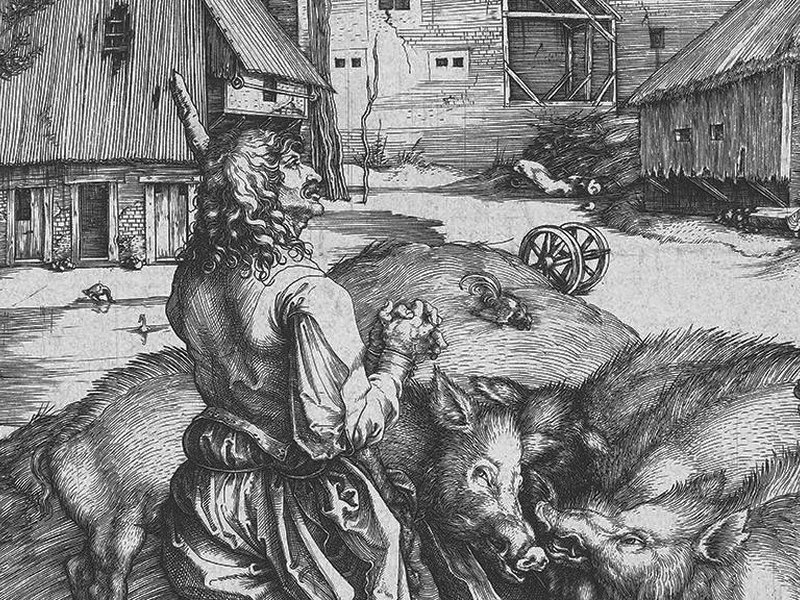
Perspectives on the Prodigal, (Part 2)

In the first essay on the parable of the Prodigal Son, I suggested that the problems commentators and others encounter in interpreting Jesus three-part parable are not accidental. These are not just problems in our ignorance of cultural background. They are intentional features of the stories —stories designed to poke…

by Ralph Allan SmithJuly 11, 2019
durer-prodigal-son-2
Luke

Perspectives on the Prodigal, (Part 1)

The story of the Prodigal Son is perhaps the most well-known story in the Bible. As others have observed, it may also be one of the most misunderstood. In two short essays, I will point out features of this story that are commonly neglected, aspects of Jesus’ parable that might…

by Ralph Allan SmithJuly 9, 2019
de-rijke-man-en-de-arme-lazarus-by-jacopo-da-ponte-16th-century
Luke

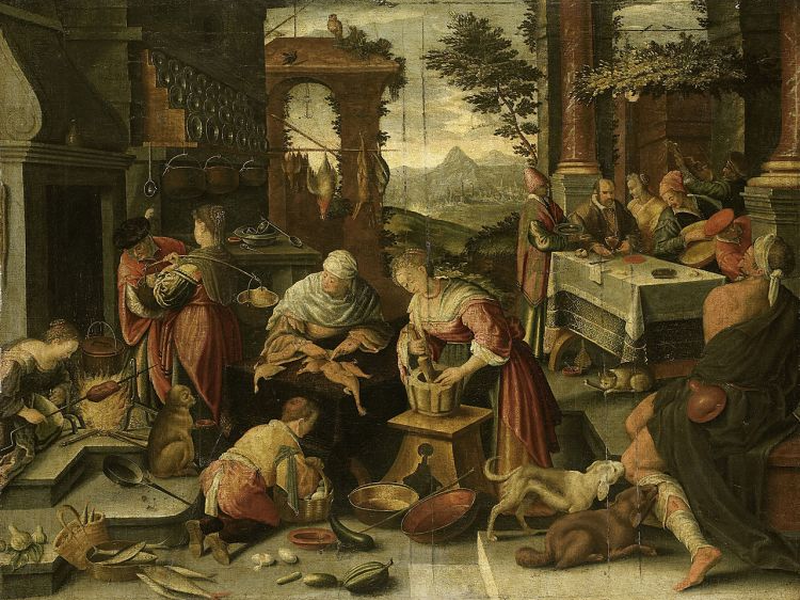
Lazarus and the Rich Man

The parable of Lazarus and the nameless rich man is not an independent story. It is part of a long context that begins in Luke 15:1, where Jesus is eating with tax collectors and sinners and the scribes and Pharisees grumble. In response to their hardheartedness, Jesus tells a three-part…

by Ralph Allan SmithJuly 4, 2019
aaron-burden-uynrnfdkjwg-unsplash
Luke

Everybody has Dropsy - Luke 14:1-24

The Bible is written so that even when a reader cannot pick up on what might be deeper or more detailed aspects of a text, there is virtually always a message to be heard. In the ancient world, where the “reader” of Scripture would likely be a church official facing…

by Ralph Allan SmithJuly 2, 2019
communion
Biblical Theology

Fruit Trees and Grain Plants

The distinction between garden (or vineyard) and field begins in Genesis 2. This relates to the ordering of the formless world. Plants of the field are contrasted with the garden planted by God in Genesis 2:5&8. Later on, under the Old Covenant the Israelites will be required to keep their…

by James B. JordanJune 27, 2019

Showing page 77 of 309

See all
See all

One Voice

We can’t all see exactly the same thing at the same time. No matter how close I press toward someone else, the perspective of my eyes is never identical to the perspective of another person. We cannot see through another’s eyes. Sight is an individualizing mode of knowledge. Hearing is…

July 20, 2005

Arousal and order

In Bed and Board , Robert Farrar Capon points out how disordered sexual relations are deeply engrained in contemporary life. Capon wrote the book 40 years ago, but what he says is more true today even than it was then. Men, he says, “come to marriage after years of being…

July 16, 2005

The Gothic

Mark Edmundson examines the pervasive influence of Gothic themes not only in popular entertainments (horror movies, computer games, etc) but also in contemporary real-life life. He suggests that the evening news presents a Gothicized world, a world of unknowable threats and horrors that we cannot escape. Writing in the late…

July 16, 2005

Hamann’s hermeneutic

Hamann allegorized a hermeneutical principle of Jer 38: “We all find ourselves in such a swampy prison as the one in which Jeremiah found himself. Old rags served as ropes to pull him out; to them he owed his gratitude for saving him. Not their appearance, but the services they…

July 15, 2005

Hamann’s hermeneutic

Hamann allegorized a hermeneutical principle of Jer 38: “We all find ourselves in such a swampy prison as the one in which Jeremiah found himself. Old rags served as ropes to pull him out; to them he owed his gratitude for saving him. Not their appearance, but the services they…

July 15, 2005
Philosophy

Death of the sign

Still on Pickstock on Derrida. Famously, Derrida says that speech dies with its author, the sound fading on the air. Writing survives. But he claim that speech is always under erasure makes the prior assumption that death and life are mutually exclusive territories, that it is impossible for the sign…

July 14, 2005

Showing page 1961 of 2212

Browse by Category

In Medias Res

Your weekly digest for all things Theopolis.

Donate

Theopolis is nearly 100% donor-supported. Consider joining us on our mission.