
Theopolis Logo

Writing

Explore our collection of theological essays, biblical studies, and reflections on faith and culture.

See all
harshit-sharma-wertrhhtz4s-unsplash-2
Revelation

The Seven Thunders, An Interpretive Suggestion

And He cried out with a loud voice, as when a lion roars; and when He had cried out, the seven thunders spoke their voices (Revelation 10:3). In Revelation 10 John sees Jesus come down to him from heaven with a little book in His hand. Jesus cries out with…

by James B. JordanOctober 7, 1994
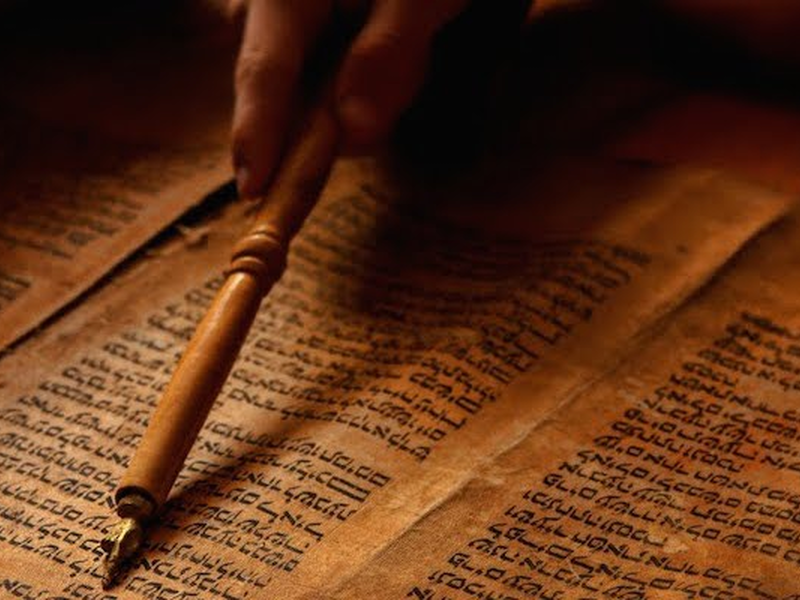
hebrew-manuscript-2
Biblical Chronology

Genesis 5 & 11: Chronological-Theological Reflections

The numbers found in Genesis 5 & 11 display characteristics that indicate a complex and meticulous symbolic schematization operating at several levels. Because these numbers are so potent symbolically, unbelieving scholars have universally (as far as I know) treated them as artificial. Believers take them literally, but believers must also…

by James B. JordanOctober 7, 1994

screen-shot-2023-04-04-at-5-01-54-pm
Revelation

The Kings From the East

And the sixth angel poured out his bowl upon the great river, the Euphrates; and its water was dried up, that the way might be prepared for the kings from the east [sunrising]. (Revelation 16:12) The kings from the east in Revelation 16:12 are generally assumed to be enemies of…

by James B. JordanSeptember 10, 1994
timothy-eberly-djj49s6ud2o-unsplash
Biblical Studies

Covenants and Dates

During my brief sojourn as a pastor during the 1980s, I had several occasions to be involved in settling disputes between men in the congregation I served. A typical dispute went like this: Two men formed a company to do business. After a few years, the business went sour, and…

by James B. JordanSeptember 10, 1994
kiwihug-l4gw27xzn1i-unsplash
Revelation

The Grape Harvest of Revelation 14:17-20

The two harvests of Revelation 14:14-20, of grain and of grapes, are most often understood as symbolic of God’s judgment against the wicked, or against Babylon, as amplified in chapters 16 & 17. Some commentators, however, notice that the gospels speak of the grain harvest as a reaping of the…

by James B. JordanAugust 10, 1994
aaron-burden-h8s0pf2rcqs-unsplash
Deuteronomy

The Chronology of the Pentateuch (Part 6)

(Conclusion of Chapter 16 in the previous Biblical Chronology Article) Month 3, 2513 According to Leviticus 23:15-16, Pentecost was to be observed 50 days after the sabbath after Passover, or 49 days after the Feast of First Fruits. I initially based my reflections on the Jewish tradition that the Law…

by James B. JordanAugust 10, 1994

Showing page 276 of 309

See all
See all

Age of Silver

D avid's plan for the temple is partly a floor plan. He gives Solomon the pattern for the “porch” and its associated buildings, treasuries, rooms, courts (1 Chronicles 28:11-12). The plan also includes instructions for organizing the priests and Levites (28:13a) and for the utensils of service for the temple…

March 14, 2017

Sources of Inequality

I n his recently-published The Great Leveller , Walter Scheidel summarizes evidence from archeology and anthropological studies to answer the question, Has inequality always been with us? The answer is: Sort of yes. Inequality is a constant in societies that farm and herd. But farming and land ownership weren't the…

March 14, 2017

Classicists and Romantics

D avid gives Solomon the “plan” (Heb. tabnit ) for the temple. Unlike Moses, David doesn't have to climb a mountain to get it (cf. Exodus 25:9, 40). It comes from “the spirit ( ruach ) with him” (1 Chronicles 28:12), and from a “writing” from the Lord that comes…

March 13, 2017

Nietzsche, Destroyer of Idols

I n an essay in the journal European Legacy , Norman Fiering summarizes the thought of Eugen Rosenstock-Huessy on biography. Fiering asks whether there are recurring patterns in the lives of significant individuals, and, relying on Rosenstock-Huessy, calls attention to moments of “conversion” (not necessarily religious) and “grace” (unexpected encounters…

March 10, 2017

Modernist Puritanism

I n his 1971 study of Modernist architecture, The Golden City , Henry Hope Reed observed that Modernists transferred moral categories to architecture. Buildings could be “honest” (if they revealed their structure on the surface) or “false” (if they hid structure under ornamentation). Purity was invoked regularly as a positive…

March 10, 2017

Happy Gothic

W hat is “the Gothic”? Answers vary, and that is, Catherine Spooner argues (in Post-Millennial Gothic ), because Gothic bears “multivalent meanings” and “has adapted and changed with the times” (9–10). This isn't a recent development: “After Gothic's initial phase of popularity fizzled out around 1820, it quickly renewed itself…

March 10, 2017

Showing page 197 of 2212

Browse by Category

In Medias Res

Your weekly digest for all things Theopolis.

Donate

Theopolis is nearly 100% donor-supported. Consider joining us on our mission.