Theopolis Logo

Writing

Explore our collection of theological essays, biblical studies, and reflections on faith and culture.

See all
31-03-0213
Hermeneutics

Apocalyptic Eyes

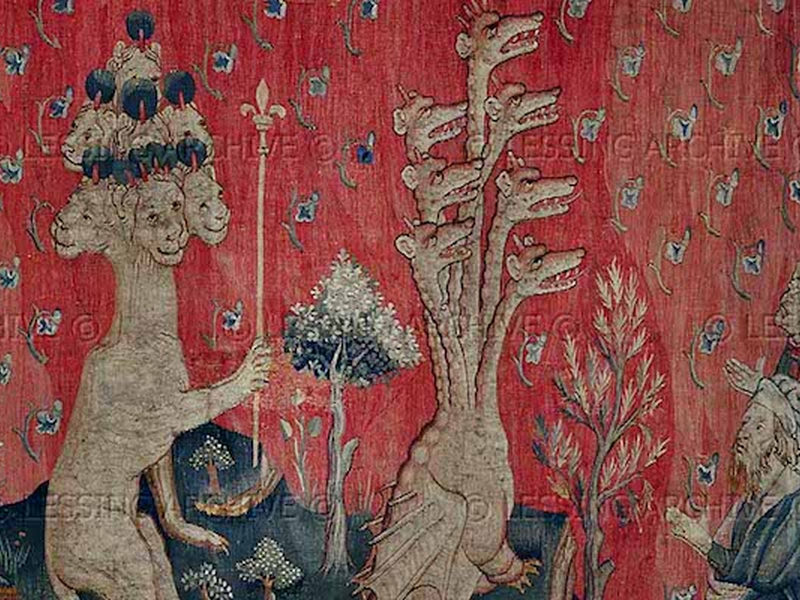
Flying scrolls. Red horses. Beasts coming out of the sea. Winged women. The list goes on. Apocalyptic literature in the Bible is like a cross between science fiction and Marvel comics. And the Bible has a fair bit of this sort of thing. Daniel sees visions in Babylon, Zechariah sees…

by Toby SumpterNovember 4, 2014

bhm-skyline-2
Theopolis News

New Name, New Look

Trinity House Institute has taken a new name, the Theopolis Institute. This striking new name expresses our unique vision and mission and captures the unified purpose behind all our specific programs and activities. We still have Bible, liturgy, and culture in our tagline. We still offer the same courses on…

by TheopolisNovember 4, 2014
istock_000012860926small
Atonement

Not Fearing the Devil

Adam Kotsko offers a socio-political variation on the Christus Victor atonement theory in his 2010 study, The Politics of Redemption: The Social Logic of Salvation . He does this by explaining "the devil" in terms of the Hegelian concept of "objective spirit," Geist . As Kotsko puts it, Geist "refers…

by Peter LeithartOctober 13, 2014
jez-timms-8muutamcwu4-unsplash
Leviticus

The Meaning of Sacrifice

Two factors keep Nahtali Meshel from discussing the meaning of sacrifice until late in his The "Grammar" of Sacrifice . The first has to do with the texts he draws from: "P says little about the meaning of its rituals" (174). The other has to do with the grammatical theory…

by Peter LeithartOctober 8, 2014
jez-timms-8muutamcwu4-unsplash
Leviticus

Praxemics

Chapter 5 of Naphtali Meshel's The "Grammar" of Sacrifice focuses on "praxemics," the physical actions of sacrificial ritual. Praxemes are constituted by six elements: an "atomact," an elementary physical act or gesture; an actor; an object that is acted up; a target for the action and often for the object…

by Peter LeithartOctober 6, 2014
markus-winkler-aid-xyrtlec-unsplash
Leviticus

Jugation and Hierarchy

Two chapters of Naphtali Meshel’s The “Grammar” of Sacrifice cover what he calls “jugation” and “hierarchies.” The first involves the addition of other materials to an animal offering. Jugates include wine, cereal, and oil that are added to the animals (zoemes) that are offered in sacrifice. Some jugates are coordinated…

by Peter LeithartOctober 1, 2014

Showing page 167 of 309

See all
See all

1 Peter on baptism

On his web site, David Bayly offers some thoughts on the Reformed baptism debates and 1 Peter. Since he quotes me (without naming me), it might be helpful to put down a couple of responses. First, he claims that those who are advocating what he calls a “new perspective on…

May 30, 2005

Eucharistic Meditation, May 29

2 Kings 2:9: Now it came about when they had crossed over, that Elijah said to Elisha, Ask what I shall do for you before I am taken from you. And Elisha said, Please, let a double portion of your spirit be upon me. The story of Elijah?s departure into…

May 29, 2005

Exhortation, May 29

The first two chapters of 2 Kings match in many ways. In both, Elijah is seen ?going up?E?Efirst to the top of a hill, and then to heaven. In both passages, things happen in threes ?Ethe oracle of Elijah is delivered three times and three sets of fifty men appear…

May 29, 2005

Romans 9:14-18

ROMANS 9:14-18 Paul rejects the idea that there is injustice with God, as he did in equally vigorous terms in chapter 3, where God?s righteousness is closely linked with His faithfulness (v. 3) and His truth (v. 7). And he supports this conclusion with a quotation from Exodus 33. A.…

May 29, 2005

Wright on Romans 9

Wright points out that the storyline Paul is reviewing in Romans 9 is not a general storyline for any old nation or race, nor the history of individuals, but specifically the story of Israel. Whatever God does with other nations, Paul is showing that God?s plan with Israel always involved…

May 29, 2005
sixteen-miles-out-al48tflf4e8-unsplash
Genesis

Noah’s nakedness

John Bergsma and Scott Hahn offer a compelling defense of a “maternal incest” view of the story of Noah’s nakedness in Genesis 9 (JBL 124:1). They reject a “voyeurist” interpretation of the story. They find more to recommend a “paternal incest” view of the story, pointing to the parallels between…

May 28, 2005

Showing page 1975 of 2212

Browse by Category

In Medias Res

Your weekly digest for all things Theopolis.

Donate

Theopolis is nearly 100% donor-supported. Consider joining us on our mission.