Theopolis Logo

Writing

Explore our collection of theological essays, biblical studies, and reflections on faith and culture.

See all
e99a9334
Advent

Stretching Christmas

For many people Christmas comes on December 25 and is over December 26. The tree is taken down along with the lights and the other decorations, and everyone begins setting the house in order for the new year. No more Christmas hymns. No more celebrations (well, until New Year’s Eve).…

by Steve WilkinsDecember 24, 2016
ascension
Advent

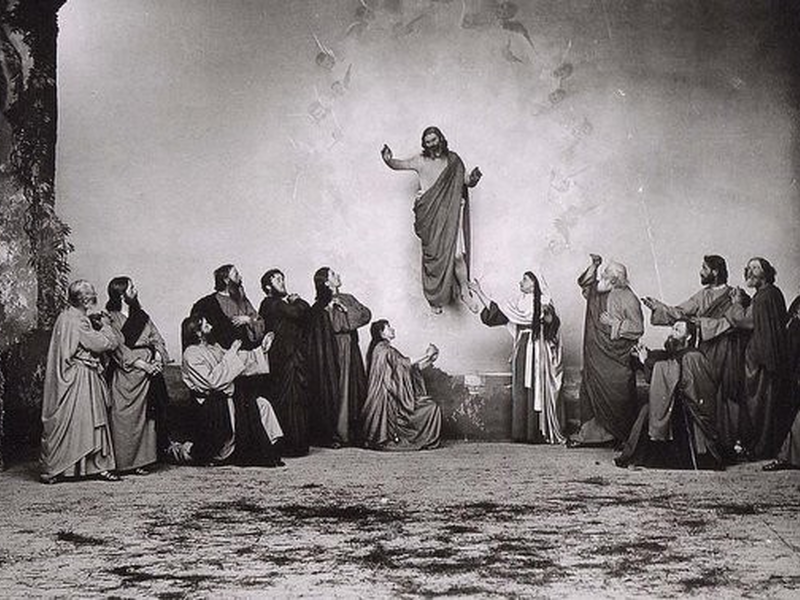
Ascension and Incarnation

The Ascension and the Incarnation should not be disconnected in our Christmas thinking or celebrations. As N.T. Wright notes, the ascension is "a central and vital feature without which all sorts of other things start to go demonstrably wrong. . . . where the ascension has been ignored or misunderstood,…

by Roy AtwoodDecember 23, 2016
nativity-rembrandt
Advent

Christmas Light

“In the Word was life, and the life was the light of men. And the light shines in the darkness.” Thus John describes the incarnation of the Son. He comes as the living and life-giving light of the world. That’s good news. In the beginning, God spoke and light shone…

by Peter LeithartDecember 23, 2016
nativity-chagall
Advent

The Spirit of Christmas

Christmas is all about Jesus. The angels announce Jesus’ birth, shepherds and wise men come to see Jesus, Herod wants to kill Jesus. We occasionally think of the Father who sent the Son, but we keep returning to the Son made flesh in Bethlehem’s manger. Meanwhile, as always, the Spirit…

by Peter LeithartDecember 22, 2016
nativity
Advent

The Humility of God

Christmas is about many things, but one of the chief things revealed in the gospel of Christmas is the humility of God. We don't often think of humility as an attribute of God. If God is glorious and exalted, we think, He must be haughty and proud and self-centered. We…

by Peter LeithartDecember 21, 2016
screenshot-2025-12-15-at-8-35-45-am
Advent

Advent of Unity

John famously begins his Gospel with a piece of theology: “In the beginning was the Word, and the Word was with God, and the Word was God.” Matthew starts with a genealogy. John celebrates Advent with a hymn, Matthew with a list. For John, Jesus is the Word of creation…

by Peter LeithartDecember 20, 2016

Showing page 120 of 309

See all
See all

Exhortation, First Advent

In this morning?s sermon, we will be looking at the role of the Spirit in the incarnation of Jesus, in the redemption achieved by Christ, and in the life of the Trinity. One way to summarize the point is that the Spirit is the divine bond, the ?glue?Eof the Trinity.…

November 28, 2004

Eucharistic Sacrifice

Vander Zee shows some chutzpah in addressing the question of Eucharistic sacrifice, and in suggesting that there are senses in which the Eucharist is properly said to be sacrificial. He offers a few quotations to show the Reformation pedigree of this perspective. The first from Calvin: “The Lord’s Supper cannot…

November 28, 2004

VanderZee on Sacraments

Leonard J. Vander Zee’s Christ, Baptism and the Lord’s Supper is the most satisfying introduction to sacramental theology that I’ve come across. VanderZee works out a Reformed understanding of sacraments in general (focusing on the fact that sacraments are God’s action - hardly a Reformed monopoly, of course), as well…

November 28, 2004

Bayer on Luther

Oswald Bayer says that for Luther faith is “divine work in us,” and that means for Luther that God “slays the old nature that belongs to the old world, the old Adam, and makes us new creatures, a new creation.” This is, in Bayers’ summary, the “decisive aspect of the…

November 27, 2004

White on NT

White in fact does not even cover all the passages concerning justification within the texts that teach the doctrine. Romans 6:7 is absent from his Scripture index, and he lists the “key Pauline passages” that deal with justification as Romans 3-5; 8:29-34; Gal 1-5 ( The God Who Justifies ,…

November 26, 2004

God the Judge

Near the heart of the Protestant doctrine of justification (as Barth saw) is the insistence that God, not man, is Judge. Efforts at self-justification are NOT merely moralistic efforts to recommend ourselves to God (though they are that). Efforts at self-justification are also (perhaps more fundamentally) assaults on God’s Lordship;…

November 26, 2004

Showing page 2034 of 2212

Browse by Category

In Medias Res

Your weekly digest for all things Theopolis.

Donate

Theopolis is nearly 100% donor-supported. Consider joining us on our mission.