Theopolis Logo

Writing

Explore our collection of theological essays, biblical studies, and reflections on faith and culture.

See all
5f72533d0afa437fcaa7e5cf_hero_history
Apologetics

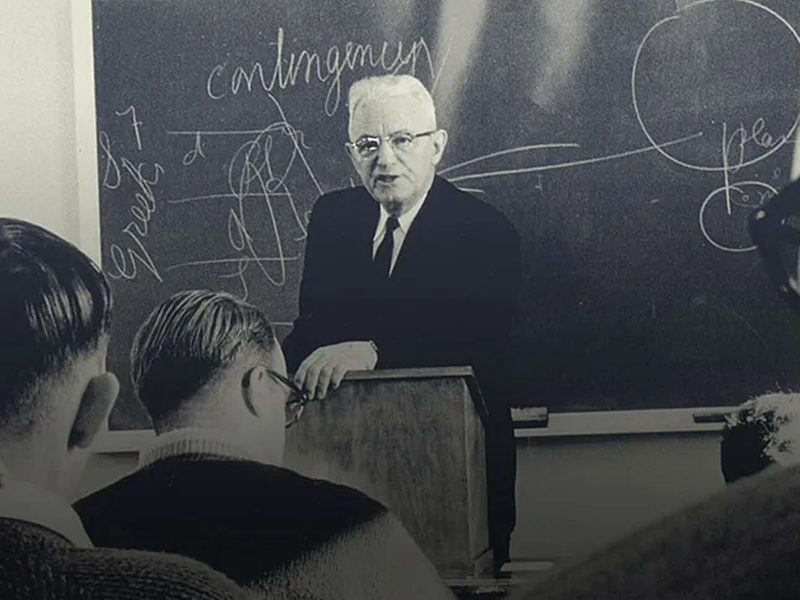
Presumptuous Presuppositions: The Apologetics of Cornelius Van Til

Whether one entirely agrees with him or not, no Christian interested in apologetics–the reasoned defense of the Faith–can afford to be uninterested in Cornelius Van Til, the late professor of Apologetics at Westminster Theological Seminary in Philadelphia. According to John Frame, Van Til “is perhaps the most important thinker since…

by Mark HorneJuly 15, 1997

trnava-university-beeyeib-am8-unsplash
Baptism

Richard Bacon’s “What Mean Ye By This Service? Paedocommunion in Light of the Passover” A Brief Response

Reverend Richard Bacon is the pastor of First Presbyterian Church of Rowlett, Texas. He has written a tract entitled “What Mean Ye By This Service? Paedocommunion in Light of Passover,” printed by Presbyterian Heritage Publications (P.O. Box 180922, Dallas, TX 75218). I am writing this brief response to set forth…

by Mark HorneJuly 6, 1997
aaron-burden-qjdzyt_k8xg-unsplash
Angels

Twelve Fundamental Avenues of Revelation, Part 5

As we move toward a consideration of Dynamic Cosmic Revelation, there is a further aspect of revelation through action that should be discussed here, and that is this: God is particularly revealed to us in times of crisis and distress. When things are going well, we forget God. When distress…

by James B. JordanJuly 3, 1997
jan-kahanek-g3o5ztrk2e4-unsplash
Biblical Chronology

John Sailhamer Weighs In, Part 4

We conclude our analysis of John Sailhamer’s book *Genesis Unbound: A Provocative New Look at the Creation Account* (Multnomah Books, 1996), which argues that Genesis 1:2ff. is not about the creation of the whole world, but about the preparation of the Land of Eden, which is also the Promised Land.…

by James B. JordanJuly 3, 1997
screenshot-2023-09-04-at-10-37-01-am
Biblical Horizons

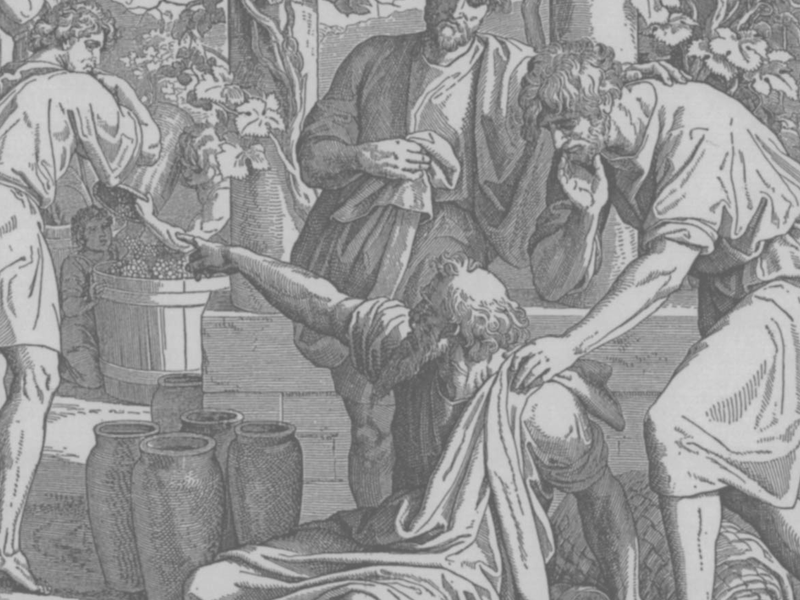
The Sin of Ham and the Curse of Canaan, Part 2 (An Exposition of Genesis 9:20-27)

Commentary A. Noah’s God-like Labor: 8:20 And Noah, a master of the ground, was the first, And he planted a vineyard. 21 And he drank from the wine, And became drunk, And lay uncovered inside his tent. It appears to me that there is a balance between "ground" and "tent"…

by James B. JordanJuly 3, 1997
e99a4713
How to Worship

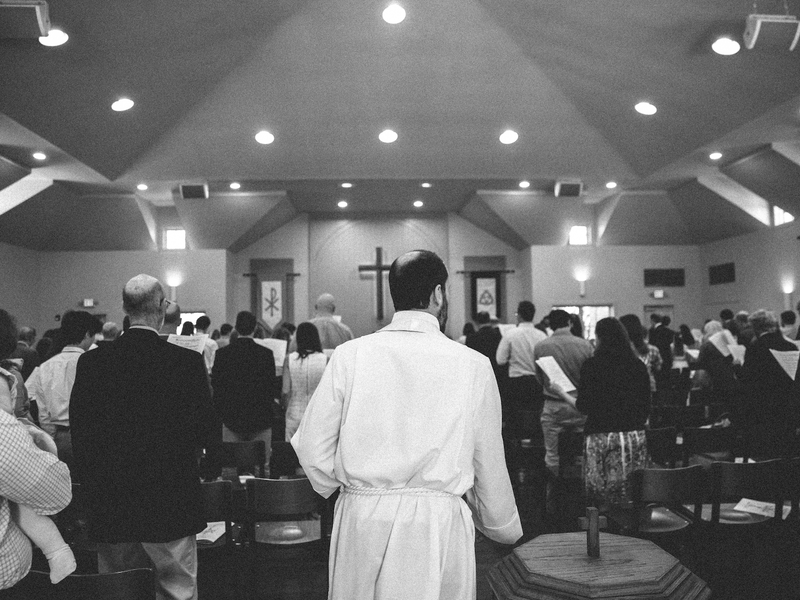
Why Does the Pastor Wear a Robe?

A Defense of the Use of the Ministerial Robe in Public Worship The purpose of this series of articles is to explain our biblical philosophy of worship and how we have sought to implement it here at Providence Reformed Presbyterian Church. We have thought through our worship services. We have…

by Jeff MeyersJune 20, 1997

Showing page 255 of 309

See all
See all

Structure in 1 Chronicles 26

1 Chronicles 26:1-19 lists the names and positions of gatekeepers at Solomon's temple. The passage is framed by references to the “allotment” or “apportionment” of assignments to Korahites (v. 1) and sons of Korah and Merari (v. 19). Within this frame, the text moves in a complex parallel fashion through…

February 21, 2017

All Great Art Is Praise

“T he art of man is the expression of his rational and disciplined delight in the forms and laws of the creation of which he forms a part.” This is the first thesis of John Ruskin's “All Great Art Is Praise,” in The Laws of Fesole . Rationality is essential…

February 21, 2017

Demonstrative Complications

I n their 1662 treatise on Logic, or the Art of Thinking , Antoine Arnauld and Pierre Nicole question the straightforwardness of the Calvinist logical analysis concerning the Eucharistic “This is my body.” They summarise the argument this way: “Their claim is that in Jesus Christ’s assertion, ‘This is my…

February 20, 2017

Passivity and Freedom

I ngolf Dalferth thinks we are Creatures of Possibility . By that, he means that “we are creatures in the making whose actual becoming depends on possibilities beyond our control that occur in our lives as opportunities and chances that we can neglect and miss or take up and use”…

February 17, 2017

The State after ‘68

A ccording to Pierre Manent ( Beyond Radical Secularism ), May 1968 marked a critical turning point in the political history ofFrance. Despite the persistence of the “Gaullist” party in political power, ‘68 undermined “collective rules, both political and merely social. The citizen of action was followed by the individual…

February 17, 2017

On Separating Church and State

S eparation of church and state, religion and politics, is not “sufficient unto itself,” argues Pierre Manent ( Beyond Radical Secularism ). After all, he points out, citizens are believers, believers citizens, and they don’t cease to be one when they take up the role of the other. Separation “suggests…

February 17, 2017

Showing page 204 of 2212

Browse by Category

In Medias Res

Your weekly digest for all things Theopolis.

Donate

Theopolis is nearly 100% donor-supported. Consider joining us on our mission.