Theopolis Logo

Writing

Explore our collection of theological essays, biblical studies, and reflections on faith and culture.

See all
tanner-mardis-xuxghzhibn4-unsplash-1-2
Biblical Studies

Tweets-turned-Notes on the Bible’s Chronology

Summary In what follows, I will consider the “year-stamps” employed in Scripture, i.e., statements of the form, “Such-and-such an event took place in the Xth year of Y.” In the process, I will suggest some ways in which the Biblical narrative might relate to events in the extra-Biblical world, though…

by James BejonJuly 16, 2019
durer-prodigal-son-2
Luke

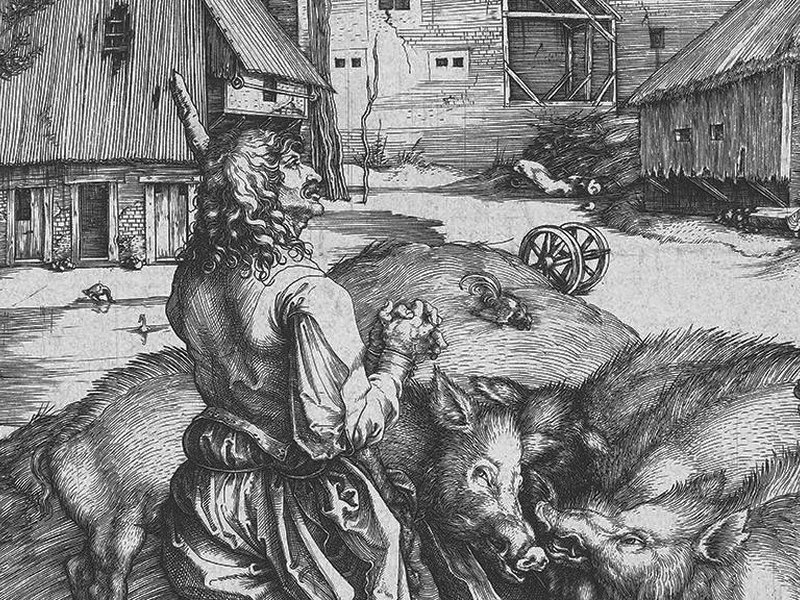
Perspectives on the Prodigal, (Part 2)

In the first essay on the parable of the Prodigal Son, I suggested that the problems commentators and others encounter in interpreting Jesus three-part parable are not accidental. These are not just problems in our ignorance of cultural background. They are intentional features of the stories —stories designed to poke…

by Ralph Allan SmithJuly 11, 2019
durer-prodigal-son-2
Luke

Perspectives on the Prodigal, (Part 1)

The story of the Prodigal Son is perhaps the most well-known story in the Bible. As others have observed, it may also be one of the most misunderstood. In two short essays, I will point out features of this story that are commonly neglected, aspects of Jesus’ parable that might…

by Ralph Allan SmithJuly 9, 2019
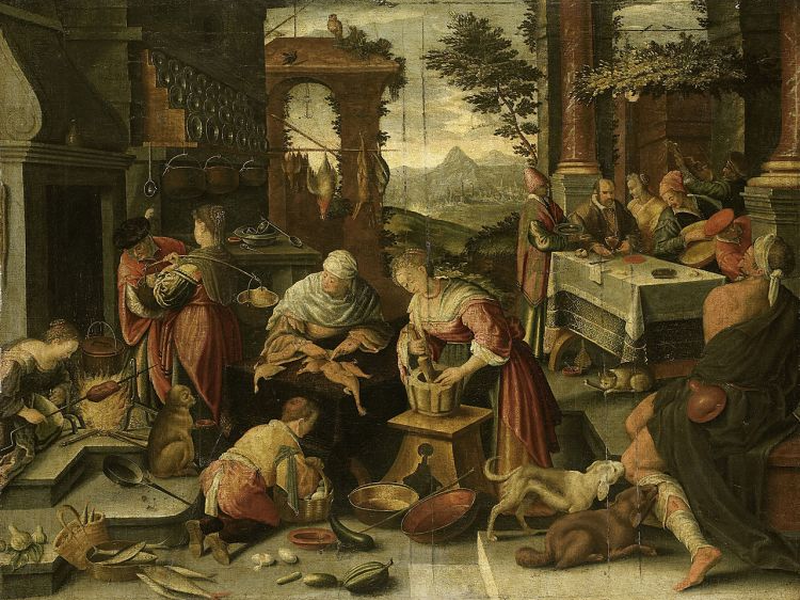
de-rijke-man-en-de-arme-lazarus-by-jacopo-da-ponte-16th-century
Luke

Lazarus and the Rich Man

The parable of Lazarus and the nameless rich man is not an independent story. It is part of a long context that begins in Luke 15:1, where Jesus is eating with tax collectors and sinners and the scribes and Pharisees grumble. In response to their hardheartedness, Jesus tells a three-part…

by Ralph Allan SmithJuly 4, 2019
aaron-burden-uynrnfdkjwg-unsplash
Luke

Everybody has Dropsy - Luke 14:1-24

The Bible is written so that even when a reader cannot pick up on what might be deeper or more detailed aspects of a text, there is virtually always a message to be heard. In the ancient world, where the “reader” of Scripture would likely be a church official facing…

by Ralph Allan SmithJuly 2, 2019
communion
Biblical Theology

Fruit Trees and Grain Plants

The distinction between garden (or vineyard) and field begins in Genesis 2. This relates to the ordering of the formless world. Plants of the field are contrasted with the garden planted by God in Genesis 2:5&8. Later on, under the Old Covenant the Israelites will be required to keep their…

by James B. JordanJune 27, 2019

Showing page 77 of 309

See all
See all

Yield Your Members

It is striking that when Paul begins to discuss the specifics of life under grace and in Christ, he emphasizes the bodily character of this life. We are “co-crucified” with Jesus, so that the “body of sin” might be done away (Rom 6:6). And the key exhortation that grows out…

July 10, 2004

“In Christ”

Brendan Byrne has this to say about Paul’s description of baptism as baptism into the death of Jesus: “behind the expression here lies the characteristically Pauline idea of the risen Lord as personally constituting a sphere of influence or milieu of salvation’into’ which believers are drawn through faith and baptism,…

July 10, 2004

“In Christ”

Brendan Byrne has this to say about Paul’s description of baptism as baptism into the death of Jesus: “behind the expression here lies the characteristically Pauline idea of the risen Lord as personally constituting a sphere of influence or milieu of salvation’into’ which believers are drawn through faith and baptism,…

July 10, 2004

Under Grace

What does it mean to be “under grace”? Does this reality somehow cancel out the necessity of obedience? Is an insistence on obedience inconsistent with Paul’s insistence that we are justified by faith alone? Rom 6:14-15 provides the answer. This is the only place in Romans (unless I’ve missed something)…

July 10, 2004

Another Stab at Rom 5

The word Paul uses for “impute” in Rom 5:13 is used in only one other passage in the NT, Philemon 18. (The Greek is ELLOGEO; elsewhere, the word translated as “impute” is LOGIZOMAI.) Perhaps an examination of Philemon 18 will shed some light on Paul’s usage in Rom 5:13. Paul’s…

July 9, 2004

Cross and Culture

This is a brief overview of a project on the atonement, first delivered as my inaugural lecture as Senior Fellow of Theology at NSA a few years ago. (I don’t think this has been posted already; if it has, my deep apologies.) My title is ?Cross and Culture,?Ebut that needs…

July 9, 2004

Showing page 2075 of 2212

Browse by Category

In Medias Res

Your weekly digest for all things Theopolis.

Donate

Theopolis is nearly 100% donor-supported. Consider joining us on our mission.