Theopolis Logo

Writing

Explore our collection of theological essays, biblical studies, and reflections on faith and culture.

See all
hebrew-manuscript-2
Hermeneutics

The Complexity of Biblical Allusion

There is no question about the fact that the book of Deuteronomy is full of literary allusion. But there is a serious problem, even a paradox, of understanding how that allusion works. To begin with, if we assume that Deuteronomy was written by Moses — with some editorial emendations added…

by Ralph Allan SmithJanuary 23, 2018

bladerunner
Culture

The Artificial Resurrection

Genesis and Genetics in Blade Runner 2049 The power of science fiction, and what’s positive about it, is that you’re able to experience the worst-case scenario without actually having to live it. (Actor Ryan Gosling, who plays Officer “K”) (Warning: The following analysis contains spoilers for both Blade Runner films.)…

by Mike BullJanuary 18, 2018
sixteen-miles-out-d40gdcd_-he-unsplash
Biblical Studies

The Battle of Gog and Magog

The battle of Gog and Magog is found in Ezekiel 38-39. My purpose in this brief essay is to propound an explanation for this passage that I have not encountered in any of my commentaries, but that makes more sense to me than any other. I offer it here in…

by James B. JordanJanuary 16, 2018
resurrection

Deep Hope

I. Varlam Shalamov in Kolyma Tales describes his experience of the Gulag, where he spent more than a dozen of years. In a story titled The Life of Engineer Kipreev Shalamov reflects on the theme of hope in the life of a prisoner: “Hope always shackles the convict. Hope is…

by Bogumil JarmulakJanuary 11, 2018
abraham-defeats-kings-g-jollain-2
Biblical Theology

Abram’s 318 Men

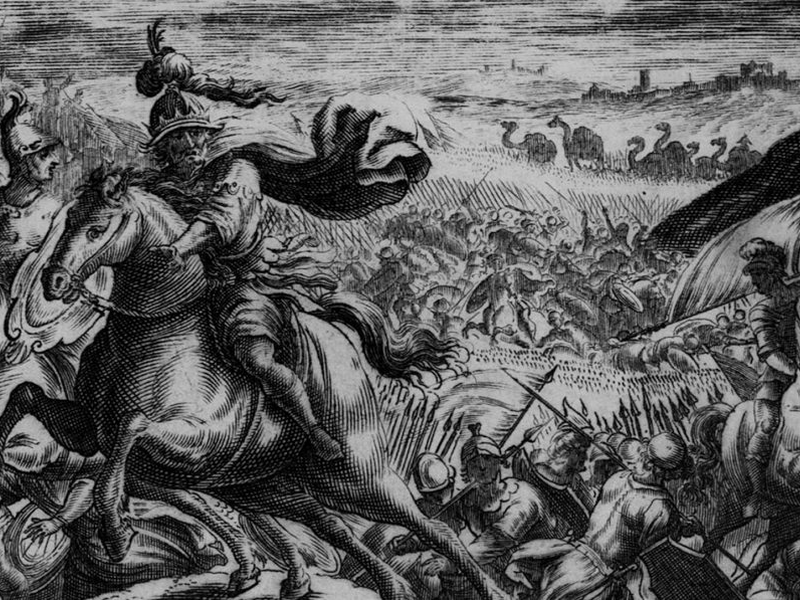
Genesis 14:14 says that Abram mustered his trained men, “born in his house,” to rescue Lot, and gives their number as 318. It is clear that the precise number is provided for some reason, but what is it? S. Gevirtz notes that 318 is the sum of all the prime…

by James B. JordanJanuary 9, 2018
tanner-mardis-xuxghzhibn4-unsplash-1
Biblical Studies

The Flying Scroll

And he said to me, "What do you see?" And I answered, "I see a flying scroll; its length is twenty cubits and its width ten cubits" (Zechariah 5:2). Immediately following his vision of the outpouring of the Spirit upon the restoration community (4:1-14), Zechariah saw a flying scroll. The…

by Peter LeithartJanuary 4, 2018

Showing page 100 of 309

See all
See all

Ward on Covenant of Works

Early in Ward’s book, he surveys mid sixteenth-century treatments of the effects of Adam’s sin, mainly to determine whether writers of that period conceived of God’s relationship with Adam as a covenantal one. His evidence suggests several important conclusions: 1) The early Protestant confessions do not describe Adam’s relationship to…

June 23, 2004
Theology

Kline on Covenant of Works

In his very useful study, God & Adam: Reformed Theology and the Creation Covenant , Rowland S. Ward has this to say about Meredith Kline’s views on the un-gracious character of the covenant of works: “Contrary to his position in 1968, Kline does not wish now to admit any concept…

June 22, 2004
Theology

More Bad Taste

I should clarify my final, hurried comments on Brown’s discussion of sin and bad taste. I suggested at the end of the last post that Brown’s initial mapping of the problem contributes to an unsatisfying conclusion regarding moral and aesthetic judgment. Brown argues that taste is community-specific, and thus subject…

June 22, 2004
Theology

Sin and Bad Taste

One of the challenges of a Christian aesthetics is sorting through the connections and distinctions between holiness and good taste on the one hand, and sin and bad taste on the other. In his 1989 book, Religious Aesthetics , Frank Burch Brown offers some thoughtful reflections on this question. Here…

June 22, 2004
Theology

Don Richardson and Contextualization

Don Richardson’s Peace Child is a classic of modern mission writing. In that book, Richardson tells of his experience among the Sawi people of New Guinea, and how he used their traditional custom of exchanging a “peace child” between warring tribes to explain the gospel to them. In his 1981…

June 22, 2004

True and False Arks

When the men of Babel organize to build a tower reaching to heaven, they decide to use “tar for mortar” (Gen 11:3; NASB). The Hebrew phrase repeats two different forms of the same root word (CHMR): The word for “tar” is CHEMAR and the word for “mortar” is CHOMER. They…

June 22, 2004

Showing page 2080 of 2212

Browse by Category

In Medias Res

Your weekly digest for all things Theopolis.

Donate

Theopolis is nearly 100% donor-supported. Consider joining us on our mission.