Theopolis Logo

Writing

Explore our collection of theological essays, biblical studies, and reflections on faith and culture.

See all
alfons-morales-ylswjsy7stw-unsplash-1
Judges

Book Review: E. John Hamlin, At Risk in the Promised Land: A Commentary on the Book of Judges

E. John Hamlin, At Risk in the Promised Land: A Commentary on the Book of Judges International Theological Commentary. Grand Rapids: Eerdmans, 1990. For anyone who has developed a taste for the rich biblical theology of Meredith Kline, James B. Jordan, Vern Poythress, and others, it is difficult to find…

by Peter LeithartJuly 17, 1993
Exodus

The Rock That Followed Them

". . . and all drank the same spiritual drink, for they were drinking from a spiritual rock that followed them; and the rock was Christ" (1 Corinthians 10:4). Paul’s passing comment about the rock that followed the Israelites in the wilderness has often been treated as a bit of…

by Peter LeithartJuly 17, 1993
elijah-1200x630-min
Biblical Studies

Elijah and Moses

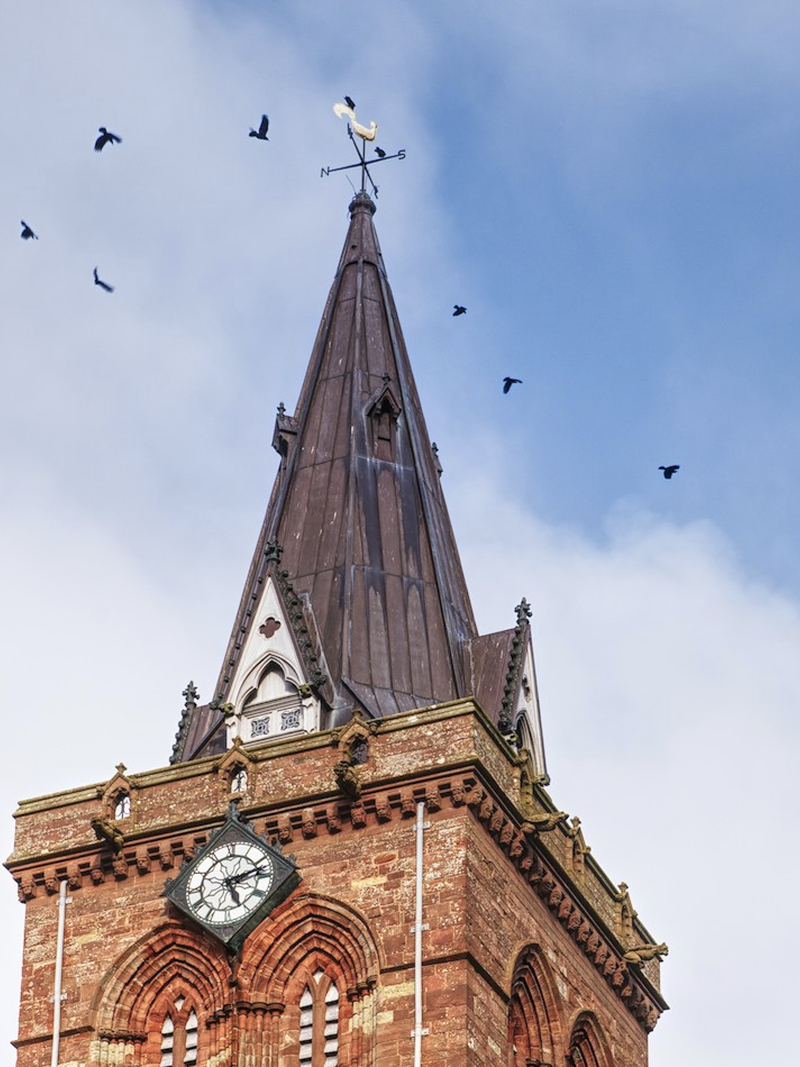
Several months ago, my brief article entitled "Elijah’s Exodus" was published in Biblical Horizons . Since that time, further study has made it evident that Elijah’s exodus in 1 Kings 17 is part of a larger pattern in which Elijah’s ministry closely parallels Moses’. The following parallels are evident: Elijah…

by Peter LeithartJuly 17, 1993

screenshot-2023-08-24-at-8-20-17-am
Exodus

The Footstool of His Feet

The translation and theology of the Hebrew term kapporet have long been puzzling to scholars. On the translation of the term, I have nothing new to offer. I wish instead to concentrate on the theological symbolism of the kapporet . The kapporet was the solid gold slab that laid "above"…

by Peter LeithartJune 17, 1993
Exodus

A Note on Exodus 22:31

Peter Leithart's article entitled " Prey in My House" pointed out that tearing flesh is a sign of kingly rule and dominion, and that God is portrayed as the Lion-King who tears flesh. The tithe brought to God’s house provides the money for the torn flesh of the sacrifices offered…

by James B. JordanJune 4, 1993
screen-shot-2022-05-12-at-12-07-23-pm
Biblical Chronology

Jubilee (Part 3)

The Seventy Years of Sabbaths 2 Chronicles 36:20-21 reads: "And those who had escaped from the sword he carried away to Babylon; and there they were slaves to him and to his sons until the rule of the kingdom of Persia, to fulfill the word of Yahweh by the mouth…

by James B. JordanApril 4, 1993

Showing page 285 of 309

See all
See all

Poesis in Renaissance

More evidence of “poesis” in Renaissance notions of human nature and “self-fashioning.” The first quotation is from Pico, and is drawn from Lewis’s English Literature in the Sixteenth Century : God’s words to Adam at creation were: “To thee, O Adam, we have given no certain habitation nor countenance of…

January 14, 2004

Greenblatt on Fashion

A couple of quotations from Stephen Greenblatt’s Renaissance Self-Fashioning , with a comment appended. He is talking about the changing meanings of “fashion” in the English Renaissance: “In the sixteenth century there appears to be an increased self-consciousness about the fashioning of a human identity as a manipulable, artful process.…

January 13, 2004
Philosophy

Quotations from Michel de Montaigne

Some fun quotations from Michel de Montaigne, taken from Stephen Toulmin’s excellent Cosmopolis: The Hidden Agenda of Modernity : “He who wants to detach his soul, let him do it. When his body is ill, to free it from the contagion; at other times, on the contrary, let the soul…

January 13, 2004
Philosophy

Zizek on Modernity

Slavoj Zizek has this to say at the beginning of his The Puppet and the Dwarf : “One possible definition of modernity is: the social order in which religion is no longer fully integrated into and identified with a particular cultural life-form, but acquires autonomy, so that it can survive…

January 13, 2004
Philosophy

Derrida on Presence and Absence

Joel Garver helpfully explains Derrida’s deconstruction of “presence/absence” by suggesting that Derrida is attacking a particular view that assumes absolute presence and absolute absence. Either a thing is here or it is not, we instinctively thing, but in fact in all kinds of ways absent things leave “traces” of their…

January 13, 2004
Theology

Barth on God’s Omnipotence

Barth has a wonderful discussion of the omnipotence of God in Dogmatics in Outline (pp 48-49). He disputes the notion of absolute power, power in itself, as a description of God’s almightiness, and concludes (in line with the tradition of God’s simplicity) that God’s power is His holiness, righteousness, mercy,…

January 12, 2004

Showing page 2137 of 2212

Browse by Category

In Medias Res

Your weekly digest for all things Theopolis.

Donate

Theopolis is nearly 100% donor-supported. Consider joining us on our mission.