Theopolis Logo

Writing

Explore our collection of theological essays, biblical studies, and reflections on faith and culture.

See all
cross-2
Atonement

God of the Furies

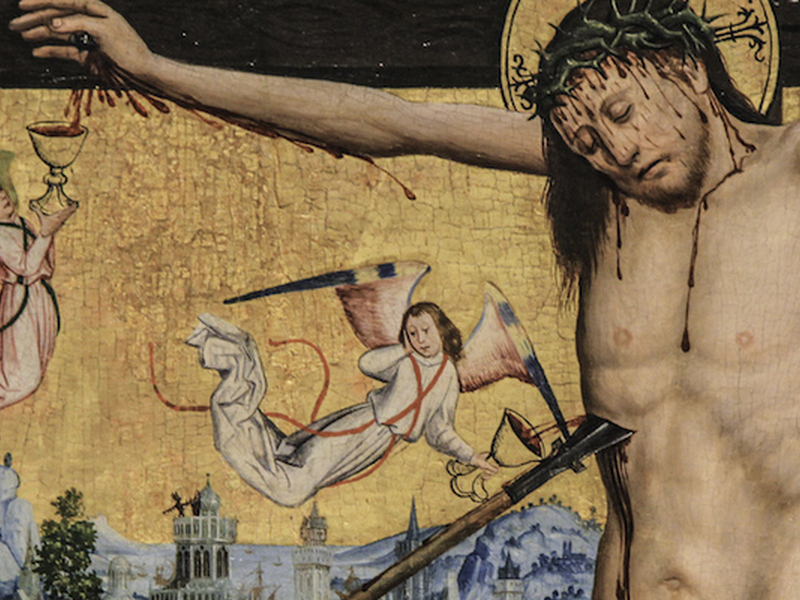
The idea of atonement is not a distinctly Christian, or even Hebraic, concept. It also makes an appearance in ancient Greek thought (among other places). The Greek tradition is by no means monolithic, so it isn’t possible to speak of a “Greek” concept of atonement. But there are certain commonalities…

by Gerald HiestandFebruary 18, 2016

aaron-burden-1ebsmyrau-s-unsplash
Acedia

Sloth, Song, Story

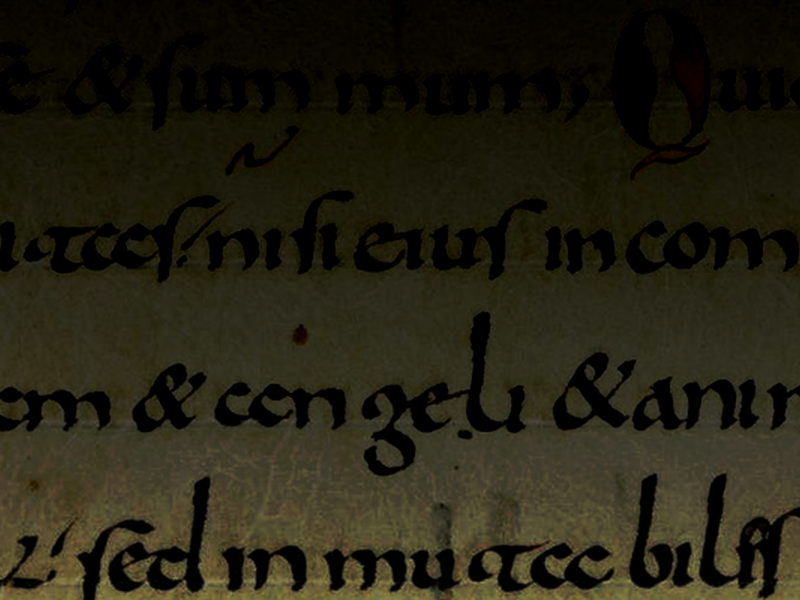
As we know, there are seven deadly or capital sins. Prior to the list of the seven deadly sins there was a list of eight evil thoughts or demons. It was made by an Eastern monk, Evagrius Ponticus. When the list was transposed to the West, one evil thought was…

by Bogumil JarmulakFebruary 16, 2016
medievalilluminatedmanuscript
1 Corinthians

What the Corinthians Did Right

Paul’s letter to the Corinthians is one of those epistles in Scripture to which pastors and teachers resort to show the church everything that it shouldn’t be . There is, of course, good reason for this. The Corinthian church was filled with all sorts of problems. Personality cults (i.e., factions),…

by Bill SmithFebruary 11, 2016
cross-2
Church Calendar

To Ash or Not To Ash

Today is Ash Wednesday , and as many Christians of the Protestant formerly "low church" persuasion are reacquiring some of the good and ancient practices of the church, one question in particular comes to the front: to ash or not to ash? That is, while many of us are finding…

by Timothy LeCroyFebruary 10, 2016
img_4660-2
Church Calendar

40+ Reasons To Observe Lent

A murder of tweets. To observe Lent rightly, we have to be persuaded that we already stand in God’s favor. Ash Wednesday reminds us to number our days. It helps us gain a heart of wisdom (Psalm 90:12). We keep Easter to manifest and deepen our prior share in resurrection.…

by Peter LeithartFebruary 9, 2016
medievalilluminatedmanuscript
Matthew

New Moses

Dale C. Allison, Jr., The New Moses: A Matthean Typology (Minneapolis: Fortress, 1993). Dale Allison 1993 book is a superb case study in the New Testament's use of the Old. Though he focuses on only a single typology (Christ as a new Moses) in only a single gospel (Matthew), Allison's…

by Peter LeithartFebruary 4, 2016

Showing page 136 of 309

See all
See all

Tangled

E mma Tarlo's recent Entangled is a study of the global market in human hair. In a TLS review , Kathryn Hughes describes a “multi-billion-dollar global hair market.” Tarlo explores “the processes by which the greasy hairballs unpicked in Mandalay get refashioned into ‘frothy toppers' and ‘dome bowlers' in New…

December 2, 2016

Stop!

“S cott Alexander” (a pseudonym) applies some common sense the media characterization of Trump as an “openly racist” candidate dedicated to courting the KKK. He estimates, for instance, that there are 3-5000 Klansman in the US. Over the course of the campaign, he estimates that at least 14,000 articles were…

December 2, 2016

Three Forms of Madness

I n an editorial introduction to King Lear , GK Hunter observes that the play depicts three forms of madness. First, “The Fool has a quality of savage innocence that the other two lack. . . . His stock consists in the main of songs and riddles, nonsense-rhymes and a…

December 2, 2016

Slapstick Tragedy

A lexander Leggatt ( King Lear ) captures the oddity of King Lear by calling attention to the blunt physicality of the play: “The tortured body is a recurring image. . . . According to J.I.M. Stewart, ‘The blinding of Gloucester represents a sort of crystallizing of this element of…

December 2, 2016

Structure and Theme in Lear

N ote #1: Act 1, scene 2 of King Lear , which initiates Edmund's plots against father Gloucester and brother Edgar, is structured chiastically: A. Edmund's first soliloquy. B. Edmund with Gloucester, accusing Edgar. C. Edmund's second soliloquy. B'. Edmund with Edgar, sowing suspicion that Gloucester is suspicious of Edgar.…

December 2, 2016

Freak of History

Diarmaid MacCulloch starts his study of the Reformation, All Things Made New , with a sketch of the medieval world. It's a bit rosy, emphasizing the unity of medieval Europe: “The most noticeable characteristic of Western Europe in what we call the Middle Ages was its cultural and religious unity…

December 2, 2016

Showing page 227 of 2212

Browse by Category

In Medias Res

Your weekly digest for all things Theopolis.

Donate

Theopolis is nearly 100% donor-supported. Consider joining us on our mission.