Theopolis Logo

Writing

Explore our collection of theological essays, biblical studies, and reflections on faith and culture.

See all
tanner-mardis-xuxghzhibn4-unsplash-1-2
Biblical Studies

Tweets-turned-Notes on the Bible’s Chronology

Summary In what follows, I will consider the “year-stamps” employed in Scripture, i.e., statements of the form, “Such-and-such an event took place in the Xth year of Y.” In the process, I will suggest some ways in which the Biblical narrative might relate to events in the extra-Biblical world, though…

by James BejonJuly 16, 2019
durer-prodigal-son-2
Luke

Perspectives on the Prodigal, (Part 2)

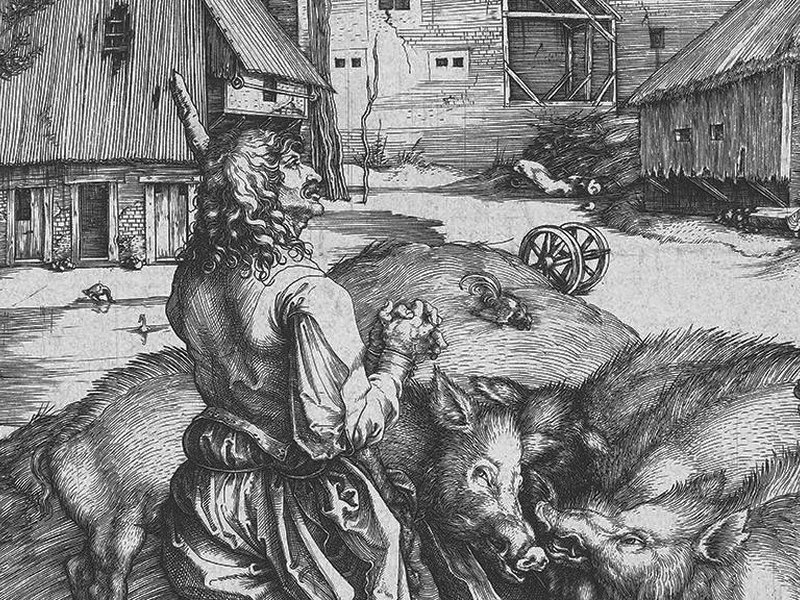
In the first essay on the parable of the Prodigal Son, I suggested that the problems commentators and others encounter in interpreting Jesus three-part parable are not accidental. These are not just problems in our ignorance of cultural background. They are intentional features of the stories —stories designed to poke…

by Ralph Allan SmithJuly 11, 2019
durer-prodigal-son-2
Luke

Perspectives on the Prodigal, (Part 1)

The story of the Prodigal Son is perhaps the most well-known story in the Bible. As others have observed, it may also be one of the most misunderstood. In two short essays, I will point out features of this story that are commonly neglected, aspects of Jesus’ parable that might…

by Ralph Allan SmithJuly 9, 2019
de-rijke-man-en-de-arme-lazarus-by-jacopo-da-ponte-16th-century
Luke

Lazarus and the Rich Man

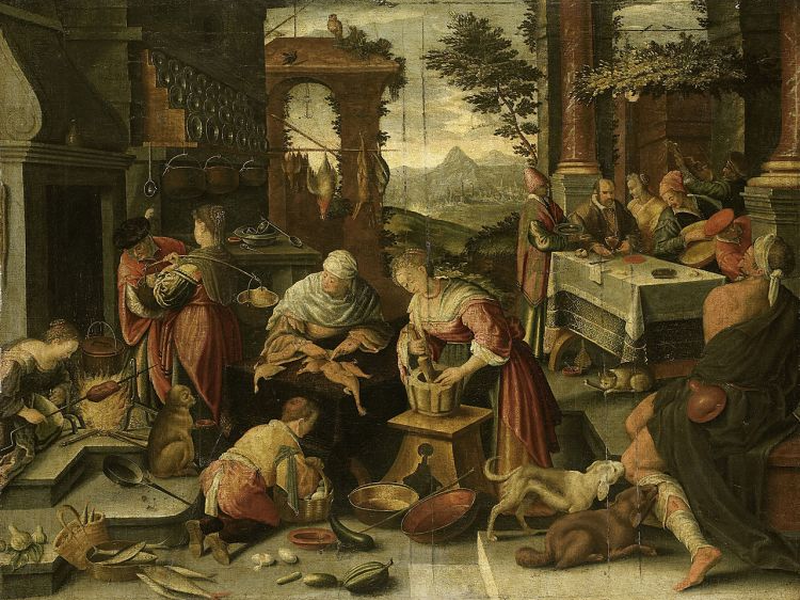
The parable of Lazarus and the nameless rich man is not an independent story. It is part of a long context that begins in Luke 15:1, where Jesus is eating with tax collectors and sinners and the scribes and Pharisees grumble. In response to their hardheartedness, Jesus tells a three-part…

by Ralph Allan SmithJuly 4, 2019
aaron-burden-uynrnfdkjwg-unsplash
Luke

Everybody has Dropsy - Luke 14:1-24

The Bible is written so that even when a reader cannot pick up on what might be deeper or more detailed aspects of a text, there is virtually always a message to be heard. In the ancient world, where the “reader” of Scripture would likely be a church official facing…

by Ralph Allan SmithJuly 2, 2019
communion
Biblical Theology

Fruit Trees and Grain Plants

The distinction between garden (or vineyard) and field begins in Genesis 2. This relates to the ordering of the formless world. Plants of the field are contrasted with the garden planted by God in Genesis 2:5&8. Later on, under the Old Covenant the Israelites will be required to keep their…

by James B. JordanJune 27, 2019

Showing page 77 of 309

See all
See all

Referees, Players, and Religious Liberty

I recently had an argument with my Lutheran brother concerning the subject of my forthcoming book, The End of Protestantism . The book is a plea to Protestants to pursue a deeper and wider unity within the church. My brother wasn’t convinced, and his response was severalfold: Lutherans aren’t going…

September 15, 2016

Jubilee

W illiam Johnstone points out ( 1 & 2 Chronicles , 1.15–16) that the Chronicler’s chronology “is related to the jubilee (Lev. 25:8–55): in the fiftieth year ‘you shall return, every one of you, to your property and every one of you to your family’ (Lev. 25:10). For C, the…

September 15, 2016

Stand, Serve, Sing

I t’s an ancient insight: Music tunes the soul. Music doesn’t just express what we’re feeling. It forms emotions. Emotions aren’t simply sensations. Emotions, as Robert Solomon has argued, are judgments about the world. Anger is a judgment concerning an outrage or injustice; fear is a judgment that a threat…

September 13, 2016

Sacraments and the Liberal Establishment

D avid L. Schindler ( Ordering Love ) exposes the “instrumentalism” that functions as the public philosophy of what he describes as the “juridical state,” an instrumentalism that he does not hesitate to describe as “violent” insofar as it excludes, in the name of fairness, any “ order of truth…

September 13, 2016

Liturgy and Totalizing Politics

I n his Political Worship , Bernd Wannenwetsch observes that “Worship again and again interrupts the course of the world. Through worship the Christian community testifies that the world is not its own. And this means also that it is not kept alive by politics, as the business of politics,…

September 12, 2016

Learning Like a Tudor

S cott Newstok urges students to learn like Shakespeare in a convocation address at Rhodes College . That means learning rhetoric: “in the Renaissance, rhetoric was nothing less than the fabric of thought itself. Because thinking and speaking well form the basis of existence in a community, rhetoric prepares you…

September 9, 2016

Showing page 254 of 2212

Browse by Category

In Medias Res

Your weekly digest for all things Theopolis.

Donate

Theopolis is nearly 100% donor-supported. Consider joining us on our mission.