Theopolis Logo

Writing

Explore our collection of theological essays, biblical studies, and reflections on faith and culture.

See all
tanner-mardis-xuxghzhibn4-unsplash-1-2
Biblical Studies

Tweets-turned-Notes on the Bible’s Chronology

Summary In what follows, I will consider the “year-stamps” employed in Scripture, i.e., statements of the form, “Such-and-such an event took place in the Xth year of Y.” In the process, I will suggest some ways in which the Biblical narrative might relate to events in the extra-Biblical world, though…

by James BejonJuly 16, 2019
durer-prodigal-son-2
Luke

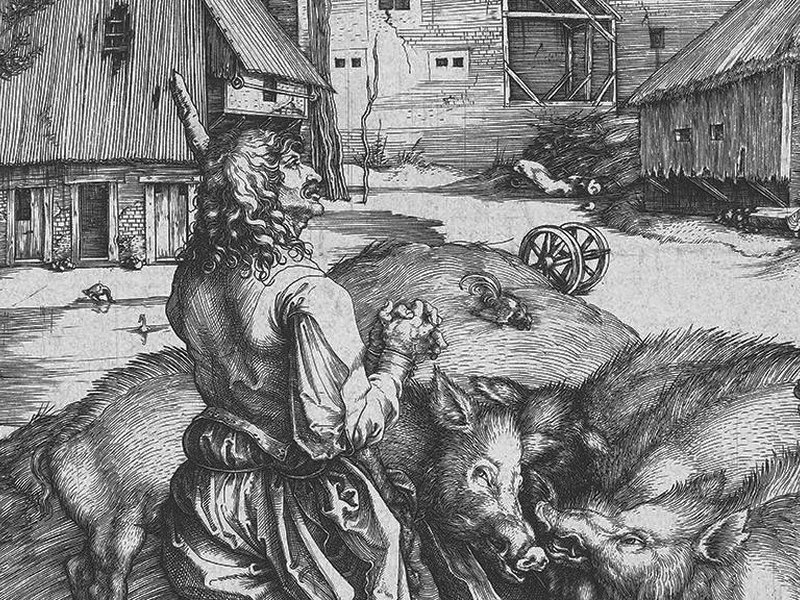
Perspectives on the Prodigal, (Part 2)

In the first essay on the parable of the Prodigal Son, I suggested that the problems commentators and others encounter in interpreting Jesus three-part parable are not accidental. These are not just problems in our ignorance of cultural background. They are intentional features of the stories —stories designed to poke…

by Ralph Allan SmithJuly 11, 2019
durer-prodigal-son-2
Luke

Perspectives on the Prodigal, (Part 1)

The story of the Prodigal Son is perhaps the most well-known story in the Bible. As others have observed, it may also be one of the most misunderstood. In two short essays, I will point out features of this story that are commonly neglected, aspects of Jesus’ parable that might…

by Ralph Allan SmithJuly 9, 2019
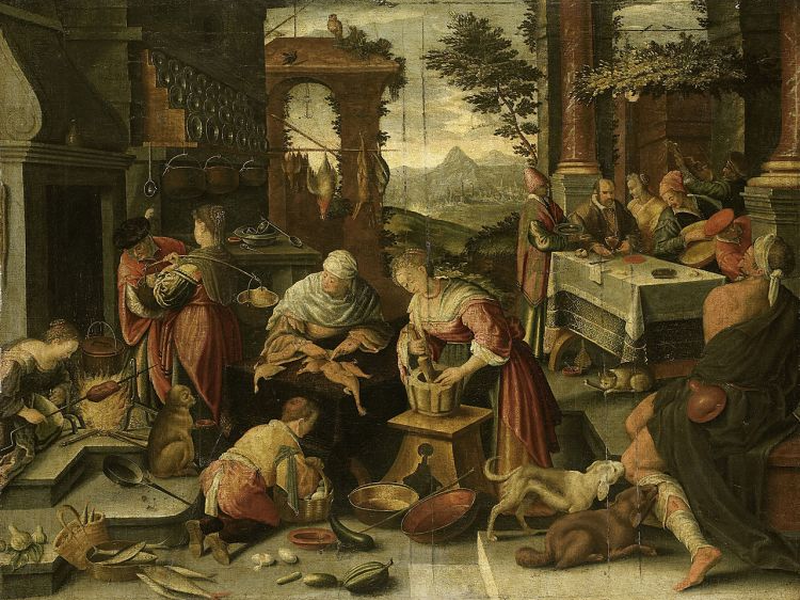
de-rijke-man-en-de-arme-lazarus-by-jacopo-da-ponte-16th-century
Luke

Lazarus and the Rich Man

The parable of Lazarus and the nameless rich man is not an independent story. It is part of a long context that begins in Luke 15:1, where Jesus is eating with tax collectors and sinners and the scribes and Pharisees grumble. In response to their hardheartedness, Jesus tells a three-part…

by Ralph Allan SmithJuly 4, 2019
aaron-burden-uynrnfdkjwg-unsplash
Luke

Everybody has Dropsy - Luke 14:1-24

The Bible is written so that even when a reader cannot pick up on what might be deeper or more detailed aspects of a text, there is virtually always a message to be heard. In the ancient world, where the “reader” of Scripture would likely be a church official facing…

by Ralph Allan SmithJuly 2, 2019
communion
Biblical Theology

Fruit Trees and Grain Plants

The distinction between garden (or vineyard) and field begins in Genesis 2. This relates to the ordering of the formless world. Plants of the field are contrasted with the garden planted by God in Genesis 2:5&8. Later on, under the Old Covenant the Israelites will be required to keep their…

by James B. JordanJune 27, 2019

Showing page 77 of 309

See all
See all

Spielberg's Ambivalence

K risten Thompson devotes several pages of her Apocalyptic Dread , a study of apocalyptic in contemporary film, analyzing Spielberg's 2005 remake of War of the Worlds . She points to the “film’s extensive references to 9/11 and terrorism as the new marker of dread in the twenty-first century.” She…

May 26, 2016

The Sacrament of the Suffering Body

F elecia Wright McDuffie's To Our Bodies Turn We Then is a study of Donne's understanding of the body as “word and sacrament.” Drawing from Donne's poetry, sermons, and prose writing, she summarizes Donne's view of the human body as created, fallen, redeemed, and recreated. All along the way, McDuffie…

May 25, 2016

Dark Music

P utting “film noir ” and “musical” in the same sentence may seem absurd. If any film genre is sunlight and sentiment, seething with clappy optimism, it's the musical. And noir is something different. Sheri Biesen's Music in the Shadows shows that the two forms have cohabited for decades: “The…

May 25, 2016

Unchosen Temples

W ho teaches your U.S.A. children how to choose their temple? What to love enough not to think two times?” These questions are posed in the broken English of Remy Maranthe, one of the Wheelchair Assassins who populate David Foster Wallace’s Infinite Jest . After Canada is forced into the…

May 25, 2016

Creation and Recreation

C J Labuschagne points out in his Numerical Secrets of the Bible that “Exod 39:32–43 tells how the Tabernacle with all its equipment was presented to Moses, who inspected all the work and saw that the craftsmen had done their work according to the command of the Lord, and he…

May 24, 2016

God Speaking to God

C J Labuschagne ( Numerical Secrets of the Bible ) highlights the use of 11-fold literary patterns in the Pentateuch. The creation account, for instance, uses the formula “and God said” eleven times, concluding with the creation of Eve: “This coherence is found also in the eleventh divine utterance in…

May 24, 2016

Showing page 286 of 2212

Browse by Category

In Medias Res

Your weekly digest for all things Theopolis.

Donate

Theopolis is nearly 100% donor-supported. Consider joining us on our mission.