Theopolis Logo

Writing

Explore our collection of theological essays, biblical studies, and reflections on faith and culture.

See all
sixteen-miles-out-al48tflf4e8-unsplash
Food

Gluttony In The Bible (As Opposed To Gluttony In The American Church)

In the Bible, fatness is such a blessing, that it is especially hard to understand why wicked men are permitted to enjoy such a state. It requires a theodicy and faith in God. Thus: “For they have no pangs until death; their bodies are fat and sleek . They are…

by Mark HorneAugust 12, 2013

jeremy-yap-j39x2xx_8cq-unsplash
How to Worship

Biblical Worship (Video with James B. Jordan)

[fve]http://vimeo.com/71901553[/fve]

by Peter LeithartAugust 8, 2013
chris-bair-ndczc5739ck-unsplash
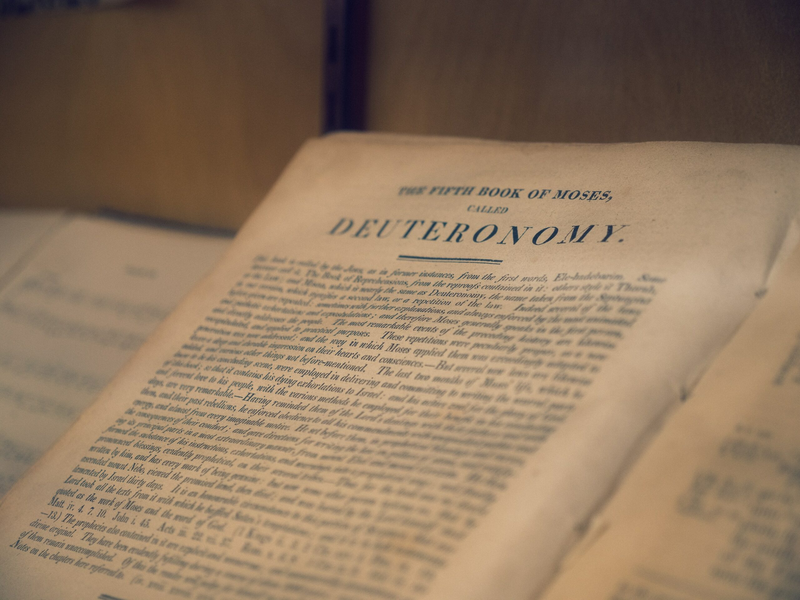
Deuteronomy

Holy Things for Holy People

The allusion to the Exodus story is contained in the first words of Deuteronomy 14:1 — “ye are the sons of Yahweh your God” — as well as in 14:2 in the use of the technical term translated “treasured possession,” “His own possession,” “peculiar people,” “precious people,” and so forth.…

by Ralph Allan SmithAugust 5, 2013
adam-and-eve-in-the-garden-of-eden-wenzel-peter
Deuteronomy

Forbidden Foods

I have argued that Deuteronomy 14:1-21 is an independent literary unit that applies the Third Word to the lives of Israelites from the time of Moses and Joshua. In this short pericope, Moses suggests broad and deep meaning by means of literary allusion to the stories of the creation and…

by Ralph Allan SmithJuly 31, 2013
david-weber-fwuo_zluhnw-unsplash
How to Worship

Pro-Sacramental Reformation

In his recently republished The New Creation , the late, delightful Herbert McCabe defends the priesthood of the plebs as roundly as anyone could want. Citing Hebrews, he claims that "there is an essential difference between the Christian community and the community of the Old Law, or any other religious…

by Peter LeithartJuly 29, 2013
eric-ward-7kqe_8meex8-unsplash
Augustine

Sexual Idolatry

Augustine famously prayed, “Our hearts our restless until they rest in You.” True indeed. Being creatures, we inherently sense our ontological poverty—our innate condition of dependence—and are compelled to find a sense of security. And it is also true—as Augustine’s own narrative painfully illustrates—that one of the things we most…

by Gerald HiestandJuly 24, 2013

Showing page 190 of 309

See all
See all

Rape and Consolatio

I n a 2013 article in Augustinian Studies , Melanie Webb argues that Augustine challenged a deeply entrenched Roman and North African “heritage of valorized suicides” in his treatment of rape, shame, and suicide in the first book of City of God . That heritage included Christian writers, like Jerome…

January 26, 2015

Guinea Pig Economy

It isn’t just Facebook. Over at Forbes.com , Parmy Olson explains how companies are not only gathering data from our computers and phones, but constantly subjecting us to tests. We have entered the Guinea Pig Economy, and everyone with an internet connection is part of the experiment: “Consumers have been…

January 26, 2015

Life By Faith

Faith is inescapable. Trust is embedded, in various ways, in all human actions. We act in order to achieve certain results, aiming at expected consequences. When we act, we trust that the actions we perform will achieve those consequences. I turn the handle on my sink, trusting that the city’s…

January 26, 2015

Mosaianic Secret

Exodus and Acts seem to offer different accounts of Moses’ killing of the Egyptian. In Exodus, there’s an emphasis on the secrecy of the act. Moses sees an Egyptian beating a Hebrew slave, looks around to see if anyone is watching, then kills the Egyptian and buries him in the…

January 26, 2015

Who Needs Books?

Naomi Baron’s Reading Onscreen argues that the value of digital reading depends on the kind of reading you’re doing: “digital reading is fine for many short pieces or for light content we don’t intend to analyze or reread.” But “eReading is less well suited for many longer works or even…

January 23, 2015
Parenting

Who needs Dads?

In his Raising An Emotionally Intelligent Child , John Gottman describes “Emotion Coaching” in parenting. This involves involves acknowledging a child’s negative emotions, using those moments of negative emotion as an opportunity to teach and engage the child, listening, helping the child put labels on his feelings, and setting parameters…

January 23, 2015

Showing page 472 of 2212

Browse by Category

In Medias Res

Your weekly digest for all things Theopolis.

Donate

Theopolis is nearly 100% donor-supported. Consider joining us on our mission.