Theopolis Logo

Writing

Explore our collection of theological essays, biblical studies, and reflections on faith and culture.

See all
paul-2
Romans

Notes on Scary Stuff in Romans 9

What shall we say then? Is there injustice on God’s part? By no means! For he says to Moses, “I will have mercy on whom I have mercy, and I will have compassion on whom I have compassion.” So then it depends not on human will or exertion, but on…

by Mark HorneFebruary 5, 2015
lunch-counter
American Politics

Covenants of Exclusion

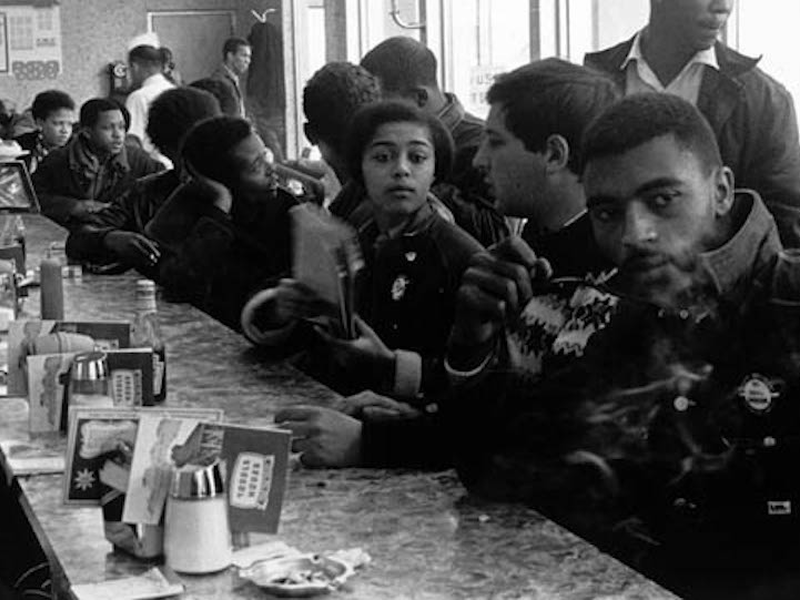
A hundred years ago, William Warley signed a contract to buy a house in Louisville, Kentucky from Charles Buchanan, a white man. Before closing the sale, Warley, who was black, learned that the lot was subject to a city ordinance barring blacks from occupying the premises if most of the…

by Brendan O'DonnellFebruary 3, 2015
shakespeare-2
Literature

The Bard and the Book

I concluded the first essay on this topic by saying that I would introduce three books about Shakespeare and the Bible, but I decided to introduce four instead. The three books become four are: Naseeb Shaheen, Biblical References in Shakespeare’s Plays (London: Associated University Presses, 1999) ; Hannibal Hamlin, The…

by Ralph Allan SmithJanuary 29, 2015
augustine-2
Augustine

Augustine on Pagan Virtue

My children attend a classical Christian school, situated in the independent “free church” evangelical tradition. Over the past few years they have been growing in their acquaintance with the world of Homer, Plato, Virgil, and Livy. They enjoy it, and I envy it. The school is a great school. My…

by Gerald HiestandJanuary 27, 2015
prodigal-son
Atonement

The Prodigal and the Cross

The Prodigal Son parable (Luke 15) has been a favorite of liberal theologians for a couple of centuries. It seems to be a parable designed for liberal sensibilities: An indulgent, accepting Father; forgiveness extended without a cross; a surly older brother who might represent the "conservative" face of religion who…

by Peter LeithartJanuary 22, 2015
sky-from-bridge
Ascension

Underground Man, Ascended Man

“I want now to tell you, gentlemen, whether you care to hear it or not, why I could not even become an insect. I tell you solemnly, that I have many times tried to become an insect. But I was not equal even to that. I swear, gentlemen, that to…

by Richard BledsoeJanuary 20, 2015

Showing page 161 of 309

See all
See all

Risen City

Sanballat hears about Nehemiah’s project of rebuilding Jerusalem after the exile, he becomes angry and mocks the Jews: “Can they finish in a day? Can they revive the stones from the heaps of dust even the burned ones” (Nehemiah 4:2). The taunt is theologically significant. “Finish” is kalah , the…

December 16, 2014

Right Hand

John describes the angel’s position in Revelation 10 in great detail. The angel straddles land and sea, but for some reason John thinks it important to record that the angels right foot is on the sea and left foot on the land. Assuming that the shoreline in question is the…

December 16, 2014

The Story of Pastor Tom Clark

Several months ago, I wrote a First Things essay on the life and ministry of Pastor Tom Clark of Tri-City Covenant Church in Somersworth, New Hampshire. Tom died shortly after that essay appeared, but during his last days we were able to spend a couple of days listening to and…

December 16, 2014

Impure Feminism

Irene Gedalof argues in Against Purity that feminists have been too much in the grip of a binary logic that actually undermines feminism. What she has in mind is the notion that women can be defined in terms of a pure category of “Woman” or “Feminine.” On the contrary, women’s…

December 15, 2014
Anthropology

Early Ethnography

Brian Pennington’s Was Hinduism Invented? includes a brief outline of William Ward’s 1817 treatise on the History, Literature and Religion of the Hindoos . He describes the missionary Ward as one of the “first Europeans to adopt an ethnographic stance” (79). Pennington continues: “He turned from linguistic and textual studies…

December 15, 2014
Shakespeare

Shakespeare’s Trials

David Wootton’s TLS review of Quentin Skinner’s Forensic Shakespeare is a primer on Elizabethan law and legal rhetoric. Wootton tells us, “We tend to think rhetoric is about using figures of speech, but that was only a small part of the orator’s training, which relied both on textbooks inherited from…

December 15, 2014

Showing page 486 of 2212

Browse by Category

In Medias Res

Your weekly digest for all things Theopolis.

Donate

Theopolis is nearly 100% donor-supported. Consider joining us on our mission.