Theopolis Logo

Writing

Explore our collection of theological essays, biblical studies, and reflections on faith and culture.

See all
chris-bair-ndczc5739ck-unsplash
Ephesians

“Be Holy for I am Holy”

Below is an excerpt from Mark Horne’s manuscript from his forthcoming commentary on Ephesians, specifically on Paul’s reference to Christians as “saints” (Ephesians 1:1). “Paul, an apostle of Christ Jesus by the will of God, to the saints who are in Ephesus, and are faithful in Christ Jesus.” Paul greets…

by Mark HorneMarch 25, 2025
300129rgsdl
Exodus

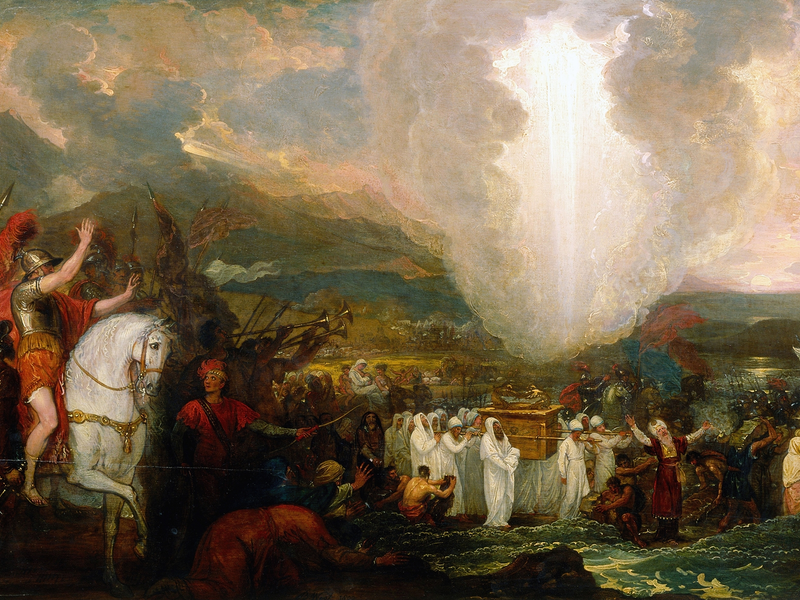
The Perishable in the Ark of the Covenant

There was nothing in the ark except the two tablets that Moses put there at Horeb, where the LORD made a covenant with the people of Israel, when they came out of Egypt (2 Chronicles 5:10). When Solomon finally brought the ark of the covenant to the finished temple in…

by Jonathan WhiteMarch 18, 2025
tim-marshall-k2u71wv2ei4-unsplash
Exodus

The Stages of a Man’s Life and the Second Table of the Law

In As You Like It , Shakespeare famously describes the seven ages of a man’s life. The division of man’s life into stages is not an invention by Shakespeare, nor merely a common medieval artifice, but an expression of the real journey taken in life. Shakespeare seems to divide up…

by Ryan HandermannMarch 13, 2025
brent-cox-2plebdf1nba-unsplash
Christology

The Essence of God’s Image

Is there a chief characteristic which best illumines the image of God in Man? What is it exactly that makes Man as a lens through which to see God? Moses thoughtfully and deliberately escorts the reader to the characteristic showcased above all else: humility. Though much ink has been spilled…

by Ben LoveladyMarch 11, 2025
josh-applegate-toksfdmznkg-unsplash
Liturgy

Two Ways of Being Liturgical: A Baptist Response to the High Church Exodus

Note: This essay is adapted from a talk delivered at the Howell E. Jackson Committee conference on “Foundations of Baptist Education,” held at Union University, Oct. 4-5, 2024. It’s no secret that evangelicals are converting to High Church traditions, a term I will use to refer to Anglo-Catholicism, Roman Catholicism,…

by Ryan SinniMarch 4, 2025
raimond-klavins-mdlseox3vzo-unsplash
Icons

Don’t Convert: Icons and Images in the Early Church

In recent years, there has been a flurry of conversions from Protestant Christianity towards Eastern Orthodoxy and Roman Catholicism, at least in part due to their supposed early church heritage relative to Protestantism. In the words of Rod Dreher, a former Methodist who converted to Eastern Orthodoxy, “Many evangelicals seek…

by John CarpenterFebruary 25, 2025

Showing page 12 of 309

See all
See all
Uncategorized

Gone Fishin’

June 24, 2014

Impure Holiness

Isaiah 65 piles up charges of idolatry and impurity against Israel. They are supposed to offer continuous sacrifices, but their sacrifices are a continuous provocation (65:3). They build their altars from bricks rather than from stones, as the law requires (65:3). The sacrificial smoke doesn’t sooth Yahweh but is an…

June 23, 2014

Coding Trance

In an essay at Slate , David Auerbach tells a story about John Harris, a game-programmer: “While working on an 8-bit Atari port of Frogger in the early 1980s, Harris said, “’ glued my hands to the keyboard.’ One day he started programming midafternoon, losing himself in work. The next…

June 23, 2014

Smart Dumb

P oet Kenneth Goldsmith gives a taxonomy of smartness and dumbness. There are various permutations. He prefers dumb, but it has to be smart dumb: “There is dumb dumb and there is smart dumb. There is also smart smart. Dumb dumb is plain dumb and smart smart is plain smart.…

June 23, 2014

Kynics and Cynics

In a 1987 review of Peter Sloterdijk’s Critique of Cynical Reason , Neil Wilson observes that for Sloterdijk “cynicism is enlightenment turned sour: a sourness which results from the self-denial that self-survival in a society dominated by instrumental rationality requires” (55). It is not a new attitude, but an ancient…

June 23, 2014

Physiognamy’s revenge

Peter Sloterdijk distinguishes in his Critique of Cynical Reason (139-40) between the objectifying and distancing aims of Enlightenment thought and the inescapable “physiognomic sense” of life among fleshly humans: “Whereas the process of civilization, whose core is constituted by the sciences, teaches us to distance ourselves from people and things…

June 23, 2014

Showing page 581 of 2212

Browse by Category

In Medias Res

Your weekly digest for all things Theopolis.

Donate

Theopolis is nearly 100% donor-supported. Consider joining us on our mission.