Theopolis Logo

Writing

Explore our collection of theological essays, biblical studies, and reflections on faith and culture.

See all
screen-shot-2022-05-12-at-12-07-23-pm
Leviticus

The Theology of the Drink Offering

The drink offering or libation ( nesek ) is mentioned in only three places in the book of Leviticus. When the sheaf of the firstfruits was waved before the Lord, a grain offering was to be burned, along with "its libation, a fourth of a hin of wine [approx. one…

by Peter LeithartJuly 17, 2018

aaron-burden-qjdzyt_k8xg-unsplash
Atonement

Limited Atonement & J. I. Packer

When I became a Calvinist it wasn't long before I learned that John Owen’s The Death of Death in the Death of Christ was regarded as the masterful treatise on what is known as "Limited Atonement"--the "L" in the TULIP mnemonic device for "the five points of Calvinism." This wasn't…

by Mark HorneJuly 12, 2018
30211-bathsheba-800w-tn
Hermeneutics

Bathsheba: The Real Story

One of the advantages of paying very close attention to the details in the Bible, especially chronological and genealogical details, is that they can shed light on situations that don’t seem to make much sense apart from them. One such situation is that of Bathsheba. It appears that Bathsheba willingly…

by James B. JordanJuly 10, 2018
img_7664
Leviticus

The Oddness of the Feast of Booths

The Feast of Ingathering in the seventh month of the Sinaitic calendar is also called the Feast of Sukkoth, of Booths, also called Feast of Tabernacles. I have usually called it by that last phrase, and it is the most common today; but there is a problem: A tabernacle is…

by James B. JordanJuly 5, 2018
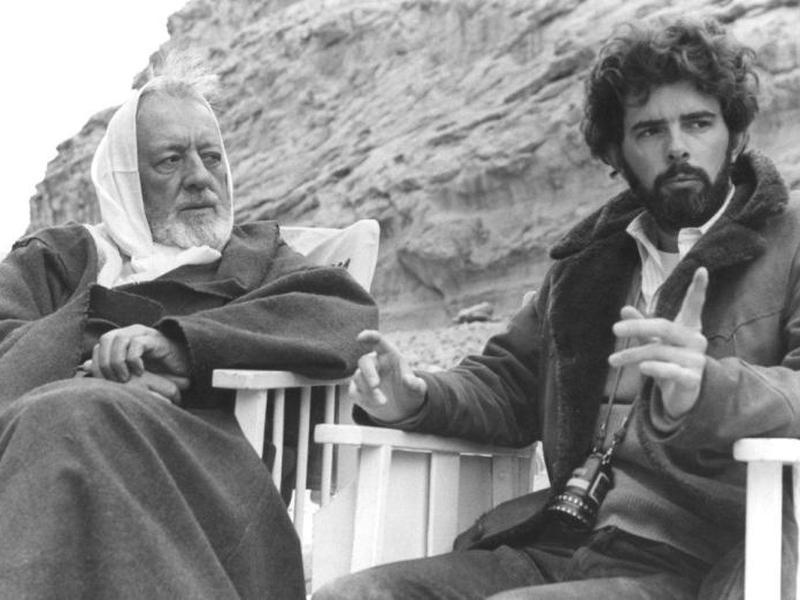
alec-guinness-with-george-lucas
Matthew

A Universe Less Expanded

When Matthew’s Gospel was first read aloud to the fledgling Christian congregations, the experience must have been like seeing the words “A long time ago in a galaxy far, far away…” appear afresh on cinema screens in 1999. Yet, unlike The Phantom Menace, the New Testament did not disappoint. Why?…

by Mike BullJuly 3, 2018
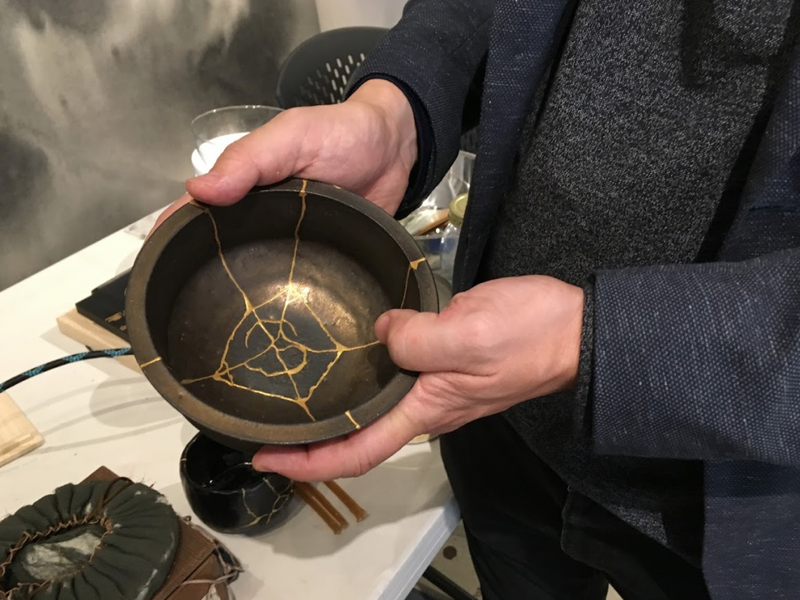
screen-shot-2018-06-28-at-9-29-39-am
Art

Seeking Integration in a Fragmented World: Kintsugi Integration

Fragmentation and integration are phenomena which artist Makoto Fujimura feels bodily, and about which he is concerned profoundly. What do these mean for him? How may we draw his insights into this ongoing consideration—itself integrative—of integration in a fragmented world? Thus far I have been acquainting you with matters already…

by Esther Lightcap MeekJune 28, 2018

Showing page 91 of 309

See all
See all
Uncategorized

Not Monolithic

Many Protestants still think of the Catholic church as a monolithic, uniform church. It’s been a long time since Catholics have thought of the church that way. Aloys Grillmeier sums up the results of Vatican II’s embrace of communio ecclesiology: “catholicity is understood as a union of opposites. The people…

May 24, 2014

What Science Cannot Know

Nicholas Rescher argues in Unknowability that there are certain things that logically cannot be known, such as “an idea that will never occur to any human being.” Prominent among unknowables are the unknowables of science. Given the way scientific research and discovery work, it is impossible for present science to…

May 24, 2014

Can the Dead Praise?

Heaven, earth, sea: That three-decker universe is standard-issue in biblical cosmology (Exodus 20:11; Psalm 69:34; 96:11; 135:6; 146:6; Revelation 10:6). Occasionally a second heaven is added to the scheme (Nehemiah 9:6). But when the Lamb ascends to take the book, praise arises from four dimensions of creation: heaven, earth, under…

May 23, 2014

Semper, ubique, ab omnibus?

Thomas Guarino ( Vincent of Lerins ) outlines Newman’s arguments against the Vincentian canon (orthodoxy is what is taught always, everywhere, by everyone). In his Essay on Development , Newman provides historical examples “to demonstrate that the first rule is, at beast, a leaky and dubious criterion. As Newman boldly…

May 23, 2014
Uncategorized

Fresh Logic

In his preface to Receptive Ecumenism , Paul Murray explains that the “driving assumption is that if all were to be asking and acting upon this question, even relatively independently of each other, then all would be moving, albeit somewhat unpredictably, and in such a fashion as might open up…

May 23, 2014

Receptive Ecumenism in Practice

As Avery Dulles recounts it in The Catholicity of the Church , the reforms of Vatican II came partly from what Paul Murray calls “ receptive ecumenism ,” an ecumenism of attentive listening to the other. Dulles wasn’t exactly a receptive ecumenist himself. While acknowledging that “the Church can certainly…

May 23, 2014

Showing page 603 of 2212

Browse by Category

In Medias Res

Your weekly digest for all things Theopolis.

Donate

Theopolis is nearly 100% donor-supported. Consider joining us on our mission.