Theopolis Logo

Writing

Explore our collection of theological essays, biblical studies, and reflections on faith and culture.

See all
sacre-bleu-r__kixb0i5m-unsplash
Death

Integrity

Integrity seems to have two meanings. It can mean the quality of being honest and having strong moral principles. A man of integrity is a person of honour, rectitude and probity, truthful and trustworthy. Integrity also describes a state – the quality of being whole and undivided. If things are…

by Arthur KayMarch 19, 2015

emmanuel-phaeton-1bwmfmvybi8-unsplash
Psalms

Psalm 32 Commentary

Get the Psalm 32 Translation here Psalm 32 is the first part of Ps. 32-33, ending with a call to praise that is answered by what follows. Ultimately the psalm needs to be considered as a whole, but what we call Psalm 32 does have its own structure and logic,…

by James B. JordanMarch 18, 2015
laughter
Humor

On Crude Humor

You wouldn’t hit a man with glasses would ya? No, of course not. I’d hit him with a bat. In our culture of frivolity it is tempting for Christians to think that solemnity should be our defining attribute. The coarseness of the world impedes us from enjoying any sort of…

by Remy WilkinsMarch 17, 2015
standingonamountain
Creation

Maker of Heaven and Earth, Part 2

Taking a cue in my last post from early Christian apologetics, I suggested that if we wish to articulate and defend a doctrine of creation ex nihilo in contemporary theology, we would do well to offer a thick description of Yahweh’s divine monarchia (his sole rule or sovereignty). Rather than…

by Stephen LongMarch 12, 2015
mountain-top-2
Creation

Catechism of the Universe

I’m not sure we really understand the insidiousness of unbelief. It is not merely to reject the gospel of Jesus, the existence of a Creator God, or to question biblical morality. At its core, unbelief is ingratitude, and by the very nature of this ingratitude, it must ultimately reject every…

by Toby SumpterMarch 10, 2015
jonah-under-gourd
Mark

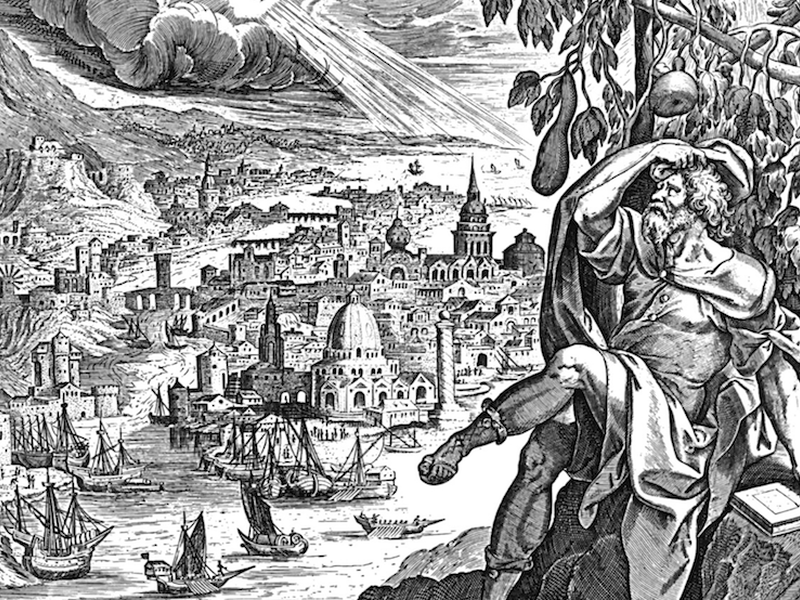
The True Jonah and Lenten Fasting

Mark’s narrative of the baptism of Jesus is characteristically brief: “In those days Jesus came from Nazareth of Galilee and was baptized by John in the Jordan. And when he came up out of the water, immediately he saw the heavens being torn open and the Spirit descending on him…

by Arthur KayMarch 9, 2015

Showing page 158 of 309

See all
See all

Bloody Christians

Rabbinic Judaism, Stephen Geller suggests, is the “triumph of Deuteronomy and the Word.” After the fall of the temple especially, the place of the cult was taken by prayer and the liturgy. The literary temple became far more important than any possible future building. And with the end of the…

March 7, 2014

Vocal Silence

Michel Anteby’s Manufacturing Morals is an “ethnography” of the Harvard Business School. It’s an odd book, very insight-the-HBS, but along the way he develops the intriguing notions of “vocal silence.” Routine seems to rob individuals of responsibility. But most routines, Anteby points out, require some degree of responsible judgment: “Police…

March 6, 2014

Traumatic Neighbors

In his contribution to The Neighbor , Zizek offers this typically contrarian, typically extreme, description of the impact of God’s command to love the neighbor: “What gets lost in this ‘critique of ethical violence’ is precisely the most precious and revolutionary aspect of the Jewish legacy. Let us not forget…

March 6, 2014

Rivers

Rivers have a unique place in biblical cosmology. Though watery, rivers are unlike the sea, which always threatens to overwhelm the land. Channeled, water becomes life-giving. They keep land fruitful, set boundaries between peoples or join them as liquid roads. A river is water brought into service to human needs,…

March 6, 2014

Gratitude according to Barth

Someone asked me recently if my Gratitude includes a section on Barth. It doesn’t, and I’m sure this is not the last time I will turn sheepish as I confess to a large, unconscionable gap in the book. It doesn’t make up for the oversight, but here are some summary…

March 6, 2014

Literary Facts

Stephen Geller opens an essay on blood in “P” by stating that he is treating the Pentateuch as a literary unit. What the “priestly editor” produced, he argue is not “patchwork aggregate signifying nothing” but “a work meaningful in the whole, a tapestry more than the sum of its woven…

March 6, 2014

Showing page 666 of 2212

Browse by Category

In Medias Res

Your weekly digest for all things Theopolis.

Donate

Theopolis is nearly 100% donor-supported. Consider joining us on our mission.