Theopolis Logo

Writing

Explore our collection of theological essays, biblical studies, and reflections on faith and culture.

See all
aaron-burden-h8s0pf2rcqs-unsplash
Galatians

The Restoration of the Galatians

While controversies over the writings of Paul continue in various corners of the intellectual globe, the word of God given through Paul and his scribe and all of the church’s interpreters and translators over the last two millennia is still readily available to the lofty and the lowly. Paul, as…

by Grace LangnessMarch 25, 2013

kiwihug-l4gw27xzn1i-unsplash
Deuteronomy

Law and History: How to Read the Law of Moses (Part 2)

The second in a series of studies in Deuteronomy. Deuteronomy 22:30: A man shall not take his father’s wife, and shall not uncover his father’s wing (Hebrew: kanaf ). There are a number of unusual features in this law that mark it out from the previous context, indicating that it…

by Ralph Allan SmithMarch 20, 2013
200403-moss-pilate-tease_pncfq5
History

Victimhood and the Gospel

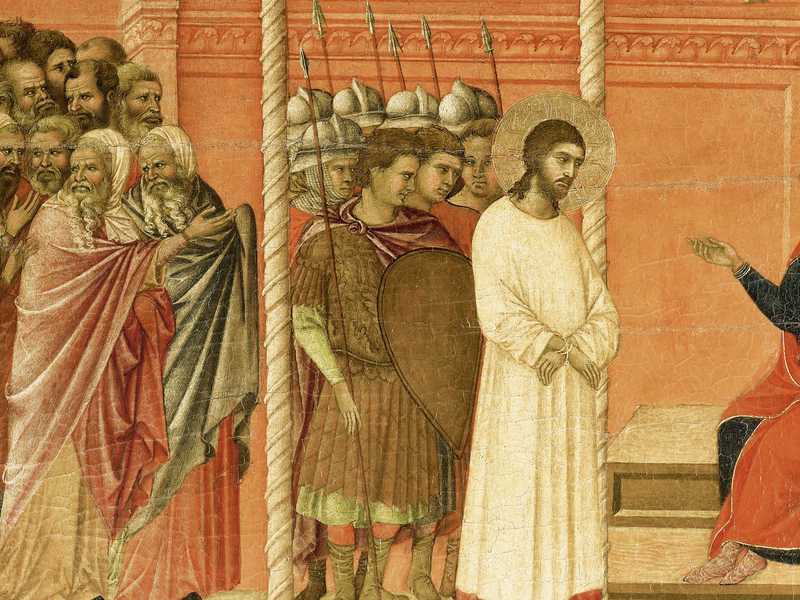
The texts of Christianity have been slowly at work, under the power of the Holy Spirit for 2000 years now. If we could be magically transported back into the world of two millennia ago, modern Americans would be shocked at the cruelty of that world. There was no concern for…

by Richard BledsoeMarch 18, 2013
aaron-burden-1ebsmyrau-s-unsplash
Luke

The Dysfunctional Family of the Gadarene Madman

The Story of the Gadarene Madman is told in all three synoptic Gospels (Matthew 8:28-34, Mark 5:1-20, Luke 8:26-37). Jesus ventures into a Gentile area when He passes over the Sea of Galilee. Upon disembarking from his boat, he is immediately met by a demon-possessed madman. Upon meeting Jesus, he…

by Richard BledsoeMarch 13, 2013
aaron-burden-1ebsmyrau-s-unsplash
Deuteronomy

Law and History: How to Read the Law of Moses

Part 1 of a multi-part series of studies on Deuteronomy 22:30-23:8. Eric Auerbach, in his classic work on Western literature, devotes his first chapter to contrasting Homer with the Bible. Of Homer, he writes of the “need of Homeric style to leave nothing which it mentions half in darkness and…

by Ralph Allan SmithMarch 12, 2013
markus-winkler-aid-xyrtlec-unsplash
Theopolis News

James Jordan in Korea, Japan

Trinity House Fellow James B. Jordan will be a speaker at an International Conference on Biblical Symbolism that will be held in Seoul on Monday, May 27 in 2013. He will address "The Importance of Biblical Symbolism and Symbolic Interpretation of the Bible." The conference will have three other speakers…

by Peter LeithartMarch 9, 2013

Showing page 197 of 309

See all
See all

Making the Man

Phyz.org reports that clothing still makes the man, but it may not be the most expensive of fashionable clothing that makes the best status statement. Harvard University researchers found that students attributed higher status to the more slovenly: “In one study, students were asked to rank the perceived professional status…

February 13, 2014

Exhausted Germans

Exhaustion has become a popular topic in Germany, many complaining “We are the most exhausted age.” Wolfgang Martynkewicz provides some contrary evidence, though he doesn’t appear to know it. In Das Zeitalter der Erschopfung , he examines German bourgeois and bohemians of the early twentieth century and finds that they…

February 13, 2014

Dead and Living One

Jesus’ declaration to the prostrate John (Revelation 1:17-18a) is a neat little, rich little chiasm: A. I am ( ego eimi ) B. First C. Last D. Living One C’. Became dead B’. Behold! Alive A’. I am ( eimi ) to ages of ages Several observations: First, the whole…

February 13, 2014

Apsu

In addition to heaven, earth, sea, and underworld, Mesopotamian cosmology believes in an intermediate region between the earth and the underworld, belonging to the god Ea. Though not entirely consistent in mythologies, and the relationship between the Apsu and the sea and the Apsu and the underworld is ambiguous, Horowitz…

February 12, 2014

Bloody Bible

David Biale observes in Blood and Belief that “the ancient Israelites were the only Near Easterners to make blood a central element in their religious rituals” (10). He fills out the picture: “There were, to be sure, magical and medical rituals mentioned in Akkadian, Sumerian, and Hittite texts that used…

February 12, 2014

Pollution and Blood

Drawing on the work of Jonathan Klawans ( Impurity and Sin in Ancient Judaism ) and others, David Biale ( Blood and Belief ) points to the difficulty of reconciling the “Priestly” and “Holiness” sections of Leviticus. In the “Priestly” code, found in Leviticus 11-15 and Numbers 19,. impurity is…

February 12, 2014

Showing page 684 of 2212

Browse by Category

In Medias Res

Your weekly digest for all things Theopolis.

Donate

Theopolis is nearly 100% donor-supported. Consider joining us on our mission.