Theopolis Logo

Writing

Explore our collection of theological essays, biblical studies, and reflections on faith and culture.

See all
aaron-burden-qjdzyt_k8xg-unsplash
Biblical Horizons

Twelve Fundamental Avenues of Revelation, Part 2

Theophanic revelation is historically progressive, or eschatological, in character. First of all, in Genesis 1:2, the Spirit appeared inside the creation, sent by the Father. After the creation of man, the Spirit worked and works with humanity to bring us to maturity, from Daughter to Bride to fruitful Mother. He…

by James B. JordanFebruary 28, 1997

gang-coo-nt7tyrsofwk-unsplash
Biblical Studies

The Calf of the Purification Offering

On the eighth day of the rite of "filling the hand," Aaron began his service at the altar. His first offering was a "calf" (Heb. `egel ), which served as a purification offering for himself and (apparently) his household (Leviticus 9:2, 8). This is striking for a couple of reasons.…

by Peter LeithartFebruary 27, 1997
sergey-shmidt-koy6flccy5s-unsplash
Exodus

A Blossom of Yahweh’s Garden

One of the distinctive items of the high priest’s clothing was the "golden plate" inscribed with the words "Holy to Yahweh" (Exodus 28:36-38). The word translated as "plate" is tsits , which literally means "flower." The verbal and noun forms are both used in Numbers 17:8, which describes Aaron’s rod…

by Peter LeithartFebruary 27, 1997
davide-ragusa-slgtmf8ejye-unsplash
Biblical Horizons

Squaring Off and Crossing Up

The square, rectangle, and cross shapes appear all over the sanctuaries God reveals in the Bible: Tabernacle, Solomon’s Temple, Ezekiel’s Temple, New Jerusalem. One thing that can be said right away about these designs, and the occasional perfect circle (the lavers), is that they do not occur in nature. They…

by James B. JordanJanuary 28, 1997
schlanger_jonah_prison_090913_620px
Biblical Studies

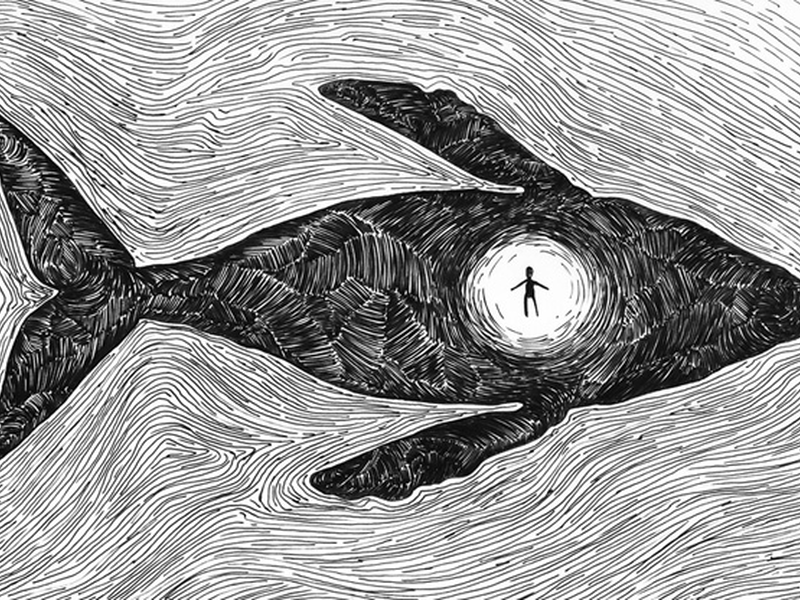
In the Fish: The Church as Tomb

"For just as Jonah was three days and three nights in the belly of the sea-monster, so will the Son of Man be three days and three nights in the heart of the earth" (Matthew 12:40). Some reflections on Jonah’s Big Fish have led to the following essay. Let me…

by James B. JordanJanuary 28, 1997
Hermeneutics

God Most High

Citing Melchizedek in Genesis 14:18-20, James Jordan has written that "the name of God in use among the nations was God Most High’" (Hebrew, `el `elyon ; in Through New Eyes , p. 176). In addition to Melchizedek, one could cite the example of Balaam, who invokes the Lord both…

by Peter LeithartJanuary 27, 1997

Showing page 260 of 309

See all
See all
Science

God or the Multiverse

Sheldrake ( The Science Delusion , 10-12) explains why physicalism - the hope that physics will finally vindicate materialism - is doomed. One reason is the “Cosmological Anthropic Principle,” which claims that “if the laws and constants of nature had been slightly different at the moment of the Big Bang,…

April 4, 2013
Science

Die to Live

During his PhD research, Rupert Sheldrake ( The Science Delusion , 1-2) made an original discovery about plant cells: “dying cells play a major part in the regulation of plant growth, releasing the plant hormone auxin as they break down in the process of ‘programmed cell death.’ Inside the growing…

April 4, 2013
History

Constantine and Constantinianism

Constantine permitted transfer of legal cases from civil to ecclesiastical courts, and also permitted ministers to manumit slaves. Both, Potter says ( Constantine the Emperor , 181 ), were steps that effectively turned clergy into civic authorities. On the first decision, Potter notes that “The main problem with Constantine’s decision,…

April 3, 2013
History

Turning point

TD Barnes has vigorously contested popular ideas of the Edict of Milan: It was not issued in Milan and didn’t affect Italy; it didn’t legalize Christianity, which was already legal; it was not an edict. This can leave the impression that the declaration of Licinius on June 13, 313 was…

April 3, 2013
History

What Did Constantine Do?

Potter ( Constantine the Emperor , 95) asks what Constantine was doing during the great persecution. His answers are speculative; we don’t and can’t know for sure, since Constantine’s feelings and thoughts were never recorded. But it is a worthwhile speculation: “He was a visible member of the court; many…

April 3, 2013
History

Burkhardt redux

David Potter’s Constantine the Emperor has many virtues. Potter is hugely well-informed about Roman history, and is able to place Constantine in his context like few others. His discussion of Diocletian’s “interventionist” policy (his Price Edict and his edicts regarding Christianity) is superb, as is his sense of the limits…

April 3, 2013

Showing page 760 of 2212

Browse by Category

In Medias Res

Your weekly digest for all things Theopolis.

Donate

Theopolis is nearly 100% donor-supported. Consider joining us on our mission.