Theopolis Logo

Writing

Explore our collection of theological essays, biblical studies, and reflections on faith and culture.

See all
49980-nicolas_poussin_-_the_judgment_of_solomon_-_wga18330-800w-tn
Biblical Studies

Advice From a Sojourner, Part 2

In our first essay in this series ( part 1 ), we saw that Proverbs 30 opens with a puzzle, a cryptic sentence that challenges the reader to search out a matter in order to gain understanding. "It is the glory of God to conceal a matter, but the glory…

by James B. JordanOctober 26, 1989
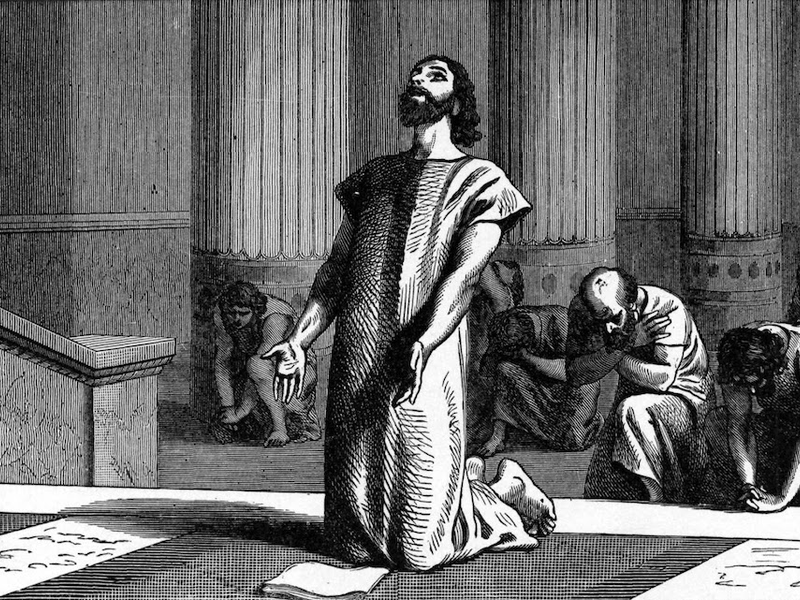
hezekiahs-prayer-2
Isaiah

Hezekiah’s Sign

The story of Hezekiah’s illness and recovery is familiar to every child who has attended Sunday School. Informed that he would die, faithful King Hezekiah pleaded in tears for a longer life. God heard his prayers and saw his tears, and promised fifteen more years. As a sign that He…

by Peter LeithartOctober 13, 1989
screen-shot-2021-08-12-at-2-57-54-pm
Proverbs

An Antidote for Yuppie Postmillennialism

1. The Blessed Hope "Looking for the blessed hope and the appearing of the glory of our great God and Savior, Christ Jesus." Titus 2:13 I was recently asked how I as a postmillennialist would preach on "The Blessed Hope." This is often a sticky question, because postmillennialists believe that…

by James B. JordanAugust 26, 1989
screen-shot-2022-01-10-at-5-52-39-pm
American Culture

Elijah’s War with Baal

1. Jeroboam and Ahab After Solomon died, the people came to his son, King Rehoboam, and asked for tax relief. Rehoboam refused to give it, and indeed told the people that he was going to tax them even more severely than his father had. At that point, with the blessing…

by James B. JordanJuly 26, 1989
screen-shot-2020-08-31-at-10-35-03-am
Biblical Horizons

The Love Feast

One aspect of truth is unity. It was Truth Incarnate who prayed for the unity of His people in John 17, which certainly makes unity a priority for them as well. In one sense, we know by faith that the Church is always invisibly unified in Christ, but there is…

by James B. JordanJune 16, 1989
screen-shot-2022-01-07-at-6-38-22-pm
Biblical Studies

The Son of Joseph, Revisited

Mr. Paul Miller of Vancouver writes that he is not persuaded by my remarks on Luke 4 on " The Son of Joseph ." He calls attention to Mark 6:1-6, where Jesus came "to His own part of the country," taught in the synagogue, and astonished many. The people said,…

by James B. JordanMay 16, 1989
See all
See all

Abraham the Rock

Abraham is a rock (Isaiah 51). What does that mean? He’s a chip off the Rock of Israel, Yahweh himself. No matter how much you water them, rocks don’t grow into rock gardens, but Abraham becomes a garden because He is blessed by the Lord. Abraham the rock grows to…

March 7, 2013

Full of fury

At the end of Isaiah 51, the prophet uses the image of the cup of wrath (cf. Psalm 75; Jeremiah 25; Revelation 18). Jerusalem has drunk so much that she has been asleep; she stumbles around without anyone to help her (v. 18). No one can help because all her…

March 7, 2013

Four by Four Equals Six

Isaiah 3 promises “comfort” for barren, bereft mother Zion. Comfort isn’t just soothing pain, but a change of condition. Yahweh brings comfort because He brings justice, establishing righteousness. The comfort is spelled out in a lovely list: From her wilderness as Eden From the Arabah as the garden of God…

March 7, 2013

Hewn from the Rock

Isaiah tells the people of Judah to look to the “rock from which you were hewn, and to the cistern from which you were dug” (Isaiah 51:1). The next verse makes it clear that he is talking about Abraham and Sarah. Abraham the father is the rock; mother Sarah is…

March 7, 2013

Uti and Frui

In his recent Theology of Augustine: An Introductory Guide to His Most Important Works (6-7), Matthew Levering offers this summary of Augustine’s distinction between use and enjoyment, uti and frui : “In loving our neighbors and ourselves, we should do nothing that is not also fully and truly love of…

March 7, 2013

Shared Glory

When he turned proud and boasted in the “power and glory of my majesty” (Daniel 4:30), Nebuchadnezzar was “driven away from mankind and began eating grass like cattle” (v. 33). Boasting in glory diminished his glory. He later came to his senses, and coming to his senses meant confessing that…

March 7, 2013

Showing page 781 of 2212

Browse by Category

In Medias Res

Your weekly digest for all things Theopolis.

Donate

Theopolis is nearly 100% donor-supported. Consider joining us on our mission.