Theopolis Logo

Writing

Explore our collection of theological essays, biblical studies, and reflections on faith and culture.

See all
e99a2994
Creation

Why Genesis Matters

Creationism is debated widely in the US, especially when it comes to teaching creation as an alternative theory of origins in public schools. Every few months, there’s another poll showing that many Americans still believe Ussher’s claim that the world was created around 4000 BC, which always elicits a contemptuous…

by Peter LeithartAugust 20, 2014

walker-percy
Books

Canary in the Coal Shaft

Walker Percy died in 1990, but his six published novels and his collections of essays are more relevant than when he wrote them. Percy was an American Dostoevsky, and that was no accident. “The European novels,” he says in a 1974 interview, “are more philosophical, more novels of ideas.” Dostoevsky,…

by Peter LeithartAugust 18, 2014
e99a0159
Children

Parenting in the Spirit

The Spirit is God’s agent for renewing the creation, for restoring bonds between nations, for knitting together people into the body of Christ. The Spirit is the renewer of the world, and the bond of all relations. That means that if you want your family to be knit together, if…

by Peter LeithartAugust 13, 2014
francesco-zxnkxnr32ng-unsplash
Revelation

Hunter Into Prey

In their basic physical sense , the verbs translated as "persecute" in the Bible mean “chase” or “pursue,” and that fits the context quite naturally. As Pharaoh “pursued” (LXX, dioko ; Heb. radaph ) Israel into the wilderness, for example, so the dragon chases the woman back to her place…

by Peter LeithartAugust 11, 2014
the-resolutions-of-jonathan-edwards-me4czyke-copy
Books

Edwards Our Contemporary

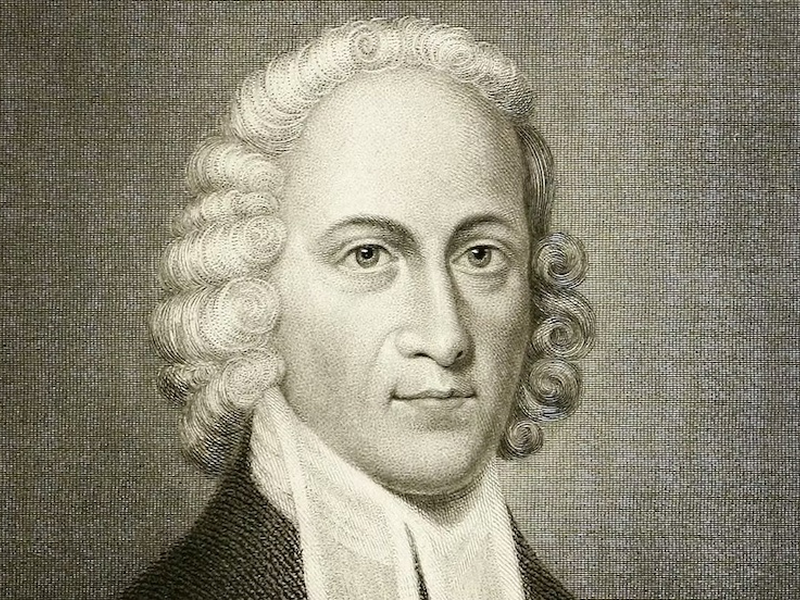
Seng-Kong Tan’s Fullness Received and Returned is a densely argued, thoroughly researched, contextually sensitive study of participation in the soteriology of Jonathan Edwards. Along the way, Tan deals with many of the central themes in Edwards’s theology. As with many recent studies of Edwards, Tan’s monograph demonstrates both Edwards’s creativity…

by Peter LeithartAugust 6, 2014
trnava-university-beeyeib-am8-unsplash
Art

Portrait of the Artist as Aesthetic Martyr

The title of James Joyce’s first novel, Portrait of the Artist as a Young Man indicates that it is a bildungsroman , a story of formation that describes the formative experiences of a poet who aspires to artistic greatness. The education described is Joyce’s own. The novel recounts the failing…

by Peter LeithartAugust 4, 2014

Showing page 170 of 309

See all

Showing page 30 of 43

See all

Objective/Subjective

McGrath notes that Augustine interpreted the genitive in the phrase “righteousness of God” in Rom 1 objectively, so that it was understood as the righteousness that God gives in saving sinners (in “making” them righteous). Ambrosiaster, as I pointed out in an earliet post, interpreted the genitive subjectively - the…

April 20, 2006

Old Perspective on Paul

Ambrosiaster writes, “Iustitia est Dei, quia quod promisit dedit, ideo credens hoc esse se consecutum quod promiserat Deus per prophetas suos, iustum Deum probat et testis est iustitiae eius” (PL, 17.56b). McGrath explains: “God, having promised to give salvation, subsequently gives it, and as a result is deemed to be…

April 20, 2006
History

Unfinished Reformation

Nevin wrote: “There is more a great deal in Christianity, I firmly believe, more in the idea of hte Holy Catholic Church, than has yet been attained, either in the way of knowledge or in the way of life, by the Protestant Reformation.”

April 20, 2006

Factitive Justification

There was a consensus among the theologians of Trent, McGrath argues, that justification was “factitive,” a view that excluded that “a sinner may be justified solely as a matter of reputation or imputation, while remaining a sinner in fact.” But of course that raises the question, What exactly is a…

April 20, 2006

True Lutherans

McGrath traces the odd development in Lutheran Orthodoxy of the notion that regeneration and faith precede justification in such a way that “where Luther had understood justification to concern the unbelieving sinner, orthodoxy revised this view, referring justification to the believing sinner.” This takes Lutheran Orthodoxy back in the direction…

April 20, 2006

Ontological change

McGrath notes, “While justification was universally understood to involve the regeneration of humanity, the opinion that an ontological change is thereby effected within humans is particularly associated with the period of High Scholasticism and the development of the concept of created grace. The earlier medieval theologians expressed the change effected…

April 20, 2006

Showing page 1854 of 2212

Browse by Category

In Medias Res

Your weekly digest for all things Theopolis.

Donate

Theopolis is nearly 100% donor-supported. Consider joining us on our mission.