Theopolis Logo

Writing

Explore our collection of theological essays, biblical studies, and reflections on faith and culture.

See all
sixteen-miles-out-al48tflf4e8-unsplash
Food

Gluttony In The Bible (As Opposed To Gluttony In The American Church)

In the Bible, fatness is such a blessing, that it is especially hard to understand why wicked men are permitted to enjoy such a state. It requires a theodicy and faith in God. Thus: “For they have no pangs until death; their bodies are fat and sleek . They are…

by Mark HorneAugust 12, 2013

jeremy-yap-j39x2xx_8cq-unsplash
How to Worship

Biblical Worship (Video with James B. Jordan)

[fve]http://vimeo.com/71901553[/fve]

by Peter LeithartAugust 8, 2013
chris-bair-ndczc5739ck-unsplash
Deuteronomy

Holy Things for Holy People

The allusion to the Exodus story is contained in the first words of Deuteronomy 14:1 — “ye are the sons of Yahweh your God” — as well as in 14:2 in the use of the technical term translated “treasured possession,” “His own possession,” “peculiar people,” “precious people,” and so forth.…

by Ralph Allan SmithAugust 5, 2013
adam-and-eve-in-the-garden-of-eden-wenzel-peter
Deuteronomy

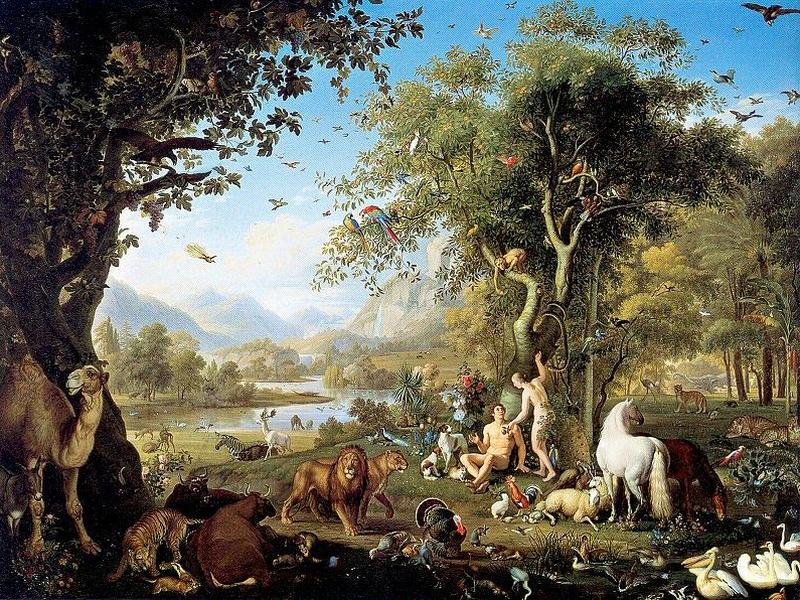
Forbidden Foods

I have argued that Deuteronomy 14:1-21 is an independent literary unit that applies the Third Word to the lives of Israelites from the time of Moses and Joshua. In this short pericope, Moses suggests broad and deep meaning by means of literary allusion to the stories of the creation and…

by Ralph Allan SmithJuly 31, 2013
david-weber-fwuo_zluhnw-unsplash
How to Worship

Pro-Sacramental Reformation

In his recently republished The New Creation , the late, delightful Herbert McCabe defends the priesthood of the plebs as roundly as anyone could want. Citing Hebrews, he claims that "there is an essential difference between the Christian community and the community of the Old Law, or any other religious…

by Peter LeithartJuly 29, 2013
eric-ward-7kqe_8meex8-unsplash
Augustine

Sexual Idolatry

Augustine famously prayed, “Our hearts our restless until they rest in You.” True indeed. Being creatures, we inherently sense our ontological poverty—our innate condition of dependence—and are compelled to find a sense of security. And it is also true—as Augustine’s own narrative painfully illustrates—that one of the things we most…

by Gerald HiestandJuly 24, 2013

Showing page 190 of 309

See all

Showing page 30 of 43

See all
Theology

Say it ain’t so, Nicholas

For reasons that I’ll detail in a subsequent post, I’m a considerable fan of Nicholas of Cusa. I was unhappy to come across this from William Cavanaugh: “The origin of the modern concept of religion can be seen clearly in the thought of two fifteenth-century Christian Platonist thinkers, Nicholas of…

May 20, 2005

Pity the satirist

Michael Budde writes, “Like the Rolling Stones and other major concert acts, the Catholic Church has now taken on corporate sponsorship to underwrite the world tours of its major performer, Pope John Paul II. To finance his 1998 visit to Mexico city, the Archdiocese of Mexico City entered into sponsorship…

May 20, 2005

The Humor of 2 Kings 1

The story of 2 Kings 1 is undoubtedly meant humorously. Ahaziah falls ill and sends messengers off to consult with Baal-zebub, baal of the flies. On the way, his messengers meet a “baal of hair,” Elijah - right title, wrong god. Yahweh will not allow Ahaziah’s men ever to get…

May 19, 2005
Literature

Garber on Richard III

Here are some highlights of Marjorie Garber?s essay on Richard III in Shakespeare After All . 1) Garber suggests that Richard is the ?first fully realized and psychologically conceived character?Ein Shakespeare?s plays. Richard?s character is fully realize because he is complex, protean, chameleon and Machiavellian (cf. 3 Henry VI 3.2.191-193).…

May 17, 2005

Luther and Aquinas

A further note from Haight: One of the criticisms he lodges against Aquinas and scholasticism is that it tended to treat grace and conversion in a mechanistic fashion: “This is a fundamental distortion of the dynamics of grace when it is seen contrasted with a personalist description, and it has…

May 17, 2005

Nature, Supernature, and Grace

Underlying different doctrines of justification, and inseparable from them, are different notions of grace. The historical issues have been ably summarized by Roger Haight in his 1979 book, The Experience and Language of Grace. Haight points out that doctrines of grace have differed partly because the reality of grace is…

May 17, 2005

Showing page 1979 of 2212

Browse by Category

In Medias Res

Your weekly digest for all things Theopolis.

Donate

Theopolis is nearly 100% donor-supported. Consider joining us on our mission.