Theopolis Logo

Writing

Explore our collection of theological essays, biblical studies, and reflections on faith and culture.

See all
aaron-burden-qjdzyt_k8xg-unsplash
Federal Vision

Justification by Union with Christ Only Through Living Faith

A Brief Comparison of Calvin’s Institutes with the Westminster Confession and Catechisms regarding the shape of imputation This essay is a brief argument that the soteriology of John Calvin in his Institutes of the Christian Religion regarding union with Christ and the imputation of his righteousness is the same as…

by Mark HorneJune 5, 2003

ben-white-mo9vkbg5csg-unsplash
Baptism

Some Thoughts on the Means of Grace: A Few Proposals

The thoughts in this paper were largely prompted by a study of Walter E. Krebs, “The Word and the Sacraments,” Mercersburg Review (July, 1867), 366-383. The discussion in this paper presupposes my earlier studies of baptism, “Baptismal Efficacy and the Reformed Tradition: Past, Present, and Future” and “Calvin on Baptism,…

by Rich LuskJune 3, 2003
aaron-burden-qjdzyt_k8xg-unsplash
Baptism

Faith, Baptism, & Justification

Sometimes our systematic theology creates an illusion of precision. For example, we distinguish the ground and instrument of justification. Justification is grounded in Christ’s work alone, and is instrumentally received by faith alone. That makes good sense and guards us from thinking that faith itself is somehow meritorious. All the…

by Rich LuskJune 1, 2003
todd-cravens-g2pdilavgcy-unsplash
Covenant

DO THIS AS MY MEMORIAL: Understanding How the Lord’s Supper Reminds God to Keep Covenant

Whenever we participate in the Sacrament of the Eucharist, we remember Christ and His Work for us. We remember. And in remembering, we imitate God, as His creatures made after His image. God remembers. This is mysterious to us because we usually think of remembering in the context of our…

by Mark HorneMay 30, 2003
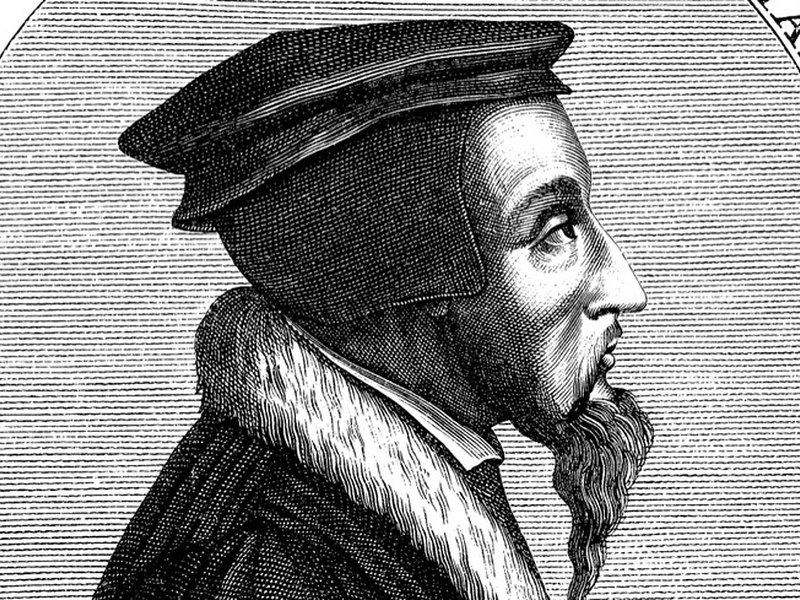
24542-cropped-john-calvin
Baptism

Calvin & the Efficacy of Infant Baptism

It is standard in paedobaptist circles to argue for the baptism of infants out of the Old Covenant system. Because there is no explicit command in the New Testament, we are left to the broader principles and patterns of Scripture. In the Old Covenant, we continually find that the children…

by Rich LuskMay 30, 2003
sixteen-miles-out-d40gdcd_-he-unsplash
Biblical Theology

Why the Law/Gospel Paradigm is Flawed

Luther popularized the law/gospel hermeneutic. Luther argued that any demands God made upon us fell into the category of “law” and could only condemn. By contrast, anything God gave us was “gospel” and came with no strings attached. Calvin paid lip service to this law/gospel antithesis, even though it was…

by Rich LuskMay 29, 2003

Showing page 232 of 309

See all

Showing page 30 of 43

See all

Structure in 1 Chronicles 26

1 Chronicles 26:1-19 lists the names and positions of gatekeepers at Solomon's temple. The passage is framed by references to the “allotment” or “apportionment” of assignments to Korahites (v. 1) and sons of Korah and Merari (v. 19). Within this frame, the text moves in a complex parallel fashion through…

February 21, 2017

All Great Art Is Praise

“T he art of man is the expression of his rational and disciplined delight in the forms and laws of the creation of which he forms a part.” This is the first thesis of John Ruskin's “All Great Art Is Praise,” in The Laws of Fesole . Rationality is essential…

February 21, 2017

Demonstrative Complications

I n their 1662 treatise on Logic, or the Art of Thinking , Antoine Arnauld and Pierre Nicole question the straightforwardness of the Calvinist logical analysis concerning the Eucharistic “This is my body.” They summarise the argument this way: “Their claim is that in Jesus Christ’s assertion, ‘This is my…

February 20, 2017

Passivity and Freedom

I ngolf Dalferth thinks we are Creatures of Possibility . By that, he means that “we are creatures in the making whose actual becoming depends on possibilities beyond our control that occur in our lives as opportunities and chances that we can neglect and miss or take up and use”…

February 17, 2017

The State after ‘68

A ccording to Pierre Manent ( Beyond Radical Secularism ), May 1968 marked a critical turning point in the political history ofFrance. Despite the persistence of the “Gaullist” party in political power, ‘68 undermined “collective rules, both political and merely social. The citizen of action was followed by the individual…

February 17, 2017

On Separating Church and State

S eparation of church and state, religion and politics, is not “sufficient unto itself,” argues Pierre Manent ( Beyond Radical Secularism ). After all, he points out, citizens are believers, believers citizens, and they don’t cease to be one when they take up the role of the other. Separation “suggests…

February 17, 2017

Showing page 204 of 2212

Browse by Category

In Medias Res

Your weekly digest for all things Theopolis.

Donate

Theopolis is nearly 100% donor-supported. Consider joining us on our mission.