Theopolis Logo

Writing

Explore our collection of theological essays, biblical studies, and reflections on faith and culture.

See all
tanner-mardis-xuxghzhibn4-unsplash-1-2
Biblical Studies

Tweets-turned-Notes on the Bible’s Chronology

Summary In what follows, I will consider the “year-stamps” employed in Scripture, i.e., statements of the form, “Such-and-such an event took place in the Xth year of Y.” In the process, I will suggest some ways in which the Biblical narrative might relate to events in the extra-Biblical world, though…

by James BejonJuly 16, 2019
durer-prodigal-son-2
Luke

Perspectives on the Prodigal, (Part 2)

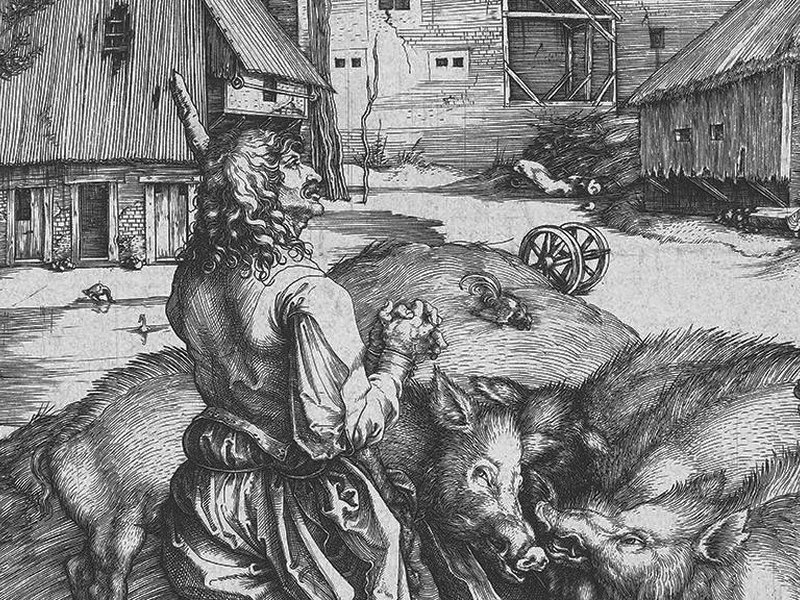
In the first essay on the parable of the Prodigal Son, I suggested that the problems commentators and others encounter in interpreting Jesus three-part parable are not accidental. These are not just problems in our ignorance of cultural background. They are intentional features of the stories —stories designed to poke…

by Ralph Allan SmithJuly 11, 2019
durer-prodigal-son-2
Luke

Perspectives on the Prodigal, (Part 1)

The story of the Prodigal Son is perhaps the most well-known story in the Bible. As others have observed, it may also be one of the most misunderstood. In two short essays, I will point out features of this story that are commonly neglected, aspects of Jesus’ parable that might…

by Ralph Allan SmithJuly 9, 2019
de-rijke-man-en-de-arme-lazarus-by-jacopo-da-ponte-16th-century
Luke

Lazarus and the Rich Man

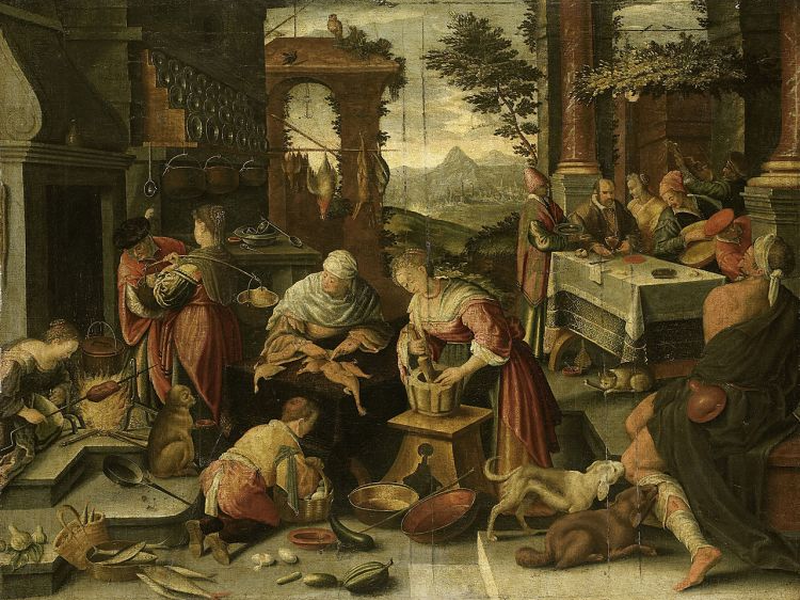
The parable of Lazarus and the nameless rich man is not an independent story. It is part of a long context that begins in Luke 15:1, where Jesus is eating with tax collectors and sinners and the scribes and Pharisees grumble. In response to their hardheartedness, Jesus tells a three-part…

by Ralph Allan SmithJuly 4, 2019
aaron-burden-uynrnfdkjwg-unsplash
Luke

Everybody has Dropsy - Luke 14:1-24

The Bible is written so that even when a reader cannot pick up on what might be deeper or more detailed aspects of a text, there is virtually always a message to be heard. In the ancient world, where the “reader” of Scripture would likely be a church official facing…

by Ralph Allan SmithJuly 2, 2019
communion
Biblical Theology

Fruit Trees and Grain Plants

The distinction between garden (or vineyard) and field begins in Genesis 2. This relates to the ordering of the formless world. Plants of the field are contrasted with the garden planted by God in Genesis 2:5&8. Later on, under the Old Covenant the Israelites will be required to keep their…

by James B. JordanJune 27, 2019

Showing page 77 of 309

See all

Showing page 30 of 43

See all

David's Speech to Solomon

1 Chronicles 22:6–16 records David's hortatory speech to Solomon about building the temple. It is divided into two large sections, both marked by the phrase “my son” (22:7, 11). The first section repeats Yahweh's oracle to David explaining why he would not build the house and promising that David's son…

January 24, 2017

The Essential Mary

S ince the Son is incarnate, argues Aaron Riches in his Ecce Homo , “we must speak of unum esse simpliciter ,” yet Constantinople II determined that the Son is persona composita . Thus, in the words of Aquinas, “there is another being of this suppositum . . . insofar…

January 24, 2017

David's Restraint, Yahweh's Trap

W hen King Nahash of Ammon dies, David sends his condolences to his son Hanun (1 Chronicles 19). Nahash had shown love-and-loyalty ( hesed ) to David, so David returns hesed (v. 2). Hanun doesn't believe it, and the princes (apparently young advisors) stoke up his suspicions (v. 3). David…

January 23, 2017

Sherlock's Soap-Operization

N icholas Barber gets Sherlock just right. Benedict Cumberbatch has the intensity to kill the title role, and, puppyish though he is, Martin Freeman's Dr. Watson is a credible sidekick. The production is slick, the characters compelling, the rapport sharp and often witty. It's hugely entertaining. Then they go and…

January 20, 2017

Thomas and Pure Nature

S ummarizing a line of argument from Aquinas, Robert Spaemann ( Essays in Anthropology ) notes that Thomas acknowledges that “By nature animals are sufficiently equipped to attain their own end” (15). The question is: Are human beings? And if the end of human beings is union with God, how…

January 20, 2017

Christ the Lion

J esus is the Lion of Judah. This is no random metaphor, according to the medieval bestiary, the verse Physiologus attributed to the 11th-century writer Theobaldus. Lions have various habits, all of which point to Christ. For instance: “As the Lion dwells on the high mountain, so Christ the spiritual…

January 20, 2017

Showing page 214 of 2212

Browse by Category

In Medias Res

Your weekly digest for all things Theopolis.

Donate

Theopolis is nearly 100% donor-supported. Consider joining us on our mission.