Theopolis Logo

Writing

Explore our collection of theological essays, biblical studies, and reflections on faith and culture.

See all
andriy-nestruiev-gdbrwwh6doc-unsplash
Biblical Studies

Funerals and Flutes

Matthew 8-9 records three clusters of miracles, interspersed with snatches of Jesus’ teaching about various aspects of discipleship. Just as the Sermon on the Mount displays the authority of Jesus’ Word in teaching, these chapters display the authority of Jesus’ Word over sickness, uncleanness, the creation, demons, and death. In…

by Peter LeithartApril 17, 1992

michal-parzuchowski-w9uljjwg2fa-unsplash
Baptism

Daddy, Why Was I Excommunicated?

Since the early 1980s, several of the conservative Reformed Churches have debated and wrestled with the issue of paedocommunion (infant communion). The PCA and the OPC assigned study committees to examine the question, both of which produced useful reports both in support of and against the position. Though the debate…

by Peter LeithartApril 13, 1992
skyler-gerald-akljfvj5ym4-unsplash
Biblical Chronology

Chronologies and Kings, Part 9: Jehu, Hazael, and Assyria

(This issue of Biblical Chronology concludes a discussion of the Biblical and Assyrian chronologies, begun in previous posts. Click on the category link of "Biblical Chronology" above to see previous issues. Did Shalmaneser Know Jehu? Allis writes: "The Black Obelisk of Shalmaneser contains, in addition to brief accounts of the…

by James B. JordanMarch 23, 1992
denise-jans-dpemksg59la-unsplash
American Culture

Arts and Play, Part 4

Movies Movies as an art form have a powerful impact because they take place in a dark room, on a large screen, with no distractions, and because they entail many of the arts: music, acting, choreography, design and color, etc. A movie can be an overwhelming experience for a young…

by James B. JordanMarch 23, 1992
sincerely-media-bhaswrjttzw-unsplash-2
Leviticus

The Ecology of the Tribute Offering

The Hebrew word translated as "grain offering" or "cereal offering" is minchah . Like the translation of `olah as "burnt offering," the translation of minchah as "grain offering" is somewhat deceiving, since minchah does not refer to grain or cereal. In liturgical contexts outside of Leviticus, in fact, the word…

by Peter LeithartMarch 13, 1992
sincerely-media-bhaswrjttzw-unsplash-2
Ascension

Skinned and Cut

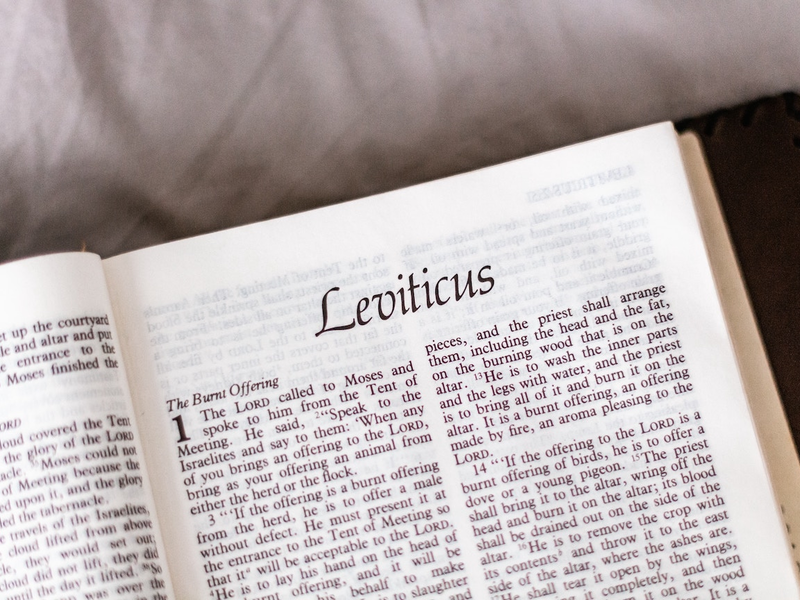
"He shall then skin the burnt offering and cut it into its pieces" (Leviticus 1:6). The normal word ( `olah ) that is translated as "burnt offering" and "whole burnt offering" has nothing to do with either burning or wholeness. It is the noun form of a verb meaning "to…

by Peter LeithartMarch 13, 1992

Showing page 291 of 309

See all

Showing page 30 of 43

See all

Day of Wrath (Romans 2)

What about taking “day of wrath” in Romans 2 as AD 70? Some arguments: 1) Dunn lists the verses that use similar phrases for “wrath and indignation” and “tribulation and distress,” and most of them are about historical judgments on Israel. There’s a cluster of uses in Deut 28:55ff, which…

November 7, 2003
Theology

Intellectualism and Voluntarism both arise

Intellectualism and voluntarism both arise from the same theological error: from the assumption that there is some realm that is independent and autonomous. This is most obvious with intellectualism: For intellectualists, things have indepdendent value that God recognizes and evaluates. Voluntarists are, however, making the same error. They assume that…

November 6, 2003

Studebaker on Pauw

Steve Studebaker writers in the Scottish Journal of Theology (56:3) about Edwards’s trinitarian theology, and includes an extended critique of Amy Plantinga Pauw’s treatment of Edwards’s incipient “social trinitarianism.” According to Studebaker, Pauw’s analysis only works if one assumes that the history of Trinitarian theology can be sketched out as…

November 5, 2003

The Olive Tree (Romans 11)

In the same issue of JSNT, Philip Esler examines ancient oleiculture to illumine Paul’s use of the olive tree image in Romans 11. When he describes branches being grafted into an olive tree, Paul refers to a common practice. But the normal practice is to graft cultivated olive branches onto…

November 5, 2003

Acts 20:20

Jerome Neyrey has an interesting article on Acts 20:20 in the current issue of JSNT. He examines the cultural background to Paul’s use of the phrase “in public and from house to house” by examining various expressions in Greek and Latin writers that correspond to modern “public” and “private.” These,…

November 5, 2003
Literature

Modernity

To what extent is modernity merely a recovery of the tragic? Tragedy, to my knowledge, simply didn’t exist in the medieval world. Drama revived late in the medieval period, but tragedy was reintroduced by the Renaissance. In Shakespeare, the tragic is set in a larger Christian comic setting, with profoundly…

November 5, 2003

Showing page 2170 of 2212

Browse by Category

In Medias Res

Your weekly digest for all things Theopolis.

Donate

Theopolis is nearly 100% donor-supported. Consider joining us on our mission.