Theopolis Logo

Writing

Explore our collection of theological essays, biblical studies, and reflections on faith and culture.

See all
screen-shot-2021-07-15-at-9-14-19-am
Biblical Studies

The Beatitudes and Woes

Mrs. Marguerite Lane of Grand Rapids writes to ask if I have ever noticed a correlation between the eight beatitudes of Matthew 5 and the eight woes of Matthew 23. I confess that I have not. A glance at various commentators reveals that such a correspondence does not seem to…

by James B. JordanMay 15, 1989
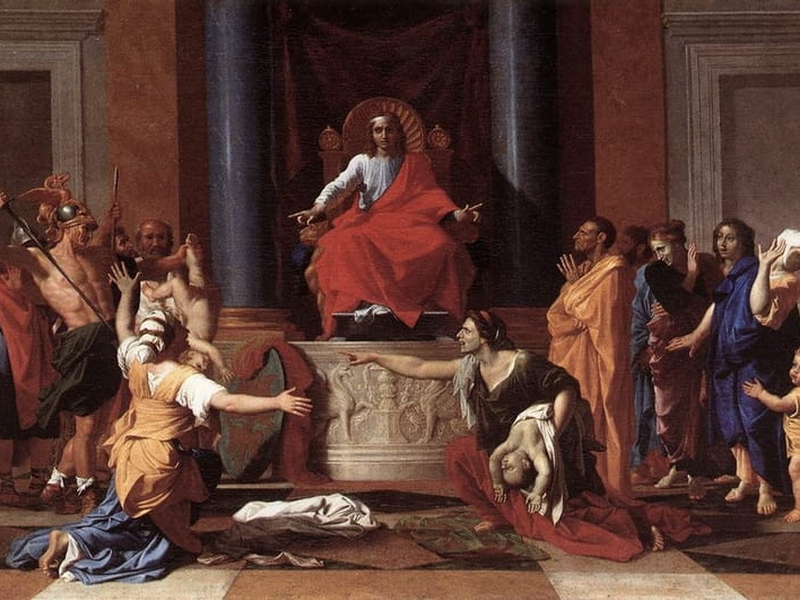
49980-nicolas_poussin_-_the_judgment_of_solomon_-_wga18330-800w-tn
Proverbs

Advice From a Sojourner, Part 1

1. The words of Agur, the son of Jakeh, the burden. The man declares to Ithiel, to Ithiel and Ucal: 2. Surely I am more stupid than any other man, And I do not have the understanding of a man. 3. And I have not learned wisdom, But I have…

by James B. JordanMay 15, 1989
hebrew-manuscript-6
Biblical Studies

The Problem of Psalm 137

Psalm 137 is widely regarded as one of the meanest of the imprecatory psalms. Certainly as we read it it is seems to be a song of pure vengeance. The exiles in Babylon, in grief over the judgment that Babylon has brought upon them, pray for the destruction of that…

by James B. JordanApril 15, 1989
timothy-eberly-djj49s6ud2o-unsplash
Biblical Studies

The Thigh of the Peace Offering

In the Levitical law, the priests received two particular portions of each peace offering: the "wave offering" of the breast and the "heave offering" (or better, "contribution") of the right thigh. The purpose of this essay is to attempt to determine the reason why the second of these, the thigh,…

by Peter LeithartApril 13, 1989
screen-shot-2022-01-07-at-6-38-22-pm
Biblical Studies

The Son of Joseph

The story of Jesus’ visit, early in His ministry, to the synagogue in His home town of Nazareth is recorded for us in Luke 4:16-30. You may remember that Jesus read from Isaiah about how the Messiah would preach the gospel, care for the poor, work miracles, and bring in…

by James B. JordanApril 12, 1989
e99a2225
Biblical Horizons

"Do This!"

(The essay that follows concerns a rather touchy subject: how the Lord’s Supper is to be done. I am not writing to insult or offend, but to challenge. To that end I have not "held back" but have "gone ahead" and said what I think needs to be said —…

by James B. JordanMarch 12, 1989
See all

Showing page 30 of 43

See all
Philosophy

More Reflections on Postmodernism

Back to reflections on post-modernism: It seems that Freud, not Nietzsche, is the really grandfather of the movement, though, not unexpectedly, some sons and grandsons efface his memory and resist his influence (not all, of course).

October 28, 2003
History

Courtly Love

On courtly love: The basic shift is from the ancient and early medieval view that eros sapped and vitiated virtus to a belief that eros was a condition of the possibility of virtus and valor. This is, as Lewis said, a seismic shift in sensibility, one that we still do…

October 28, 2003

Structure of Romans 1:16ff.

Jouette Bassler’s 1984 article “Divine Impartiality in Romans” ( Novum Testamentum ) present structural arguments for saying that the section beginning in Rom 1:16-18 runs through the middle of chapter 2. This is evident from the repetition of the verb prasso in 1:32 and again in 2:1-3; thus the center…

October 28, 2003
Philosophy

Postmodernism and the ’60s

It’s not at all accidental that postmodernism takes its rise in the mid-1960s. Bloom wrote the first draft of the anxiety of influence in 1967, and revised it over several years before its initial publication in 1973. Derrida’s annus miraibilis was 1967, which saw the publication of Speech and Phenomena…

October 28, 2003
Philosophy

Postmodernism and the ’60s

It’s not at all accidental that postmodernism takes its rise in the mid-1960s. Bloom wrote the first draft of the anxiety of influence in 1967, and revised it over several years before its initial publication in 1973. Derrida’s annus miraibilis was 1967, which saw the publication of Speech and Phenomena…

October 28, 2003
Philosophy

Murder of Father

Turns out that Harold Bloom’s “anxiety of influence” is just another variation on the same set of themes that Derrida is obsessed with — the son’s murder of the father. For Bloom, the son is the “strong poet” who resists the influence of his predecessor/father in order to carve out…

October 28, 2003

Showing page 2176 of 2212

Browse by Category

In Medias Res

Your weekly digest for all things Theopolis.

Donate

Theopolis is nearly 100% donor-supported. Consider joining us on our mission.