Theopolis Logo

Writing

Explore our collection of theological essays, biblical studies, and reflections on faith and culture.

See all
sunrise-2
Creation

Maker of Heaven and Earth, (Part 4)

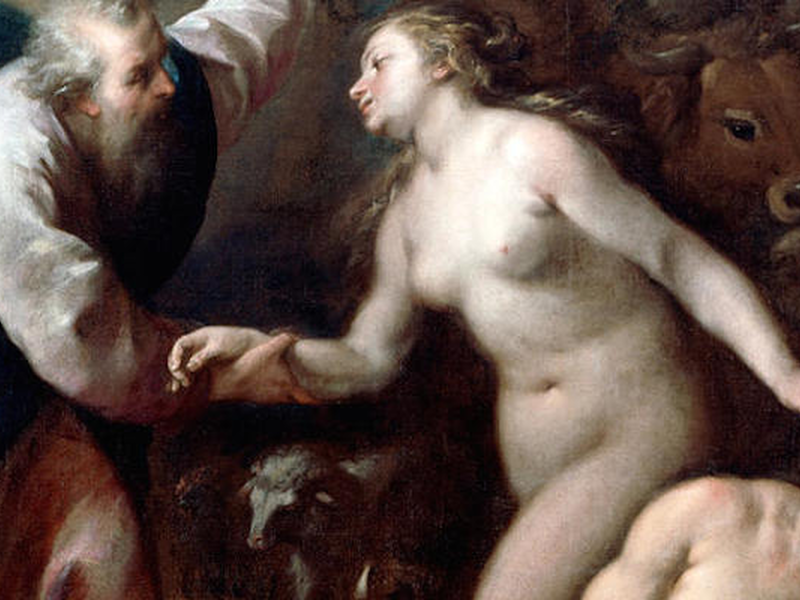
In my previous two posts, I looked at aspects of Psalms 93, 95, 96 and 98 that declare Yahweh, the divine King, to be the world’s own Creator. In my next post, I plan to argue that the creation theology of the sub-section constituted by Psalms 93-100 contributes to the…

by Stephen LongApril 23, 2015
creation-eve
Otherness

Sexual Difference, Liberal and Christian

Ethika Politika has published a fascinating interview within which the French Catholic philosopher Fabrice Hadjadj discusses his recent work on the subject of sexuality. While there are many points where our lines of reasoning as Protestants will sharply diverge from Hadjadj’s, there is also much that is deeply perceptive in…

by Alastair RobertsApril 21, 2015
giammarco-zeh-ljawhtg-unsplash
Literature

Macbeth and the Fall of Adam

For anyone in Shakespeare’s audience who knew the real story of Macbeth, his play must have been surprising. Shakespeare changed so many important details of the historical Macbeth’s life that had Raphael Holinshed, the main author of the most popular history of the British Isles in Shakespeare’s day — Holinshed…

by Ralph Allan SmithApril 16, 2015
medievalilluminatedmanuscript
Creation

Maker of Heaven and Earth, (Part 3)

I started looking at a sequence of psalms on divine Kingship (Psalms 93-100) in my last post, part of a series looking at the Old Testament’s witness to Yahweh’s exercise of absolute mastery over his cosmos. I am not trying to “prove” a doctrine of creation ex nihilo directly from…

by Stephen LongApril 14, 2015
pearls
Anxiety

(Un)Holy Fear

Most of the time I believe that dread is wise, anxiety righteous, fear a holy thing. It sounds ridiculous, but bear with me. There are days when fear seems to be not only a rational response to my circumstances, but a moral duty. After all, being a grown-up means responsibility.…

by Leta SundetApril 11, 2015
emmanuel-phaeton-1bwmfmvybi8-unsplash
Psalms

Psalm 36 Commentary

Get the Psalm 36 Translation here Psalm 36 begins with several translation problems. First, the first word in the actual psalm, as it is found in the English text, is the word "oracle." This word also begins the second verse in the medieval Massoretic Hebrew text, which is our basic…

by James B. JordanApril 10, 2015

Showing page 155 of 309

See all

Showing page 30 of 43

See all
screenshot-2024-07-04-at-8-35-35-am
Ephesians

Chiasm in Ephesians 2:8

In the Greek text of Ephesians 2:8, the statement “and this not of ourselves, it is the gift of God” is chiastically structured. A wooden translation is: “and this not out of ourselves, of God the gift,” with the EX HUMON (“out of ourselves”) chiastically matching the genitive THEOU (“of…

September 19, 2003
main-qimg-677803682e526eb3d3440054b59433fe-lq
Philosophy

Milbank on Derrida

Here’s a summary of part of Milbank’s critique of Derrida (from Theology and Social Theory , pp. 307-311). Derrida attacks Western metaphysics by focusing on the attempt to separate a “meaning” out from the “play of signs.” In most Western systems, this meaning is associated with an original meaning that…

September 18, 2003
nicki-eliza-schinow-mg3nb1l2kdm-unsplash
Philosophy

A Note Against Empiricism: Derrida

A note against empiricism: Derrida quotes Scheler (in his essay on Levinas, “Violence and Metaphysics”) to this effect: “I see not only the eye of an other, I see also that he looks at me.” That is, what is seen is not only a thing, a dead object, but also…

September 17, 2003
jeremy-thomas-e0ahdsenmdg-unsplash
Philosophy

Levinas on Absolute Other

Levinas claims that an absolute other must necessarily be invisible. If the other is visible, I can at least “capture” and “grasp” and “encompass” him in my gaze, which is the first moment in a sequence that could lead to capturing, grasping, and encompassing and dominating him in other ways.…

September 17, 2003
505017ldsdl
BooksCulture

Yeats on the Classical World

Yeats said that the classical world was fundamentally tragic, with the Oedipus myth as the founding myth — the man kills his father and marries his mother. Yeats would have been better off pointing to the myth of Zeus, for that truly is the founding myth of the Olympian order,…

September 17, 2003
valentino-mazzariello-ndm1hhicwhc-unsplash-2
Philosophy

Progress

In his history of the ancient concept of progress, E. R. Dodds says that one fundamental limitation on the idea of progress was imposed by the theory of Forms, both in Platonic and in the Aristotelian version. For Plato all progress consists in approximation to a pre-existing model; the model…

September 17, 2003

Showing page 2196 of 2212

Browse by Category

In Medias Res

Your weekly digest for all things Theopolis.

Donate

Theopolis is nearly 100% donor-supported. Consider joining us on our mission.