Theopolis Logo

Writing

Explore our collection of theological essays, biblical studies, and reflections on faith and culture.

See all
31-03-0213
Hermeneutics

Apocalyptic Eyes

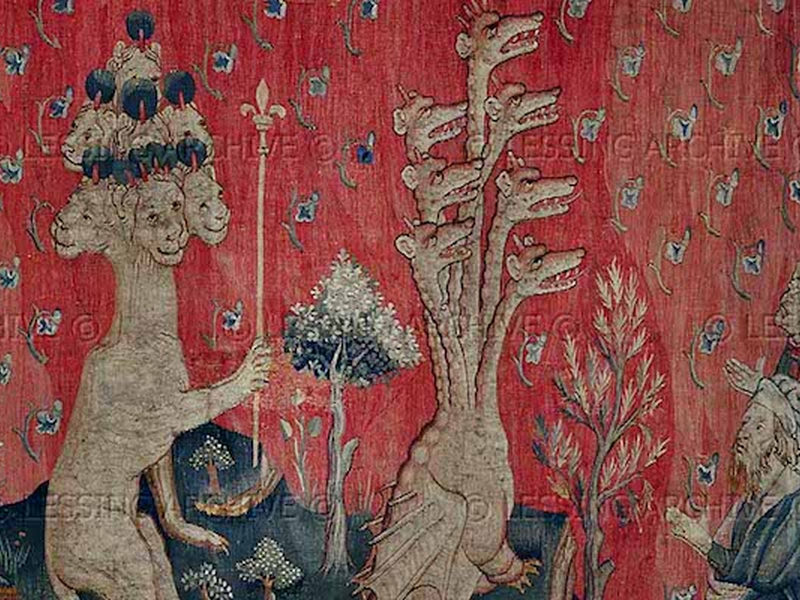
Flying scrolls. Red horses. Beasts coming out of the sea. Winged women. The list goes on. Apocalyptic literature in the Bible is like a cross between science fiction and Marvel comics. And the Bible has a fair bit of this sort of thing. Daniel sees visions in Babylon, Zechariah sees…

by Toby SumpterNovember 4, 2014

bhm-skyline-2
Theopolis News

New Name, New Look

Trinity House Institute has taken a new name, the Theopolis Institute. This striking new name expresses our unique vision and mission and captures the unified purpose behind all our specific programs and activities. We still have Bible, liturgy, and culture in our tagline. We still offer the same courses on…

by TheopolisNovember 4, 2014
istock_000012860926small
Atonement

Not Fearing the Devil

Adam Kotsko offers a socio-political variation on the Christus Victor atonement theory in his 2010 study, The Politics of Redemption: The Social Logic of Salvation . He does this by explaining "the devil" in terms of the Hegelian concept of "objective spirit," Geist . As Kotsko puts it, Geist "refers…

by Peter LeithartOctober 13, 2014
jez-timms-8muutamcwu4-unsplash
Leviticus

The Meaning of Sacrifice

Two factors keep Nahtali Meshel from discussing the meaning of sacrifice until late in his The "Grammar" of Sacrifice . The first has to do with the texts he draws from: "P says little about the meaning of its rituals" (174). The other has to do with the grammatical theory…

by Peter LeithartOctober 8, 2014
jez-timms-8muutamcwu4-unsplash
Leviticus

Praxemics

Chapter 5 of Naphtali Meshel's The "Grammar" of Sacrifice focuses on "praxemics," the physical actions of sacrificial ritual. Praxemes are constituted by six elements: an "atomact," an elementary physical act or gesture; an actor; an object that is acted up; a target for the action and often for the object…

by Peter LeithartOctober 6, 2014
markus-winkler-aid-xyrtlec-unsplash
Leviticus

Jugation and Hierarchy

Two chapters of Naphtali Meshel’s The “Grammar” of Sacrifice cover what he calls “jugation” and “hierarchies.” The first involves the addition of other materials to an animal offering. Jugates include wine, cereal, and oil that are added to the animals (zoemes) that are offered in sacrifice. Some jugates are coordinated…

by Peter LeithartOctober 1, 2014

Showing page 167 of 309

See all

Showing page 30 of 43

See all

More Than Cool Reason

Antonio Damasio began to doubt the purity of reason when he encountered a patient with a brain disease that destroyed the portion of his brain that controlled emotional responses: “I had before my eyes the coolest, least emotional, intelligent human being one might imagine, and yet his practical reason was…

May 9, 2016

The Persistence of Modernism

In a contribution to a forthcoming collection of essays on Time , David James explores the usefulness of periodization categories like “modern” and “postmodern.” To be sure, some believe that modernism and modernity are passe: “' Many emerging artists,' reflects Terry Smith, ‘sense that Modernism—no matter how often and subtly…

May 6, 2016

Singers and Priests

The genealogy of Levi in 1 Chronicles 6 begins and ends with the genealogy of Aaron (6:1-15; 6:49-53). In between are two lists of the clans of Levi, the first a simple genealogy arranged according to the subclans of Kohath, Gershom, and Merari (6:16-30) and the second a genealogy of…

May 6, 2016

No Deal

David Goldman (Spengler) writes that “Republican voters bought Trump’s message that the wicked Chinese and the feckless Mexicans have stolen jobs and wealth that rightfully belonged to Americans, and that he, Donald Trump, with his world-class negotiating skills, would go out and get them back.” The problem is that “There’s…

May 6, 2016

What Is A Family?

In her Sexual Authenticity , Melinda Selmys says that the distinction between “traditional” and “alternative” families is often misunderstood: “At the heart of it is distinction between family as something we choose to meet our own needs and desires (for comfort, security, affection, etc.), and family as something that we…

May 5, 2016

Sacramental Art

Nearly everything about modern art “can be empirically explained by examining style, iconography and patronage,” writes Richard Nelson ( The Spirit of Secular Art ). What cannot be explained is the prestige of art, and this eludes because it is reliant on intuitions that artists dismiss as archaic and outmoded.…

May 5, 2016

Showing page 292 of 2212

Browse by Category

In Medias Res

Your weekly digest for all things Theopolis.

Donate

Theopolis is nearly 100% donor-supported. Consider joining us on our mission.