Theopolis Logo

Writing

Explore our collection of theological essays, biblical studies, and reflections on faith and culture.

See all
kristina-flour-bcjdbykwquw-unsplash
Culture

On Foul Language

The Stranger: Do you have to use so many cuss words? The Dude: What the f*ck you talking about? - The Big Lebowski There was a man I knew, an elder at his church, who, whenever he was called upon to announce a pregnancy, preferred the euphemism “with child” because…

by Remy WilkinsJanuary 12, 2016

organ-pipes
How to Worship

Pipes Worth Playing

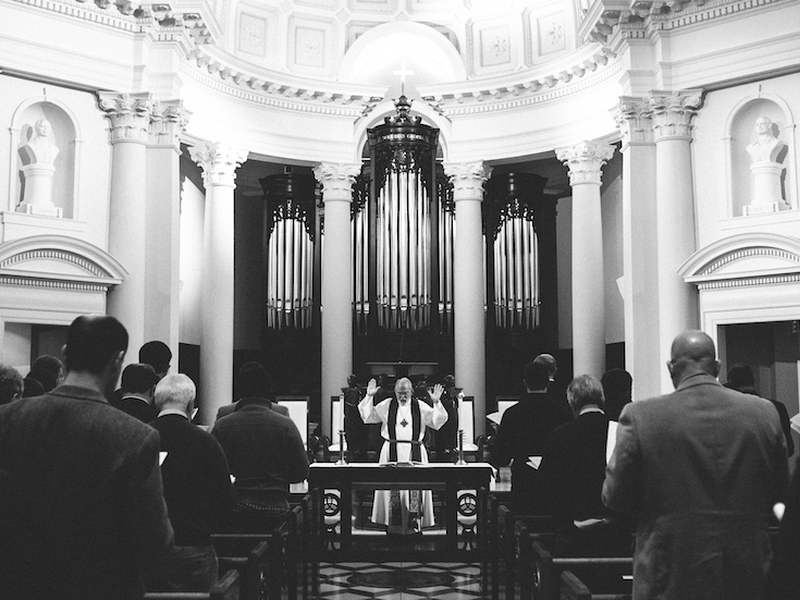
I know what you’re thinking. Organ: funeral, ball game, grand dusty cathedral. Why should modern Christians of such a technological age revisit a thousand year-old instrument? Don’t worry, I will not be trying to punch another hole in my Weird Music Preferences and Opinions card here. The truth is, our…

by Jarrod RicheyJanuary 7, 2016
tree-2
James

Do Things Have Natures?

Do things have natures? As I am posing the question, it is not simply a question of whether there are particular kinds of things in the world that have characteristic features, patterns of behavior, trajectories of growth and development. If that is what the word means, then the answer is…

by Peter LeithartJanuary 5, 2016
jim-leading-worship
Theopolis News

2016 Nevin Lectures with Father John Behr

We are excited to announce our 2016 Nevin Lectures featuring Father John Behr. Fr. John is the Dean of St. Vladimir's Seminary and Professor of Patristics, as well as the author of multiple works. He will be delivering three lectures over the course of two days dealing with "What Protestants…

by Brian MoatsJanuary 4, 2016
times-square
Creation

Time, Curse or Gift?

New Year's Day makes one reflective, at least about the past year, perhaps about life, perhaps, more broadly, about time itself. Many view time as a curse. Some see it as a curse because of missed chances. As one day or year moves on to the next, all we can…

by Peter LeithartDecember 31, 2015
nativity-2
Advent

The Manger

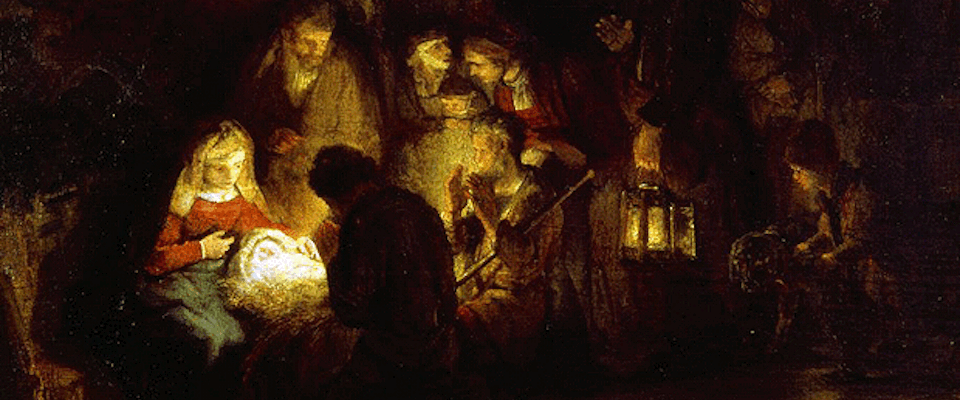
It seems a truism to say that we live in the world: that the world is outside of us. In reality the world is very much inside of us too. In fact the world passes through us as much as we pass through it. We breathe in its air, using…

by Arthur KayDecember 29, 2015

Showing page 138 of 309

See all

Showing page 30 of 43

See all

Donne and Sacramental Poetics

Sophie Read's Eucharist and the Poetic Imagination in Early Modern England examines six early modern English poets on the assumption that “particularities of belief can be made manifest in the verbal texture of a literary work: that there is an analogy between the rhetorical and theological plans of understanding, and…

April 29, 2016

Preaching to Spirits

Karen Jobes ( 1 Peter ) understates the point when she says that 1 Peter 3 is “more obscure than we might wish,” but she highlights the central point of Peter's odd claim that Jesus preached to spirits in prison: “(1)Being linked with 3:13-17 by hoti kai (because also, 3:18),…

April 28, 2016

Rabbinic Welfare

Susan Holman devotes a few pages of her The Hungry Are Dying , a study of “beggars and bishops” in Cappadocia, to a sketch of Rabbinic teaching on almsgiving, drawn from the writings of the Talmudim. The poor appear in three main contexts in rabbinic writing: “First, they are recognized…

April 28, 2016
Ritual

Biblical Terms for “Ritual”

English Bibles rarely employ the words “ceremony,” “rite,” or “ritual” to translate biblical terms. The NASB, for example, uses the words “ritual” and “rite” in only three instances, all having to do with the Passover (Exodus 12:25-26; 13:5). The Authorized Version uses the word “ritual” only at Number 9:3. The…

April 27, 2016

Weber's Liberal Protestantism

Anthony Carroll summarizes his Protestant Modernity in a 2009 article in the Archives of European Sociology . Recognizing that Weber's theory of secularization “has greatly influenced later social theorists in their accounts of secularisation, rationalisation, and modernisation,” he wanted to set Weber's theory “within its liberal Protestant heritage.” This is…

April 27, 2016

No Longer

The ruined city Babylon is a city where things that used to happen don't happen anymore. John's description is under the rubric “no longer” ( ou eti , used 6x in Revelation 18:21-24). In Babylon, music, crafts, milling, light, and weddings have ceased. The old has passed, the new has…

April 26, 2016

Showing page 295 of 2212

Browse by Category

In Medias Res

Your weekly digest for all things Theopolis.

Donate

Theopolis is nearly 100% donor-supported. Consider joining us on our mission.