
Theopolis Logo

Writing

Explore our collection of theological essays, biblical studies, and reflections on faith and culture.

See all
giammarco-zeh-ljawhtg-unsplash
Biblical Horizons

OPEN BOOK: Views and Reviews

Isaac E. Mozeson, The Word: The Dictionary that Reveals the Hebrew Sources of English (Northvale, NJ: Jacob Aaronson Inc., 1995), 310 pp. Reviewed by James B. Jordan. Once there was only one language in the world, the language God spoke to Adam. At the Tower of Babel, there came to…

by James B. JordanJune 28, 1996
tim-wildsmith-j6jv-mkdzqs-unsplash
Esther

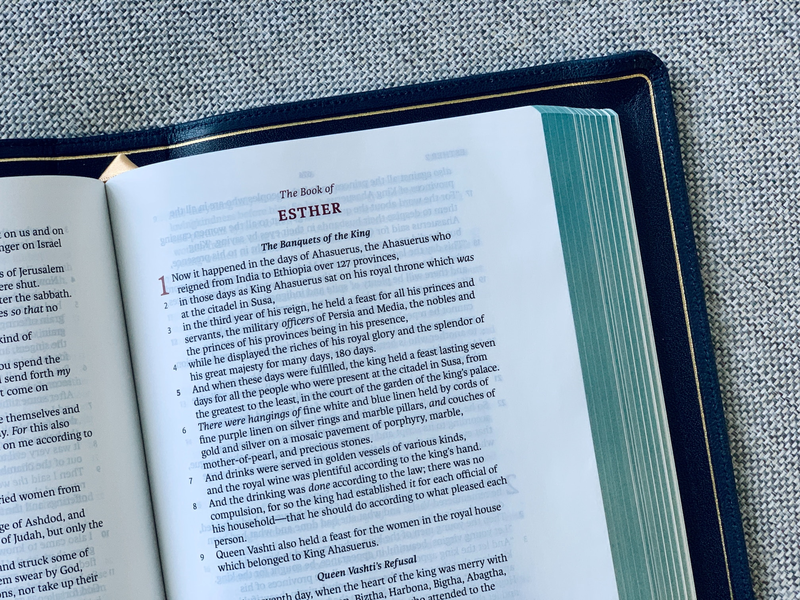
Esther: Historical & Chronological Comments (IV)

2. The Setting of the Book of Esther A. Xerxes (continued from previous issue) Ezra 6:14 says that the Jews finished building "according to the command of the God of Israel and the decree of Cyrus and Darius and Artaxerxes king of Persia." The problem with this verse is that…

by James B. JordanJune 28, 1996

ales-krivec-4mibe6zg5r0-unsplash
Acts

Jesus and Amalek

This essay goes with our previous study of the Amalek pattern back in Biblical Horizons No. 2. Since many do not have this essay, entitled "The Battle of Gog and Magog," let me cite the relevant paragraphs: Note in Genesis 12-15 that Abram moves into the land after escaping Pharaoh…

by James B. JordanJune 28, 1996

aaron-burden-1ebsmyrau-s-unsplash
Proverbs

The Strange Woman

Proverbs 7:6-23 is one of several passages early in the Proverbs in which Solomon warns his son about the wiles and dangers of the "strange woman." It is certainly quite proper to take these as straightforward warnings against sexual sins, and these are certainly warnings that need to be impressed…

by Peter LeithartJune 27, 1996
jan-kahanek-g3o5ztrk2e4-unsplash
Biblical Studies

Some Observations

1. In Luke 4:20 we read that after Jesus finished reading from Isaiah, "the eyes of all in the synagogue were fixed upon Him." This is usually taken in a psychological sense: They were amazed at Jesus somehow. I suggest that, as always, a merely psychological reading is a modern…

by James B. JordanMay 28, 1996
tim-wildsmith-j6jv-mkdzqs-unsplash
Esther

Esther: Historical & Chronological Comments (III)

2. The Setting of the Book of Esther Up to now we have assumed what we must prove, that the king in Esther is Darius the Great. While Biblical chronologists have usually taken this position, commentators on the book of Esther have often taken others as the king. One view,…

by James B. JordanMay 28, 1996

Showing page 265 of 309

See all

Showing page 30 of 43

See all

Ruined Temples

Ezekiel says that Yahweh deals with Judah so that Judah will know that He is Lord. When there are bodies scattered on the high places, then Israel will know that Yahweh is Lord (Ezekiel 6:13-14). When Judah is devastated and the Lord shows no pity, then Judah will know that…

October 30, 2015

What I Want From Catholics

My wish list for Catholics is terribly old-fashioned and terribly assertive. There’s hardly space here to defend my positions or thoroughly critique the Catholic position. So, this may end up sounding like a drive-by shooting or a childish tantrum. I trust that I can formulate my wish list with enough…

October 29, 2015

The Love of the Divine Warrior

Aren Wilson-Wright examines the elements of “Northwest Semitic combat myth” in the theme verses of the Song of Songs (8:6b-7a). I have my doubts about the presence of the combat myth, but even within a strictly biblical frame, his observations illuminate the text. He points out, for instance, that 8:6b…

October 29, 2015

Meals and the Gospel Truth

Stephen Turley ends The Ritualized Revelation of the Messianic Age by elaborating the point made in his title: “for early Pauline communities, rituals and beliefs were in fact irreducible to one another. As such, our ritual reading of Paul provides an exegetical corrective to the traditional relation posited between theology…

October 29, 2015

Sabbath in Society

Tyler Atkinson uses Bonaventure and Luther as his primary interlocutors in his study of the “work ethic” of Ecclesiastes, Singing at the Winepress . The two giants offer quite divergent readings of the book. For Bonaventure, the vanity of the world encourages withdrawal; for Luther, though, the goal is to…

October 29, 2015

Luther, Faith, and Love

In his contribution to Reformation Readings of Paul , David C. Fink argues that Luther's doctrine of justification was an effort to “grapple with the great commandment” to love God (45). Luther vehemently rejected the medieval notion that faith as the material cause had to be formed by love as…

October 28, 2015

Showing page 357 of 2212

Browse by Category

In Medias Res

Your weekly digest for all things Theopolis.

Donate

Theopolis is nearly 100% donor-supported. Consider joining us on our mission.