Theopolis Logo

Writing

Explore our collection of theological essays, biblical studies, and reflections on faith and culture.

See all
last-supper
Luke

Table Talk

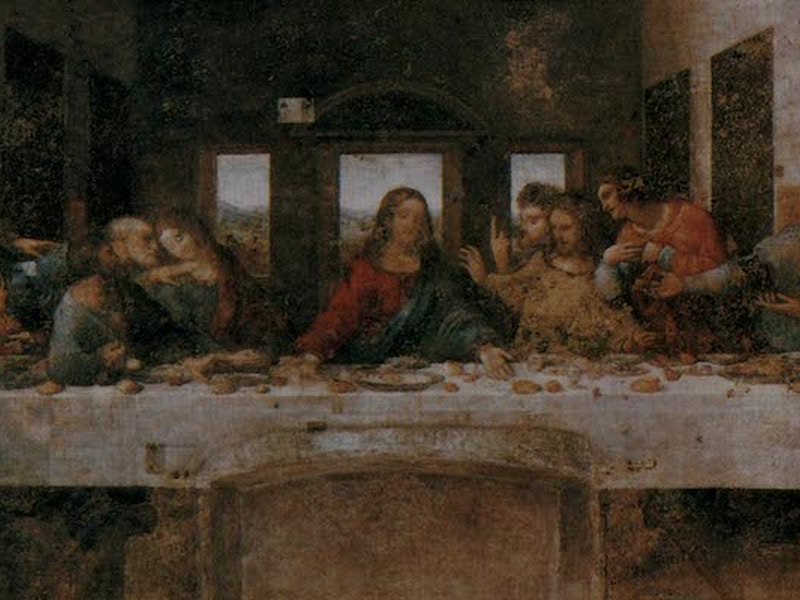
Along His journey to Jerusalem, Jesus stops frequently to have meals, three times with Pharisees (7:37-50; 11:37-54; 14:1-35). Meals were central to Jesus’ ministry. He comes “eating and drinking” (Luke 7:34). While His meals are not just for refreshment, they are opportunities for teaching the protocols of the kingdom. Meals…

by Peter LeithartApril 19, 2016

music-violin
Biblical Theology

A Musical Case for Typological Realism, (Part 4)

Time as a realm of participation can be difficult for us imaginatively to grasp. While music is a profoundly temporal art, exploring the medium of time like no other, most of our temporal experience seems decidedly unmusical in character, disjointed and unorchestrated. The form in which we naturally discover time…

by Alastair RobertsApril 14, 2016
John

Jesus' Burial Clothes

John devotes much attention to Jesus’ burial clothes. He tells us that Nicodemus brought about a hundred pounds of myrrh and aloes to spice Jesus body, and that He was bound in linen wrappings. We find out that His body and His head were wrapped separately. (John 19:39-40; 20:6-7). When…

by James B. JordanApril 12, 2016
clock
Biblical Theology

A Musical Case for Typological Realism, (Part 3)

Thinking about time in terms of music also helps us to appreciate its unity and inner relations. Henri Bergson observes our cultural habit of dividing time into discrete moments, and conceiving of these as if akin to objects in a spatial succession. [1] Against such a notion, Bergson argues for…

by Alastair RobertsApril 7, 2016
screen-shot-2016-03-31-at-9-32-11-am
Biblical Theology

A Musical Case for Typological Realism, (Part 2)

As we attend to these and other aspects of music’s temporality, Begbie suggests, we will find means by which to resist some of our habitual modern ways of conceptualizing time, most especially our tendency to conceive of time as if it were a homogeneous set of technologically quantifiable units laid…

by Alastair RobertsMarch 31, 2016
biblioteca-vasconcelos-crop
Biblical Theology

Systematic Typology (Part Three)

The Hidden Dimension In many fields of scientific study, the apparent complications and contradictions are dispelled once the internal logic is perceived. Biblical hermeneutics is no different, since the author of Creation is the Author of the Word. The Bible’s literary labyrinth radiates organically from an algorithm so simple it…

by Mike BullMarch 29, 2016

Showing page 133 of 309

See all

Showing page 30 of 43

See all

Primal Wound

During the night before Jacob returns from his sojourn with Laban in Haran, a man confronts him and they wrestle (Genesis 32). Jacob refuses to let the man go and the man touches him in the yerekh - usually translated as “socket of his thigh.” He returns to the land,…

June 25, 2015
American Religion

Techno-Ecumenism

Robert Wuthnow points out ( Boundless Faith , 115-6) that improvements in technology enabled leaders to transcend denominational boundaries: “Communication and travel increased the opportunities to organize transnational ministries in new ways, just as philanthropy and fund-raising techniques did. The earlier denominational boards depended on corresponding secretaries to stay in…

June 25, 2015

Confederate Civil Religion

I n an essay in Judgment & Grace in Dixie , Charles Wilson Reagan traces the evolution of Southern civil religion from 1920 to 1980. He argues that over the decades the civil religion of the lost cause “evolved from a public faith celebrating the virtues of a religiously sanctioned…

June 25, 2015

Sacrificing Babylon

The ten horns join with the beast in slaughtering the harlot city Babylon. It's a macabre scene, marked by five relentless verbs - hate, desolate, make naked, eat, burn - and by a bizarre sequence of actions. It's a sacrificial sequence. An ascension offering (Leviticus 1) was prepared for offering…

June 24, 2015
Denominationalism

Denomination—Creed, Organization, Culture

N ancy Ammerman's contribution to Denominationalism is outstanding. She asks what we're studying when we study denominations, and she comes up with three answers: A group of Christian communities defined by a common set of beliefs and practices; an organization; and a cultural profile (evident, for instance, in Episcopalian jokes).…

June 24, 2015
Denominationalism

Fundamentalism and Modernism

Nancy Ammerman briefly examines the “shifting terrain” at the close of her essay in Denominationalism . Choice seems to have taken over the religious landscape, displacing ethnic associations, family and upbringing. Many change denominations during their lifetimes; fewer think it important to marry within their denominations. Congregations function independently of…

June 24, 2015

Showing page 407 of 2212

Browse by Category

In Medias Res

Your weekly digest for all things Theopolis.

Donate

Theopolis is nearly 100% donor-supported. Consider joining us on our mission.