Theopolis Logo

Writing

Explore our collection of theological essays, biblical studies, and reflections on faith and culture.

See all
kristina-flour-bcjdbykwquw-unsplash
Culture

On Foul Language

The Stranger: Do you have to use so many cuss words? The Dude: What the f*ck you talking about? - The Big Lebowski There was a man I knew, an elder at his church, who, whenever he was called upon to announce a pregnancy, preferred the euphemism “with child” because…

by Remy WilkinsJanuary 12, 2016

organ-pipes
How to Worship

Pipes Worth Playing

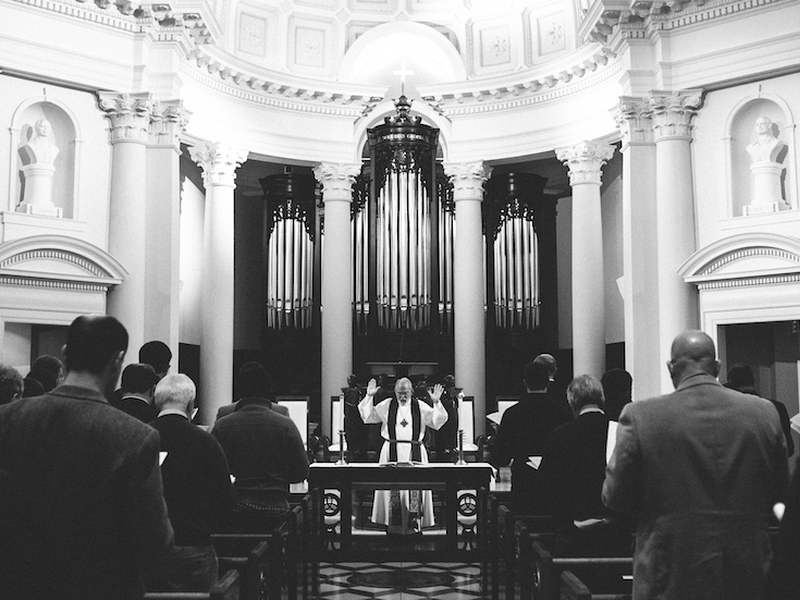
I know what you’re thinking. Organ: funeral, ball game, grand dusty cathedral. Why should modern Christians of such a technological age revisit a thousand year-old instrument? Don’t worry, I will not be trying to punch another hole in my Weird Music Preferences and Opinions card here. The truth is, our…

by Jarrod RicheyJanuary 7, 2016
tree-2
James

Do Things Have Natures?

Do things have natures? As I am posing the question, it is not simply a question of whether there are particular kinds of things in the world that have characteristic features, patterns of behavior, trajectories of growth and development. If that is what the word means, then the answer is…

by Peter LeithartJanuary 5, 2016
jim-leading-worship
Theopolis News

2016 Nevin Lectures with Father John Behr

We are excited to announce our 2016 Nevin Lectures featuring Father John Behr. Fr. John is the Dean of St. Vladimir's Seminary and Professor of Patristics, as well as the author of multiple works. He will be delivering three lectures over the course of two days dealing with "What Protestants…

by Brian MoatsJanuary 4, 2016
times-square
Creation

Time, Curse or Gift?

New Year's Day makes one reflective, at least about the past year, perhaps about life, perhaps, more broadly, about time itself. Many view time as a curse. Some see it as a curse because of missed chances. As one day or year moves on to the next, all we can…

by Peter LeithartDecember 31, 2015
nativity-2
Advent

The Manger

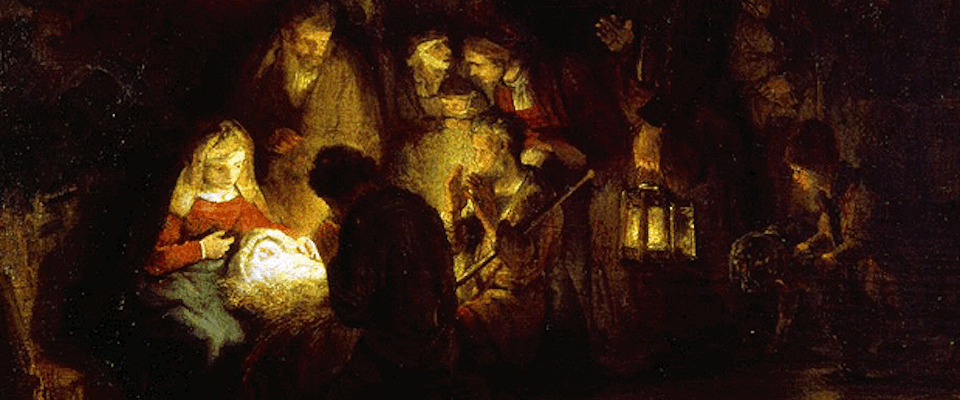
It seems a truism to say that we live in the world: that the world is outside of us. In reality the world is very much inside of us too. In fact the world passes through us as much as we pass through it. We breathe in its air, using…

by Arthur KayDecember 29, 2015

Showing page 138 of 309

See all

Showing page 30 of 43

See all

Fated Adventure

According to Michael Nerlich ( Ideology of Adventure ), “all figures of the Greek and Latin novels of adventure are ‘involuntary’ adventurers.” Mikhail Bakhtin too ( Dialogic Imagination ) emphasizes that in earlier adventures “an individual can be nothing other than completely passive, completely unchanging” and function as “merely the…

May 1, 2015

Siegfried in Victory and Defeat

Winder McConnell ( Nibelungenleid , 98-99) sketches the changing uses of the epic in the mid-20 th century: “During the Weimar Republic, the themes and motifs of the Nibelungenlied had been employed by authors of antirepublican persuasion to express optimism for Germany’s future, but poets and dramatists sympathetic to the…

May 1, 2015

Wagner, Tristan, Love

In an essay in A Companion to Gottfried of Strassburg's Tristan , Ulrich Muller argues that “In Tristan und Isolde Wagner radically transformed the meaning and message of Gottfried’s romance, just as he had in Parsifal. As cast by Gottfried (and in all medieval versions), the lovers and their love…

May 1, 2015

Art of Divine Love

Andreas Capellanus literally wrote the book on the Art of Courtly Love , but the concluding Book 3 suggests that the book was a cautionary tale throughout. Capellanus closes the treatise with an exhortation to Walter, the man to whom the book is addressed to abstain from the desires of…

April 30, 2015

Liberal Arts in Middle Ages

Even today, when historians have abandoned the idea, many regard the Middle Ages as a time dark and ignorant, the huddled masses in shadows until the burst of light that came with the Renaissance and then the Enlightenment. For centuries, it is often thought, medieval thinkers knew little of the…

April 30, 2015

Allegorizing Homer

Allegorization was one of the techniques medieval used, adapted from ancient writers, to incorporate pagan writing in a biblical framework. As Ernst Curtius ( European Literature and the Latin Middle Ages ) writes, “the Middle Ages subjected profane writers to allegorical interpretation exactly as it did the Bible, and .…

April 30, 2015

Showing page 432 of 2212

Browse by Category

In Medias Res

Your weekly digest for all things Theopolis.

Donate

Theopolis is nearly 100% donor-supported. Consider joining us on our mission.