Theopolis Logo

Writing

Explore our collection of theological essays, biblical studies, and reflections on faith and culture.

See all
cloister

Gatekeepers

1 Chronicles 9:1 seems to bring the genealogies of 1 Chronicles to an end. The Chronicler has recorded the genealogy of the human race from Adam, focusing on the descendants of Abraham through Jacob. Summing it all up, he says, “So all Israel was enrolled by genealogies; and behold, they…

by Peter LeithartJune 21, 2016
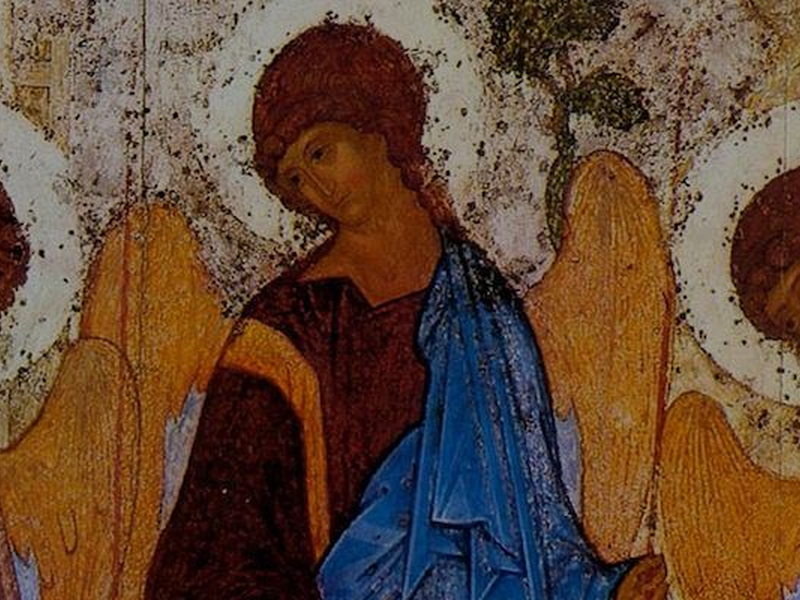
trinity-1-2
Trinity

Are the Divine Persons Persons?

The “personalist” understanding of the Trinity, articulated most influentially in the work of John Zizioulas, has fallen on hard times. Recent scholars have attacked Zizioulas’s idea that Cappadocian Trinitarianism represented an ontological revolution, hammering on the distinction between divine and human personhood. Michel Barnes’s conclusion is the most drastic of…

by Peter LeithartJune 16, 2016
img_4660-2
Architecture

On Biblical Theology

Biblical Theology is often defined as the historical unfolding of God’s revelation, or of God’s revelation and of the history of his covenantal redemption and transformation of humanity and the world. In practice, Biblical Theology is usually broader than this, and also includes the study of literary structure and of…

by James B. JordanJune 14, 2016
laughing_statue_by_xxbobbiie-d5f0meh-2
Humor

Wise Laughter

We are made to be happy. Created to enter into the eternal joy of God, our whole being inclines to that end, but the fallen world has put forth barriers and by our own sin we bar ourselves from that endless delight, and death blinds us to that reality. Yet…

by Remy WilkinsJune 7, 2016
img_7664
Liturgy

Why Theopolis? Take Two

At the end of Revelation, John sees the heavenly city descending to earth. The city shines with the brilliance of God's glory, which lightens the nations, so that kings bring their glory to the city. This is not a vision of the final new heaven and new earth. It's a…

by Peter LeithartJune 2, 2016
trinity-1-2
Attributes of God

How Can We Talk About God?

“No one has ever seen God,” writes John (John 1:18). If this is the case, then how can we speak about God? Some people say we actually cannot. Or at least we cannot speak about God positively, i.e. who He is. We can only say who or what God is…

by Bogumil JarmulakMay 31, 2016

Showing page 130 of 309

See all

Showing page 30 of 43

See all

Sacramentum et Imperator

In a 2005 article, Daniel Van Slyke explores the use of sacramentum in non-Christian writers from the ancient world. He reiterates the common observation that the term is most often used in military contexts to describe the engagement of soldiers to military service. Livy, for instance, writes that during a…

April 9, 2015

Post-Nominalist Theology

John Milbank is no nominalist, yet in Beyond Secular Order he insists that the nominalists raised questions that could not simply be answered by a return to Thomas. He points to four questions: Do creatures stand “outside” God in any sense? Does analogy violate the law of non-contradiction (2 things…

April 9, 2015

Gender Arianism again

My little post on Gender Arianism created some buzz. Some of the responses missed my argument. But that was partly my fault for making the argument so briefly and (perhaps) opaquely. Here's what I hope is a somewhat clearer statement of the argument. In Deep Comedy , I argued that…

April 9, 2015

Can't Keep Him Out

It is widely believed that if the world is a causally closed system, then God cannot be involved in the world. He cannot introduce new information. William Dembski ( Being As Communion ) disputes the conclusion. He concedes that “causal closure in a deterministic universe precludes what may be called…

April 8, 2015

Gender Arianism

Arians say that the Son isn't eternal God, but a high-level creature. There is a twofold assumption behind Arianism: First, that the Absolute must be un-related. A related Absolute becomes relative to the one to whom it is related. Trinitarian theology rejected this premise and followed Scripture in affirming an…

April 8, 2015

Paul and “Judaizing”

In his Beginnings of Judaism , Shaye Cohen devotes a chapter to ancient usages of the meaning of the term ioudaizein . It appears only once in extant classical sources, once in the LXX of Esther, once in Paul, two times in Josephus. Most of the ancient uses are from…

April 8, 2015

Showing page 442 of 2212

Browse by Category

In Medias Res

Your weekly digest for all things Theopolis.

Donate

Theopolis is nearly 100% donor-supported. Consider joining us on our mission.