
Theopolis Logo

Writing

Explore our collection of theological essays, biblical studies, and reflections on faith and culture.

See all
2001_a_space_odyssey_1-970x545
Biblical Horizons

2001: A Space Odyssey

In the November 1993 issue of Open Book Peter Leithart commented briefly on gnosticism. The film 2001 is a great specimen of gnosticism, and is worth viewing as a Sunday School project for an adult class. The author of the basic story was Arthur C. Clarke, an old-school science fiction…

by James B. JordanJanuary 6, 1994
alfred-hitchcock
Biblical Horizons

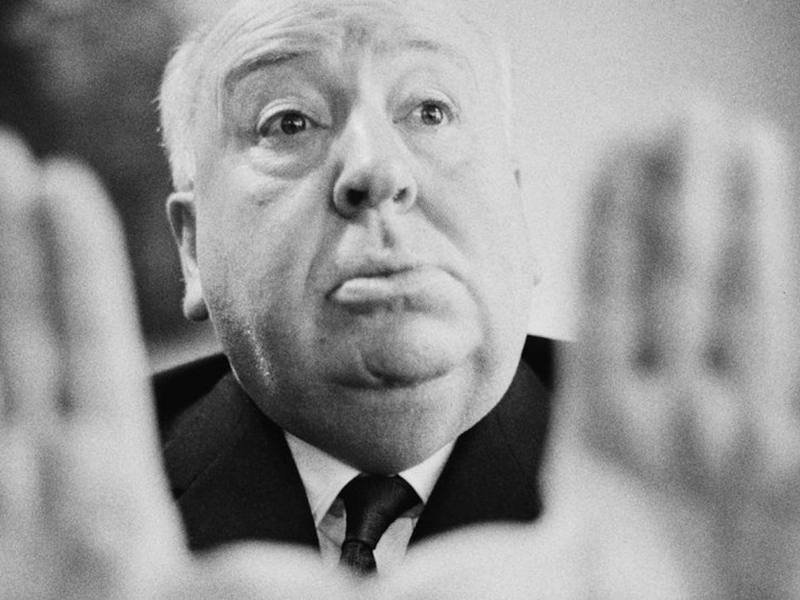
Two Films by Alfred Hitchcock

Alfred Hitchcock’s earlier movies display a strongly moral, even Christian, point of view, and certainly can be enjoyed by Christian viewers. His later works, such as Psycho , The Birds , and his television series, are not as clearly moral in tone. In these later efforts, Hitchcock brought humorous or…

by James B. JordanJanuary 6, 1994

david-weber-fwuo_zluhnw-unsplash
Leviticus

Cult and Communication

“What art thou, thou idol ceremony?” asked Henry V during his midnight rounds of the English camp near Agincourt. His answer was that ceremony was both nothing and everything. It was nothing in the sense that it offered no guarantee that the king would be fit for office. Contrary to…

by Peter LeithartDecember 20, 1993
screenshot-2023-07-27-at-10-25-35-am
Biblical Studies

Which Sacred Writings?

You, however, continue in the things you have learned and become convinced of, knowing from whom you have learned them; and that from childhood you have known the sacred writings which are able to give you the wisdom that leads to salvation through faith which is in Christ Jesus. All…

by Peter LeithartDecember 20, 1993
daniel-day-media-bzkf1nk-vpq-unsplash
Biblical Horizons

The Production of the New Testament Canon: A Revisionist Suggestion

My research has led me to the conviction that there are three major periods of Biblical history, which lead to a fourth. These are the Ages of the Father, the Word, and the Spirit. The First Age, that of the Father, is recorded in the book of Genesis. It focuses…

by James B. JordanDecember 6, 1993
Exodus

Egypt in Biblical History

Both Bible history and the current consensus chronology of the ancient world are tied up intimately with Egyptian history and chronology. Thus, as we broaden Biblical Chronology beyond the matter of adding up numbers and try to integrate Biblical chronology with the ancient world, the place to start would seem…

by James B. JordanDecember 6, 1993

Showing page 282 of 309

See all

Showing page 30 of 43

See all

Derived Aseity

Aseity is the property that describes a being’s self-causation. In theology, to speak of divine aseity is to say that God exists in and of Himself. He is not derived from or dependent upon anything else. He is fully Himself in Himself and of Himself. He is a se .…

January 13, 2015

Pure and Holy

Naomi Koltun-Fromm argues ( Hermeneutics of Holiness ) that the concepts of purity and holiness, while normally distinct in the Hebrew Bible, are blurred in some passages where qadash is used in contexts that speak of purity and purification rather than of consecration. In 1 Samuel 21:6, David says that…

January 12, 2015

Holy Seed

Explaining Ezra’s concern about the mixed marriages in the restoration community, Naomi Koltun-Fromm ( Hermeneutics of Holiness ) writes, “Ezra presents Israel not only as holy but as a qodesh in its own right—a freestanding holy thing, a holy seed, a sanctum. As such, it must be protected (or in…

January 12, 2015

Catholic Historiography

In his contribution to Seeing Things Their Way , Richard Muller discusses and commends the recent effort to free church history from denominational apologetics. When the Reformers are viewed in the light of late medieval theology (as in the work of Heiko Oberman), unexpected commonalities appear: “Common ground can be…

January 12, 2015
Death

Die Alone, Live Alone

At the end of Albert Camus’s The Stranger , the narrator is on death row for killing an Arab. Death is familiar to him. It is the “black wind” that has blown through his entire life. For Camus’s Stranger, the inevitability of death makes life indifferent. It does not matter…

January 12, 2015

War of Indefinites

In his recent Zero to One , Peter Thiel sets out a neat typology of philosophy, politics, and cultural attitudes based on differing stances toward the future. He distinguishes optimists and pessimists, and subdivides each into “definite” and “indefinite.” Optimists and pessimists are obvious: One is bullish about the future,…

January 9, 2015

Showing page 478 of 2212

Browse by Category

In Medias Res

Your weekly digest for all things Theopolis.

Donate

Theopolis is nearly 100% donor-supported. Consider joining us on our mission.