Theopolis Logo

Writing

Explore our collection of theological essays, biblical studies, and reflections on faith and culture.

See all
screen-shot-2021-06-03-at-8-49-15-am
Ezra

Ezra: The Aaronic Rest-Giver

If you’re a preacher looking for good commentaries on Ezra, you’ll struggle. Certainly to find ones that wrestle in good detail with the text. And certainly ones that don’t cost you an arm and a leg. There’s a good bit more for Nehemiah, which is odd, as the two are…

by Rhys LavertyJune 8, 2021

christian-lue-k1e6994p3t8-unsplash
1 John

1 John in Community

Quick thought experiment: try to pretend you’ve never read 1 John before. Read 1:1-6. Go ahead; I’ll wait. Now, on to v. 7: “But if we walk in the light as He is in the light, we have fellowship with ______….” What word would you expect in that blank, based…

by Tim NicholsJune 1, 2021
noahs-ark-genesis
Hermeneutics

Spending Time with Noah: Reflections on Prepositions in the Flood Narrative

In my work as a Bible translator, I was recently checking our translation team’s draft of Genesis 8:8, which says of Noah (translating the Hebrew quite literally): And he sent out the dove from with him to see: had the waters lessened from upon the face of the ground? Part…

by Josh JensenMay 25, 2021
86758
Philosophy

Steven Weinberg Destroyed My Faith

Just in case a reader may not know Weinberg, he is a theoretical physicist and the winner of the Nobel prize in physics in 1979, as well as countless other prizes for his research. He is also a prolific, lucid, and captivating writer. If you want to read something on…

by Ralph Allan SmithMay 18, 2021
screen-shot-2020-09-17-at-9-11-45-am
Colossians

Reconciliation in Colossians 1:20

Colossians 1:15-20 is a famous passage in Paul’s epistles because it is a succinct and powerful poem. It appears even to have been a hymn. Given the uniquely Pauline language — “reconciliation” is a term used only by Paul — it should not seem odd to attribute the poem/hymn to…

by Ralph Allan SmithMay 11, 2021
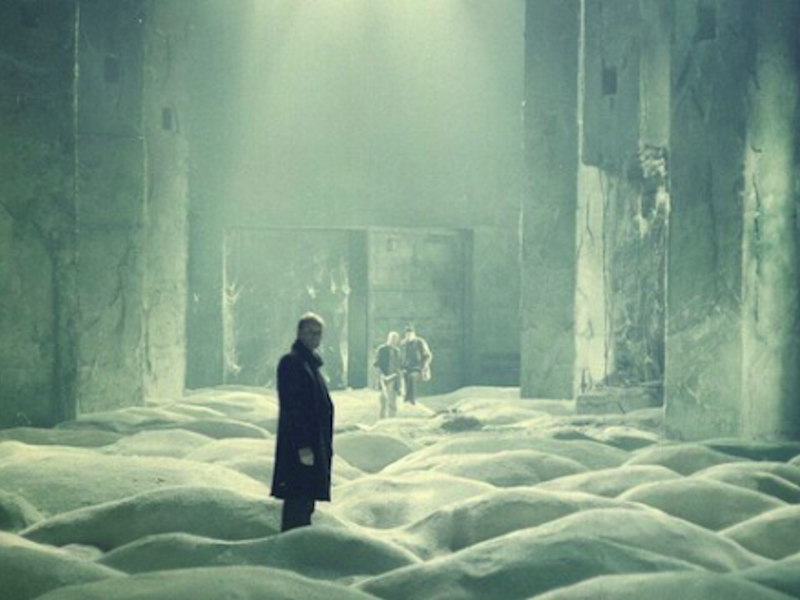
stalker_still
Movies

Terror of Knowing Myself

Stalker (1979) is a film by Andrei Tarkovsky based on Roadside Picnic by the Strugatsky brothers. It shows a day from the life of a stalker, a man who enters the so-called "Zone", an Alien landing site, where he leads people to a room that grants people’s innermost desires, which…

by Bogumil JarmulakMay 4, 2021

Showing page 55 of 309

See all

Showing page 30 of 43

See all

Soldiers, Martyrs, Choristers

The numbering of the sealed in Revelation 7 alludes to the census events of the book of Numbers. There, Moses initially numbers men twenty years and older, mustering them as the troops that will conquer the land. (The second census, in Numbers 26, includes women and has a different focus.)…

November 26, 2014
Trinity

Are the Divine Persons Persons?

The “personalist” understanding of the Trinity, articulated most influentially in the work of John Zizioulas, has fallen on hard times. Recent scholars have attacked Zizioulas’s idea that Cappadocian Trinitarianism represented an ontological revolution, hammering again and again the distinction between divine and human personhood. Michel Barnes’s conclusion is the most…

November 26, 2014
Theology

Protestant Eyes

Protestant soteriology claims to deal with perennial patterns of behavior and belief: Striving for approval from God by our performance, self-righteousness, works-righteousness, pride in our achievements, etc. Let’s grant that these are perennial patterns of behavior, though they will likely take various forms in different cultural settings. That’s not just…

November 25, 2014

Paul and the Petty Tyrants

Theodore Jennings ( Transforming Atonement , 158) observes that “what is visible on the grand scale of imperial political history also lodges itself in the dynamics of quite small-scale communities, including those that may seem to be, and may think of themselves as, and may even in important respects actually…

November 25, 2014

The Grounds of Justification

Markus Barth ( Acquittal by Resurrection ) sharply raises the question of the justice of God’s verdict of justification. How can God pronounce the guilty innocent, the ungodly righteous? Barth raises the stakes by insisting that the justice should be evident to all: “If after the proclamation of a verdict,…

November 25, 2014

The Liturgical Formation of Culture

Over at the Theopolis Institute site , I offer some reflections on the liturgical formation of culture through a consideration of the biblical anatomy of human action.

November 25, 2014

Showing page 494 of 2212

Browse by Category

In Medias Res

Your weekly digest for all things Theopolis.

Donate

Theopolis is nearly 100% donor-supported. Consider joining us on our mission.