Theopolis Logo

Writing

Explore our collection of theological essays, biblical studies, and reflections on faith and culture.

See all
sixteen-miles-out-al48tflf4e8-unsplash
Food

Gluttony In The Bible (As Opposed To Gluttony In The American Church)

In the Bible, fatness is such a blessing, that it is especially hard to understand why wicked men are permitted to enjoy such a state. It requires a theodicy and faith in God. Thus: “For they have no pangs until death; their bodies are fat and sleek . They are…

by Mark HorneAugust 12, 2013

jeremy-yap-j39x2xx_8cq-unsplash
How to Worship

Biblical Worship (Video with James B. Jordan)

[fve]http://vimeo.com/71901553[/fve]

by Peter LeithartAugust 8, 2013
chris-bair-ndczc5739ck-unsplash
Deuteronomy

Holy Things for Holy People

The allusion to the Exodus story is contained in the first words of Deuteronomy 14:1 — “ye are the sons of Yahweh your God” — as well as in 14:2 in the use of the technical term translated “treasured possession,” “His own possession,” “peculiar people,” “precious people,” and so forth.…

by Ralph Allan SmithAugust 5, 2013
adam-and-eve-in-the-garden-of-eden-wenzel-peter
Deuteronomy

Forbidden Foods

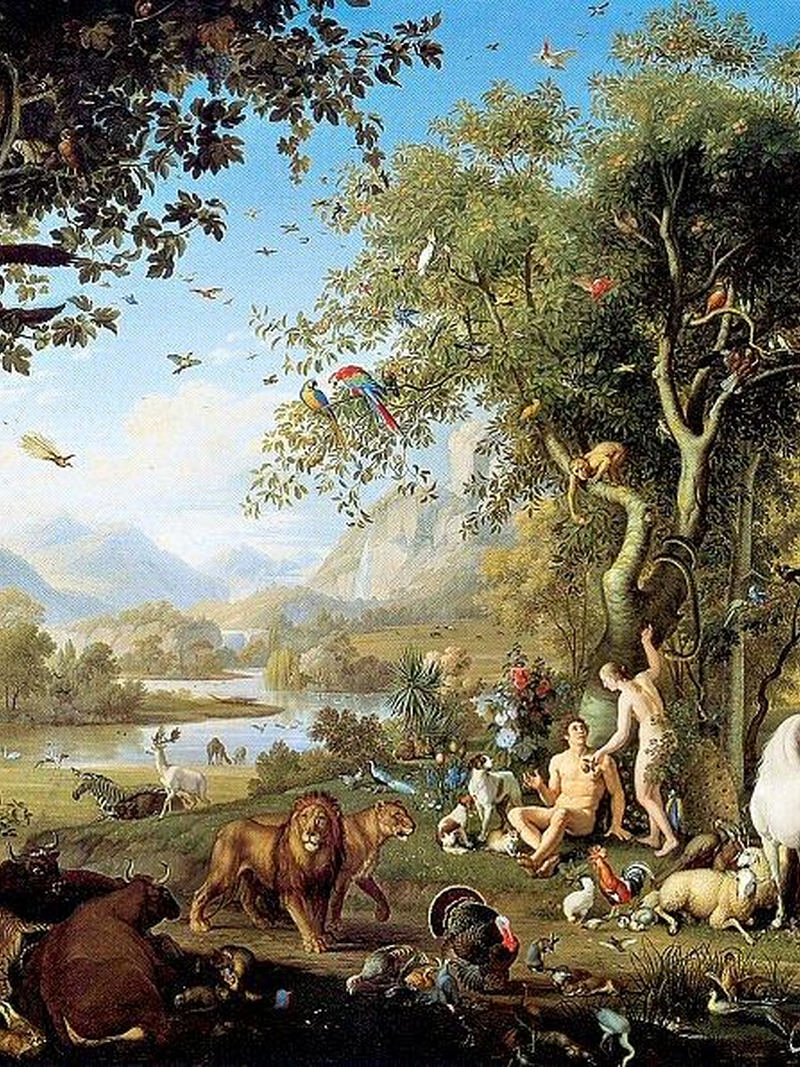
I have argued that Deuteronomy 14:1-21 is an independent literary unit that applies the Third Word to the lives of Israelites from the time of Moses and Joshua. In this short pericope, Moses suggests broad and deep meaning by means of literary allusion to the stories of the creation and…

by Ralph Allan SmithJuly 31, 2013
david-weber-fwuo_zluhnw-unsplash
How to Worship

Pro-Sacramental Reformation

In his recently republished The New Creation , the late, delightful Herbert McCabe defends the priesthood of the plebs as roundly as anyone could want. Citing Hebrews, he claims that "there is an essential difference between the Christian community and the community of the Old Law, or any other religious…

by Peter LeithartJuly 29, 2013
eric-ward-7kqe_8meex8-unsplash
Augustine

Sexual Idolatry

Augustine famously prayed, “Our hearts our restless until they rest in You.” True indeed. Being creatures, we inherently sense our ontological poverty—our innate condition of dependence—and are compelled to find a sense of security. And it is also true—as Augustine’s own narrative painfully illustrates—that one of the things we most…

by Gerald HiestandJuly 24, 2013

Showing page 190 of 309

See all

Showing page 31 of 43

See all

Etymology

Peter Cotterell and Max Turner summarize James Barr’s case against etymology, dismissing TF Torrance’s claims about the links between ekklesia and kaleo , qahal and qol : “Even if qahal derives from qol , ‘voice’, (which is no more than merely possible ) it remains highly questionable whether anyone would…

July 18, 2008

Emotive Speech

Ogden and Richards, whose triangle of signification (word, concept, reference) has had a significant impact in evangelical hermeneutics, begin their book on the “meaning of meaning” by acknowledging that words have other functions than referential, “which may be grouped together as emotive. These can best be examined when the framework…

July 18, 2008

Unending lawsuit

In his book, Liturgies and Trials , Richard Fenn writes, “The individual is perpetually facing judgment by abstract and impersonal criteria that are only partially revealed while always calling into question the individual’s own sense of worthiness . . . the theme of the ‘last judgment’ loses its theological framework,…

July 16, 2008

Justification and modern man

In Arthur Miller’s After the Fall , a character says, “When you’re young, you prove how brave you are, or smart; when what a good lover; then a good father; finally how wise or powerful or what-the-hell-ever. But underlying it all, I see now, there was a presumption. That I…

July 16, 2008

Higher criticism

I like J. Louis Martyn. His commentary on Galatians is a masterpiece, and the other essays I’ve read are all very stimulating. I begin with a disclaimer because what has been called Martyn’s “seminal proposal” concerning the gospel of John is remarkable mainly for the absence of evidence and argument.…

July 16, 2008
History

Civilization of Word

In the introduction to his Elements of Semiology (1964), Roland Barthes argues that for all the icons and images that surround us, we remain a civilization of the word: “Semiology has so far concerned itself with codes of no more than slight interest, such as the Highway Code; the moment…

July 15, 2008

Showing page 1492 of 2212

Browse by Category

In Medias Res

Your weekly digest for all things Theopolis.

Donate

Theopolis is nearly 100% donor-supported. Consider joining us on our mission.