Theopolis Logo

Writing

Explore our collection of theological essays, biblical studies, and reflections on faith and culture.

See all
sixteen-miles-out-al48tflf4e8-unsplash
Food

Gluttony In The Bible (As Opposed To Gluttony In The American Church)

In the Bible, fatness is such a blessing, that it is especially hard to understand why wicked men are permitted to enjoy such a state. It requires a theodicy and faith in God. Thus: “For they have no pangs until death; their bodies are fat and sleek . They are…

by Mark HorneAugust 12, 2013

jeremy-yap-j39x2xx_8cq-unsplash
How to Worship

Biblical Worship (Video with James B. Jordan)

[fve]http://vimeo.com/71901553[/fve]

by Peter LeithartAugust 8, 2013
chris-bair-ndczc5739ck-unsplash
Deuteronomy

Holy Things for Holy People

The allusion to the Exodus story is contained in the first words of Deuteronomy 14:1 — “ye are the sons of Yahweh your God” — as well as in 14:2 in the use of the technical term translated “treasured possession,” “His own possession,” “peculiar people,” “precious people,” and so forth.…

by Ralph Allan SmithAugust 5, 2013
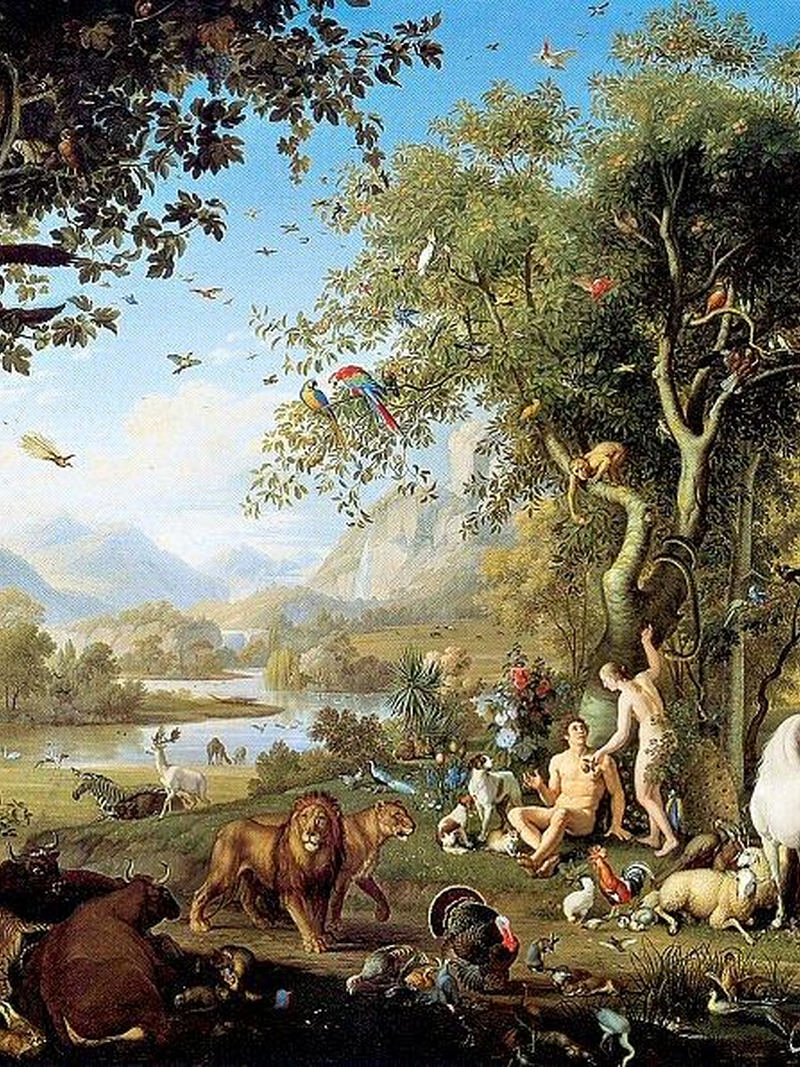
adam-and-eve-in-the-garden-of-eden-wenzel-peter
Deuteronomy

Forbidden Foods

I have argued that Deuteronomy 14:1-21 is an independent literary unit that applies the Third Word to the lives of Israelites from the time of Moses and Joshua. In this short pericope, Moses suggests broad and deep meaning by means of literary allusion to the stories of the creation and…

by Ralph Allan SmithJuly 31, 2013
david-weber-fwuo_zluhnw-unsplash
How to Worship

Pro-Sacramental Reformation

In his recently republished The New Creation , the late, delightful Herbert McCabe defends the priesthood of the plebs as roundly as anyone could want. Citing Hebrews, he claims that "there is an essential difference between the Christian community and the community of the Old Law, or any other religious…

by Peter LeithartJuly 29, 2013
eric-ward-7kqe_8meex8-unsplash
Augustine

Sexual Idolatry

Augustine famously prayed, “Our hearts our restless until they rest in You.” True indeed. Being creatures, we inherently sense our ontological poverty—our innate condition of dependence—and are compelled to find a sense of security. And it is also true—as Augustine’s own narrative painfully illustrates—that one of the things we most…

by Gerald HiestandJuly 24, 2013

Showing page 190 of 309

See all

Showing page 31 of 43

See all

Ten books

Pamuk again: “to read well is not to pass one’s eyes and one’s mind slowly and carefully over a text: it is to immerse oneself utterly in its soul. This is why we fall in love with only a few books in a lifetime. Even the most finely honed personal…

January 19, 2008
Literature

Reading and Words

Pamuk again, summarizing a comment from Proust concerning reading: “There is, he said, a part of us that stays outside the text to contemplate the table at which we sit, the lamp that illuminates the plate, the garden around us, or the view beyond. When we notice such things, we…

January 19, 2008
Literature

Dostoevsky’s anger

In an essay on Notes from Underground , the Turkish novelist Orhan Pamuk suggests that Dostoevsky’s “anger was not a simply expression of anti-Westernism or hostility to European thinking: What Dostoyevsky[his spelling] resented was that European thought came to his country at second hand. What angered him was not its…

January 19, 2008

Jesus’ Sword

Jesus comes to bring a sword that sets sons against fathers, daughters against mothers, etc. (Matthew 10:34-39). What is the sword? Perhaps Rome; and when Jesus wields the sword of the Roman armies against Judea and Jerusalem, He sets family members against one another. With Rome threatening, some Jews will…

January 19, 2008

Parable of fig tree

What is the “Parable of the fig tree” that Jesus mentions in Matthew 24:32? The fig tree’s branches and leaves will tell you that summer is near, and that when the things he describes take place the time of the end is near. But what does this refer to exactly?…

January 19, 2008

Hagar’s Firsts

In her contribution to Hagar, Sarah and their Children (WJK), Phyllis Trible develops an interesting feminist reading of the story of Hagar. Her targets (surprise!) patriarchy and hierarchy, but along the way she makes some insightful observations on the text. She notes, for instance, that Hagar’s departure from the household…

January 19, 2008

Showing page 1580 of 2212

Browse by Category

In Medias Res

Your weekly digest for all things Theopolis.

Donate

Theopolis is nearly 100% donor-supported. Consider joining us on our mission.