Theopolis Logo

Writing

Explore our collection of theological essays, biblical studies, and reflections on faith and culture.

See all
sixteen-miles-out-al48tflf4e8-unsplash
Food

Gluttony In The Bible (As Opposed To Gluttony In The American Church)

In the Bible, fatness is such a blessing, that it is especially hard to understand why wicked men are permitted to enjoy such a state. It requires a theodicy and faith in God. Thus: “For they have no pangs until death; their bodies are fat and sleek . They are…

by Mark HorneAugust 12, 2013

jeremy-yap-j39x2xx_8cq-unsplash
How to Worship

Biblical Worship (Video with James B. Jordan)

[fve]http://vimeo.com/71901553[/fve]

by Peter LeithartAugust 8, 2013
chris-bair-ndczc5739ck-unsplash
Deuteronomy

Holy Things for Holy People

The allusion to the Exodus story is contained in the first words of Deuteronomy 14:1 — “ye are the sons of Yahweh your God” — as well as in 14:2 in the use of the technical term translated “treasured possession,” “His own possession,” “peculiar people,” “precious people,” and so forth.…

by Ralph Allan SmithAugust 5, 2013
adam-and-eve-in-the-garden-of-eden-wenzel-peter
Deuteronomy

Forbidden Foods

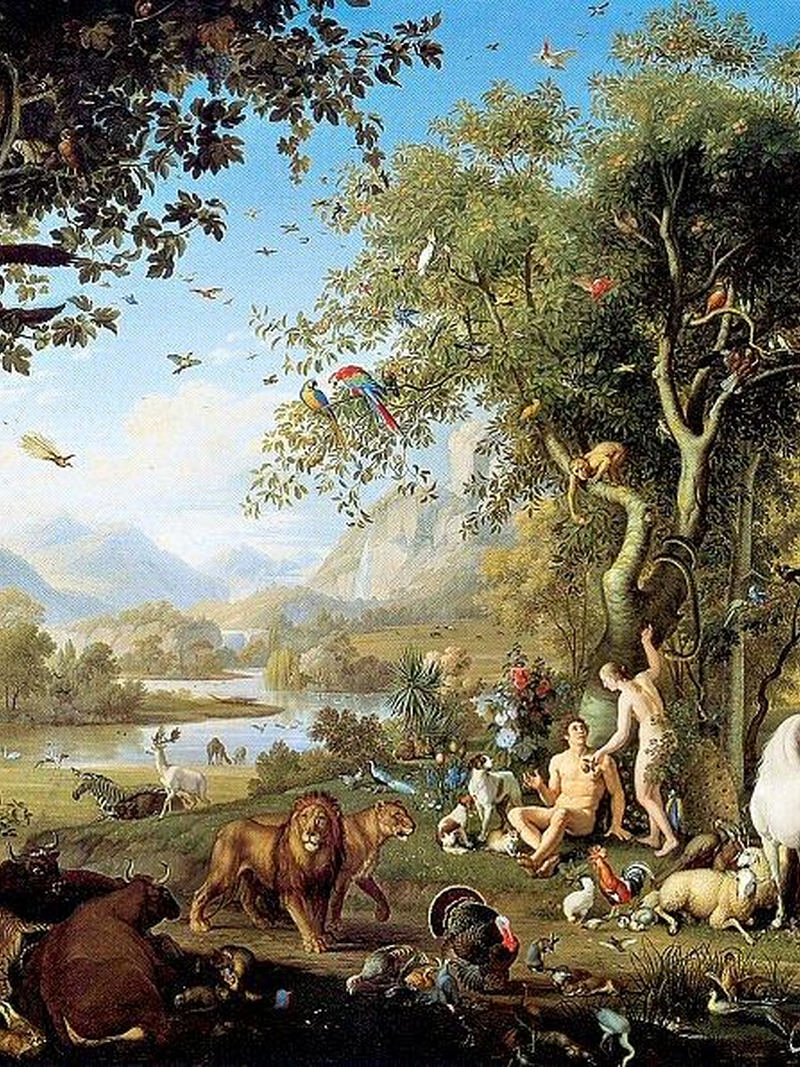
I have argued that Deuteronomy 14:1-21 is an independent literary unit that applies the Third Word to the lives of Israelites from the time of Moses and Joshua. In this short pericope, Moses suggests broad and deep meaning by means of literary allusion to the stories of the creation and…

by Ralph Allan SmithJuly 31, 2013
david-weber-fwuo_zluhnw-unsplash
How to Worship

Pro-Sacramental Reformation

In his recently republished The New Creation , the late, delightful Herbert McCabe defends the priesthood of the plebs as roundly as anyone could want. Citing Hebrews, he claims that "there is an essential difference between the Christian community and the community of the Old Law, or any other religious…

by Peter LeithartJuly 29, 2013
eric-ward-7kqe_8meex8-unsplash
Augustine

Sexual Idolatry

Augustine famously prayed, “Our hearts our restless until they rest in You.” True indeed. Being creatures, we inherently sense our ontological poverty—our innate condition of dependence—and are compelled to find a sense of security. And it is also true—as Augustine’s own narrative painfully illustrates—that one of the things we most…

by Gerald HiestandJuly 24, 2013

Showing page 190 of 309

See all

Showing page 31 of 43

See all
Philosophy

Heidegger and the gift

Marion works from both Husserl and Heidegger, and we’ll focus on the latter, as he is slightly easier to grasp. (I am summarizing Robyn Horner’s discussion.) Heidegger begins from Husserl, but seeks to go beyond him. Husserl’s phenomenology was an effort, Heidegger says, to “let that which shows itself be…

November 28, 2007

Sermon Notes, First Advent

INTRODUCTION Isaiah is the great prophet of the incarnation, but Isaiah is a bit too large to cover during the four weeks of Advent. Micah, though, prophesied at the same time as Isaiah (Micah 1:1; Isaiah 1:1), and the prophecies overlap (Micah 4:1-3; Isaiah 2:1-4) and Micah includes a major…

November 26, 2007

Eucharistic meditation

Psalm 128:5-6: The LORD bless you out of Zion, and may you see the good of Jerusalem all the days of your life. Yes, may you see your children’s children. Peace be upon Israel. We saw in the sermon this morning that the man who fears Yahweh can hope for…

November 25, 2007
Theology

Exhortation

As soon as Adam sins, his marriage is disrupted, as he becomes Eve’s accuser instead of her guardian. In the next generation, sibling rivalry escalates to the first murder. The family is a fallen institution. It cannot redeem. It needs to be redeemed. The story continues throughout the Old Testament.…

November 25, 2007
Literature

Meta-Theater

During one scene of King Lear, Edgar, disguised as Mad Tom, leads his father, Gloucester to the cliffs of Dover, where his father intends to throw himself down to his death. Only Edgar doesn’t go to Dover. He tells his father that he has reached Dover, and Gloucester ceremoniously throws…

November 24, 2007
History

Stoic and Christian

For the Stoics, as for most ancient philosophers who reflected on signs, signs were examined as part of a theory of inference. A sign was a symptom, and the medical usage is often overt in examples; or a sign is a premise of an argument, from which something unknown can…

November 24, 2007

Showing page 1601 of 2212

Browse by Category

In Medias Res

Your weekly digest for all things Theopolis.

Donate

Theopolis is nearly 100% donor-supported. Consider joining us on our mission.