Theopolis Logo

Writing

Explore our collection of theological essays, biblical studies, and reflections on faith and culture.

See all
james-coleman-642705-unsplash
Biblical Studies

The Literary Structure of the Whole Bible

In this essay we will think about how the whole Bible is structured as one Word of God. To begin with, there is only one Bible, not two. While we divide the Bible into Old and New Testaments, that division has no more meaning than divisions into chapters and verse,…

by James B. JordanMay 16, 2019

img_1689
Catholicity

Catholicity and Integrity

How should one badly bruised and inadequate church relate to another? (I am not addressing the blessed possessors of absolutely perfect churches, naturally.) I believe there are three things to bear in mind. First, we must be open to the values in other Christian traditions - even Roman Catholic and…

by James B. JordanMay 14, 2019
screen-shot-2019-05-09-at-2-51-07-pm
Chiasm

Fertile Meaning

The third and sixth day have a second creative act. Note the chiastic arrangement of the material in these special acts and the parallelism between them, see the figure below. The author arranges the description of each day as a chiasm. Each line in the chiasm is mated with a…

by Scott FairbanksMay 9, 2019
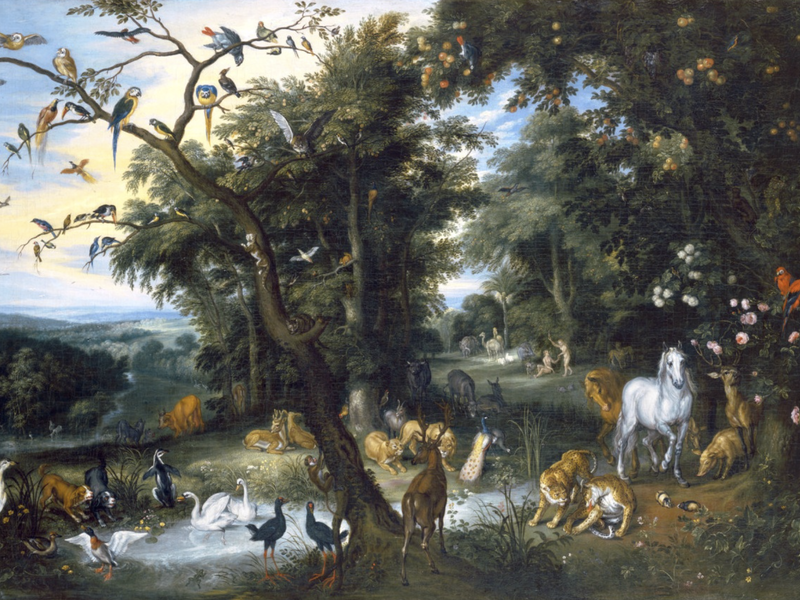
29994-adam-and-eve-in-the-garden-of-eden-800w-tn
Biblical Theology

Nakedness and Clothing

Now the two of them were naked, the man and his woman, and they did not sense shame (Genesis 2:25) The nakedness of Adam and Eve requires several comments. First of all, against those who think that nakedness is what God intended for humanity as a permanent estate, we have…

by James B. JordanMay 7, 2019
screenshot-2023-10-27-at-1-23-26-pm
Epistemology

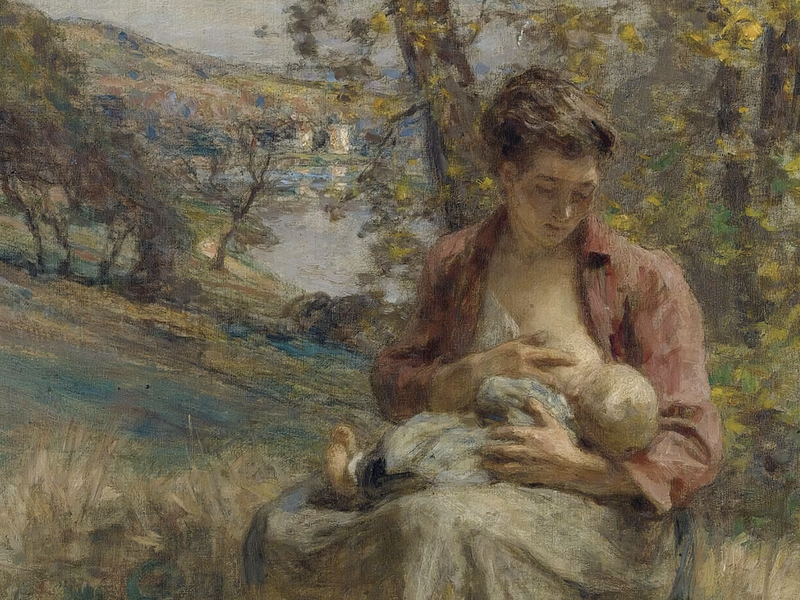
Restoring the “Other” in Mother

I’ve been reflecting on the meaning of integration, and our longing for integration in a fragmented world. I’ve been connecting my own covenant epistemology further with the thought of scientist-philosopher Michael Polanyi, artist Makoto Fujimura, and Classical Christian metaphysician D.C. Schindler. In my last post , and now in this…

by Esther Lightcap MeekApril 30, 2019
sixteen-miles-out-al48tflf4e8-unsplash
Hermeneutics

Go Tell that Vixen!

Luke 13:31-33 is one of the strangest passages in the Gospel of Luke. It begins with a time note that sounds emphatic “At that very hour.” Then, we are told of Pharisees bringing a message that Herod wants to kill Jesus! In His answer, Jesus speaks of a three day…

by Ralph Allan SmithApril 23, 2019

Showing page 79 of 309

See all

Showing page 31 of 43

See all

Inner Word and Culture

Cavadini suggests that Augustine’s theory of the inner word is a theory of cultural production, formation, and transformation. First, Augustine’s theory opens space for the person’s transcendence of culture, a space that allows for critique and transformation. But this transcendence of culture does not mean removal from culture. The inner…

November 24, 2007

Inner word

Colin Gunton has cited Augustine’s doctrine of the “inner word” as a sign of his preference for abstract over the material/concrete. John Cavadini (Theological Studies 1997) responds: “Augustine’s distinctions, between the presignified and the signified, are evidence unobserved and unaccounted for by Gunton, who sees a distinction only between the…

November 24, 2007

Multiple selves

In his 1969 book on self-deception, Herbert Fingarette pointed out that self-deception could only work if the self was divisible, and suggested that the self is not a unit but a community of “subselves.” Fingarette traced this theme to Plato, and saw it intensified by the New Testament polarity of…

November 22, 2007
History

Early Modern Skepticism

John D. Cox points out in his recent Baylor Press book on Shakespeare that ancient skepticism was not a-religious in the Renaissance and Reformation, but often served the purposes of reform. Erasmus, for instance, deployed skeptical arguments in challenging traditional, but corrupt, practices in the Catholic church. Like More, he…

November 22, 2007

Tennis scoring

Why 15-Love? “Love” is a corruption of the French “l’oeuf,” “the egg,” as in “the big goose egg.”

November 22, 2007
History

Germanic war

Tacitus records in Germania , 7, concerning the Germans in warfare: “They therefore carry with them when going to fight, certain images and figures taken out of their holy groves. What proves the principal incentive to their valour is, that it is not at random nor by the fortuitous conflux…

November 22, 2007

Showing page 1602 of 2212

Browse by Category

In Medias Res

Your weekly digest for all things Theopolis.

Donate

Theopolis is nearly 100% donor-supported. Consider joining us on our mission.