Theopolis Logo

Writing

Explore our collection of theological essays, biblical studies, and reflections on faith and culture.

See all
tanner-mardis-xuxghzhibn4-unsplash-1-2
Biblical Studies

Tweets-turned-Notes on the Bible’s Chronology

Summary In what follows, I will consider the “year-stamps” employed in Scripture, i.e., statements of the form, “Such-and-such an event took place in the Xth year of Y.” In the process, I will suggest some ways in which the Biblical narrative might relate to events in the extra-Biblical world, though…

by James BejonJuly 16, 2019
durer-prodigal-son-2
Luke

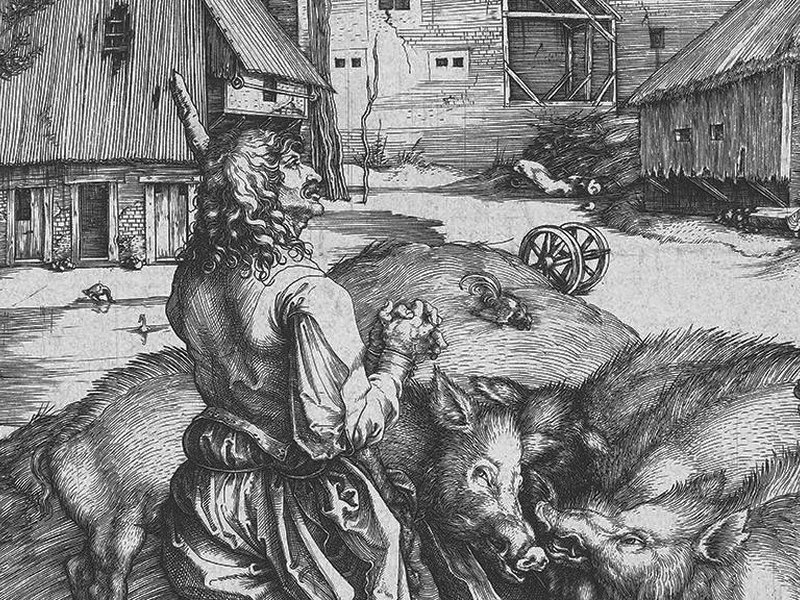
Perspectives on the Prodigal, (Part 2)

In the first essay on the parable of the Prodigal Son, I suggested that the problems commentators and others encounter in interpreting Jesus three-part parable are not accidental. These are not just problems in our ignorance of cultural background. They are intentional features of the stories —stories designed to poke…

by Ralph Allan SmithJuly 11, 2019
durer-prodigal-son-2
Luke

Perspectives on the Prodigal, (Part 1)

The story of the Prodigal Son is perhaps the most well-known story in the Bible. As others have observed, it may also be one of the most misunderstood. In two short essays, I will point out features of this story that are commonly neglected, aspects of Jesus’ parable that might…

by Ralph Allan SmithJuly 9, 2019
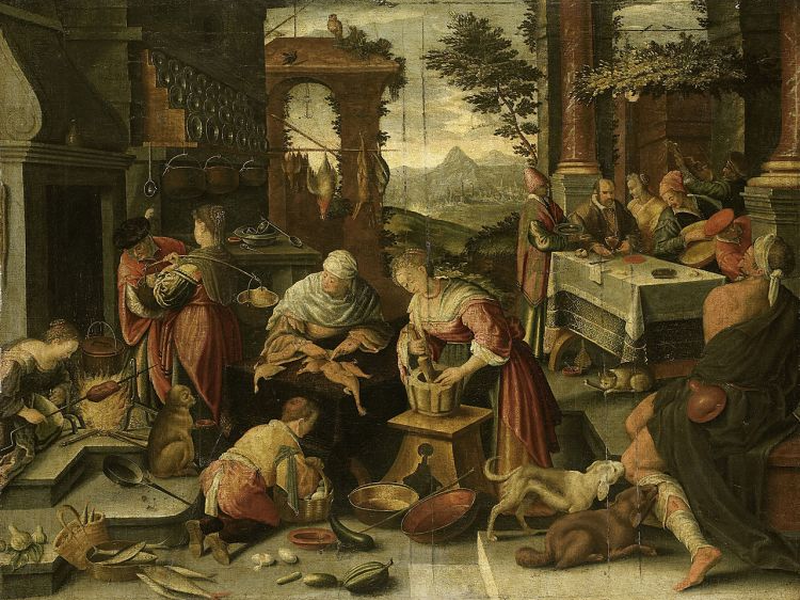
de-rijke-man-en-de-arme-lazarus-by-jacopo-da-ponte-16th-century
Luke

Lazarus and the Rich Man

The parable of Lazarus and the nameless rich man is not an independent story. It is part of a long context that begins in Luke 15:1, where Jesus is eating with tax collectors and sinners and the scribes and Pharisees grumble. In response to their hardheartedness, Jesus tells a three-part…

by Ralph Allan SmithJuly 4, 2019
aaron-burden-uynrnfdkjwg-unsplash
Luke

Everybody has Dropsy - Luke 14:1-24

The Bible is written so that even when a reader cannot pick up on what might be deeper or more detailed aspects of a text, there is virtually always a message to be heard. In the ancient world, where the “reader” of Scripture would likely be a church official facing…

by Ralph Allan SmithJuly 2, 2019
communion
Biblical Theology

Fruit Trees and Grain Plants

The distinction between garden (or vineyard) and field begins in Genesis 2. This relates to the ordering of the formless world. Plants of the field are contrasted with the garden planted by God in Genesis 2:5&8. Later on, under the Old Covenant the Israelites will be required to keep their…

by James B. JordanJune 27, 2019

Showing page 77 of 309

See all

Showing page 31 of 43

See all

Mass v. Manners

C atherine Pickstock claims that the rejection of liturgy is central to modernity. Having refused the integrations of liturgy, modernity forges various forms of pseudo-liturgy, pale substitutes to accomplish what the liturgy once did in Western society. One of these pseudo-liturgies is civility: “Once the common ritual basis in which…

February 24, 2017

China - Guardian of Western Civ

D avid Goldman compares “transgressors” Milo Yiannopoulos and Yuja Wang . Milo's transgressiveness is his essence; Wang, a thirty-year-old Chinese pianist, plays the Western repertoire, her transgressiveness evident in her habit of performing in micro-dresses and revealing evening gowns. (Goldman wrote this just before Milo's public humiliation.) Despite her Asian…

February 24, 2017

Weak Nationalism?

P ete Spiliakos makes the counter-intuitive point that Trump's nationalism will fail politically unless it can become more nationalist: Trump’s ‘Make America Great Again' slogan is, paradoxically, insufficiently nationalist. MAGA leaves out African Americans for whom America was not noticeably greater in the past—when, for instance, blacks were prevented from…

February 24, 2017

Adamic Israel

1 Chronicles 27:25–31 lists the officials in charge of David's stores and lands. Twelve men are named and each has an area of responsibility: 1. Azmaveth, king's treasuries, v. 25a 2. Jonathan, treasuries in the field, v. 25b 3. Ezri, supervisor of field workers, v. 26 4. Sheim, vineyards, v.…

February 23, 2017

Typology, Toleration, and the Metaphysics of Hospitality

I n an article on “Liturgy, Art and Politics,” Catherine Pickstock argues that the liturgy holds together universal and particular in a unique way. It does this in part because it “extends the liturgical tension between the ideal and the real to an extreme, and yet still holds the polarities…

February 23, 2017

Zwingli, Matter, Mind

I n her meticulous and revealing study of The Eucharist in the Reformation , Lee Palmer Wandel argues that Luther and Zwingli divided at Marburg because their respective positions were incommensurate, incomprehensible each to the other. Specifically, they “divided over the nature of Christ's body,” but that point of division…

February 22, 2017

Showing page 203 of 2212

Browse by Category

In Medias Res

Your weekly digest for all things Theopolis.

Donate

Theopolis is nearly 100% donor-supported. Consider joining us on our mission.