Theopolis Logo

Writing

Explore our collection of theological essays, biblical studies, and reflections on faith and culture.

See all
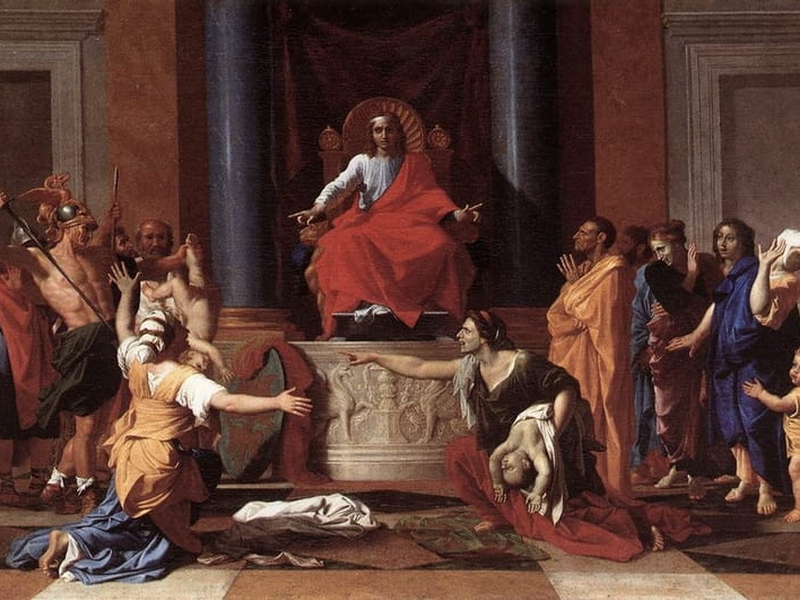
49980-nicolas_poussin_-_the_judgment_of_solomon_-_wga18330-800w-tn
Proverbs

Advice From a Sojourner, Part 10

21. Under three things the earth quakes. And under four, it cannot bear up. 22. Under a slave when he becomes king, And a fool when he is satisfied with food, 23. Under an odious woman when she gets a husband, And a maidservant when she supplants her mistress. The…

by James B. JordanApril 22, 1991
tanner-mardis-xuxghzhibn4-unsplash-1
Biblical Studies

The Chronology of Ezra & Nehemiah, Part 3

We have looked at the prima facie evidence for a short chronology in Ezra-Nehemiah, a chronology that assumes that the Artaxerxes of Ezra 7ff. and Nehemiah is in fact Darius. This month we examine the argument against the short chronology. There is only one argument, and that is that the…

by James B. JordanApril 22, 1991

tanner-mardis-xuxghzhibn4-unsplash-1
Ezra

The Chronology of Ezra & Nehemiah, Part 2

The Priestly Genealogy Jeshua the high priest, who returned with Zerubbabel, was not a young man at the time. We know this because his father, Jehozadak, was taken into captivity (1 Chron. 6:15). Thus was 50 years before the decree of Cyrus (2 Kings 25:18-22, by implication). Jehozadak’s father Seraiah,…

by James B. JordanMarch 22, 1991
trnava-university-beeyeib-am8-unsplash
Biblical Horizons

The Modernity Trap

Thomas C. Oden, After Modernity . . . What? Grand Rapids: Zondervan, 1990. Reviewed by Rev. Jeffrey Meyers. Reading Oden’s After Modernity . . . What? was tonic. There were passages that launched me out of my chair with a hoot to pace the office floor — of course, the…

by Jeff MeyersMarch 5, 1991
61-248
Matthew

Galilee of the Gentiles

Matthew records that Jesus "withdrew" to Galilee to begin His public ministry there after He "heard that John had been delivered up" (Mt. 4:12). Matthew’s typically matter-of-fact style veils the truly remarkable character of Jesus’ withdrawal. Matthew has been presenting Jesus as the Messiah, the Seed of Abraham and Son…

by Peter LeithartFebruary 27, 1991
timothy-eberly-djj49s6ud2o-unsplash
Hebrews

Just Men Made Perfect

John Brown called this one of the most difficult passages in the entire epistle to the Hebrews, and Hebrews is no easy book. Several questions confront us as we read and meditate on these verses. First, in what sense did the Old Testament saints described in verses 4-38 not receive…

by Peter LeithartFebruary 27, 1991

Showing page 298 of 309

See all

Showing page 31 of 43

See all

Poesis in Renaissance

More evidence of “poesis” in Renaissance notions of human nature and “self-fashioning.” The first quotation is from Pico, and is drawn from Lewis’s English Literature in the Sixteenth Century : God’s words to Adam at creation were: “To thee, O Adam, we have given no certain habitation nor countenance of…

January 14, 2004

Greenblatt on Fashion

A couple of quotations from Stephen Greenblatt’s Renaissance Self-Fashioning , with a comment appended. He is talking about the changing meanings of “fashion” in the English Renaissance: “In the sixteenth century there appears to be an increased self-consciousness about the fashioning of a human identity as a manipulable, artful process.…

January 13, 2004
Philosophy

Quotations from Michel de Montaigne

Some fun quotations from Michel de Montaigne, taken from Stephen Toulmin’s excellent Cosmopolis: The Hidden Agenda of Modernity : “He who wants to detach his soul, let him do it. When his body is ill, to free it from the contagion; at other times, on the contrary, let the soul…

January 13, 2004
Philosophy

Zizek on Modernity

Slavoj Zizek has this to say at the beginning of his The Puppet and the Dwarf : “One possible definition of modernity is: the social order in which religion is no longer fully integrated into and identified with a particular cultural life-form, but acquires autonomy, so that it can survive…

January 13, 2004
Philosophy

Derrida on Presence and Absence

Joel Garver helpfully explains Derrida’s deconstruction of “presence/absence” by suggesting that Derrida is attacking a particular view that assumes absolute presence and absolute absence. Either a thing is here or it is not, we instinctively thing, but in fact in all kinds of ways absent things leave “traces” of their…

January 13, 2004
Theology

Barth on God’s Omnipotence

Barth has a wonderful discussion of the omnipotence of God in Dogmatics in Outline (pp 48-49). He disputes the notion of absolute power, power in itself, as a description of God’s almightiness, and concludes (in line with the tradition of God’s simplicity) that God’s power is His holiness, righteousness, mercy,…

January 12, 2004

Showing page 2137 of 2212

Browse by Category

In Medias Res

Your weekly digest for all things Theopolis.

Donate

Theopolis is nearly 100% donor-supported. Consider joining us on our mission.