Theopolis Logo

Writing

Explore our collection of theological essays, biblical studies, and reflections on faith and culture.

See all
tanner-mardis-xuxghzhibn4-unsplash-1-2
Biblical Studies

Tweets-turned-Notes on the Bible’s Chronology

Summary In what follows, I will consider the “year-stamps” employed in Scripture, i.e., statements of the form, “Such-and-such an event took place in the Xth year of Y.” In the process, I will suggest some ways in which the Biblical narrative might relate to events in the extra-Biblical world, though…

by James BejonJuly 16, 2019
durer-prodigal-son-2
Luke

Perspectives on the Prodigal, (Part 2)

In the first essay on the parable of the Prodigal Son, I suggested that the problems commentators and others encounter in interpreting Jesus three-part parable are not accidental. These are not just problems in our ignorance of cultural background. They are intentional features of the stories —stories designed to poke…

by Ralph Allan SmithJuly 11, 2019
durer-prodigal-son-2
Luke

Perspectives on the Prodigal, (Part 1)

The story of the Prodigal Son is perhaps the most well-known story in the Bible. As others have observed, it may also be one of the most misunderstood. In two short essays, I will point out features of this story that are commonly neglected, aspects of Jesus’ parable that might…

by Ralph Allan SmithJuly 9, 2019
de-rijke-man-en-de-arme-lazarus-by-jacopo-da-ponte-16th-century
Luke

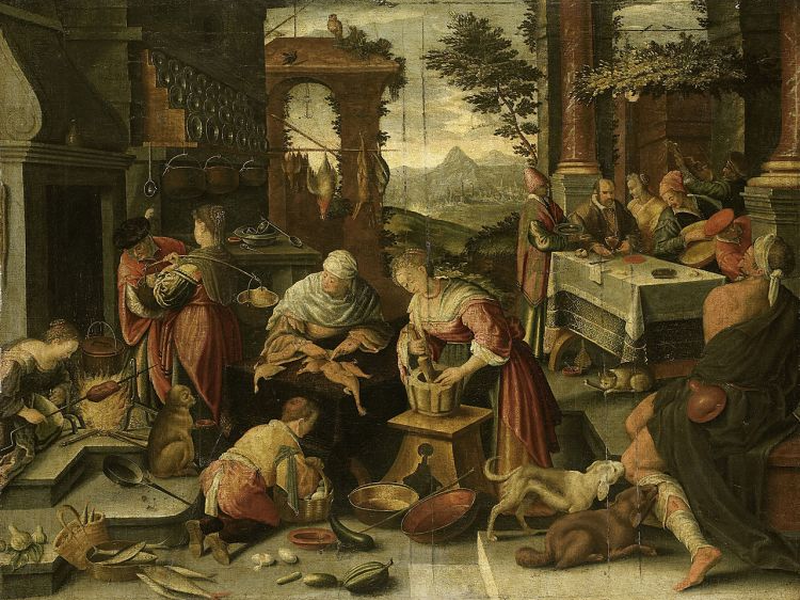
Lazarus and the Rich Man

The parable of Lazarus and the nameless rich man is not an independent story. It is part of a long context that begins in Luke 15:1, where Jesus is eating with tax collectors and sinners and the scribes and Pharisees grumble. In response to their hardheartedness, Jesus tells a three-part…

by Ralph Allan SmithJuly 4, 2019
aaron-burden-uynrnfdkjwg-unsplash
Luke

Everybody has Dropsy - Luke 14:1-24

The Bible is written so that even when a reader cannot pick up on what might be deeper or more detailed aspects of a text, there is virtually always a message to be heard. In the ancient world, where the “reader” of Scripture would likely be a church official facing…

by Ralph Allan SmithJuly 2, 2019
communion
Biblical Theology

Fruit Trees and Grain Plants

The distinction between garden (or vineyard) and field begins in Genesis 2. This relates to the ordering of the formless world. Plants of the field are contrasted with the garden planted by God in Genesis 2:5&8. Later on, under the Old Covenant the Israelites will be required to keep their…

by James B. JordanJune 27, 2019

Showing page 77 of 309

See all

Showing page 31 of 43

See all

House of Wisdom

1 Chronicles 22 records a lengthy speech from David to his son Solomon. The very setup suggests an analogy with the book of Proverbs, in which Solomon gives instructions to his son the prince. For the Chronicler, Solomon learned to teach wisdom by receiving it from David. That formal hint…

December 1, 2016

Sources of Apocalyptic

I n his 1892 Lectures on the Apocalypse (29–30), William Milligan argues that “the symbolism of the Revelation is wholly and exclusively Jewish.” He illustrates: Even “the crown of life” in chap. i. 10 is not the wreath of the victor in the Grecian games, but the Hebrew crown of…

December 1, 2016

Limits of Pen and Tongue

S hakespeare's Sonnet 103 laments the limits of language to capture the thing it describes. “Look in your glass,” the poet says, and you will see a face that overwhelms “my blunt invention quite.” The reality dulls the poet’s lines and disgraces him. And it would be a sin to…

November 30, 2016

Church With Soul of America?

The paragraphs below are taken, with slight changes, from a column I wrote at Firstthings.com in July 2015. The questions are even more pressing since Trump's election. I mmigration has always roiled under the surface of American politics. It’s the price of being America, a land subdued by outcasts and…

November 30, 2016

A House by and for Nations

A fter David sinfully takes a census of Israel (1 Chronicles 21), the threshing site where he builds the altar that arrests the plague becomes the temple site (1 Chronicles 22:1). David begins preparations for the temple. First, he gathers the “strangers” (Heb. ger ), non-Israelite residents of the land…

November 29, 2016

Love Well What You Leave

S hakespeare's Sonnet 73 embodies the excessiveness of poetry. It’s possible to summarize the poem in a brief statement: “I’m getting old. I'll die. Love me while you can.” Why so belabor the point? One effect of belaboring through fourteen lines of iambic pentameter is to link aging with cosmic…

November 29, 2016

Showing page 228 of 2212

Browse by Category

In Medias Res

Your weekly digest for all things Theopolis.

Donate

Theopolis is nearly 100% donor-supported. Consider joining us on our mission.