Theopolis Logo

Writing

Explore our collection of theological essays, biblical studies, and reflections on faith and culture.

See all
kristina-flour-bcjdbykwquw-unsplash
Culture

On Foul Language

The Stranger: Do you have to use so many cuss words? The Dude: What the f*ck you talking about? - The Big Lebowski There was a man I knew, an elder at his church, who, whenever he was called upon to announce a pregnancy, preferred the euphemism “with child” because…

by Remy WilkinsJanuary 12, 2016
organ-pipes
How to Worship

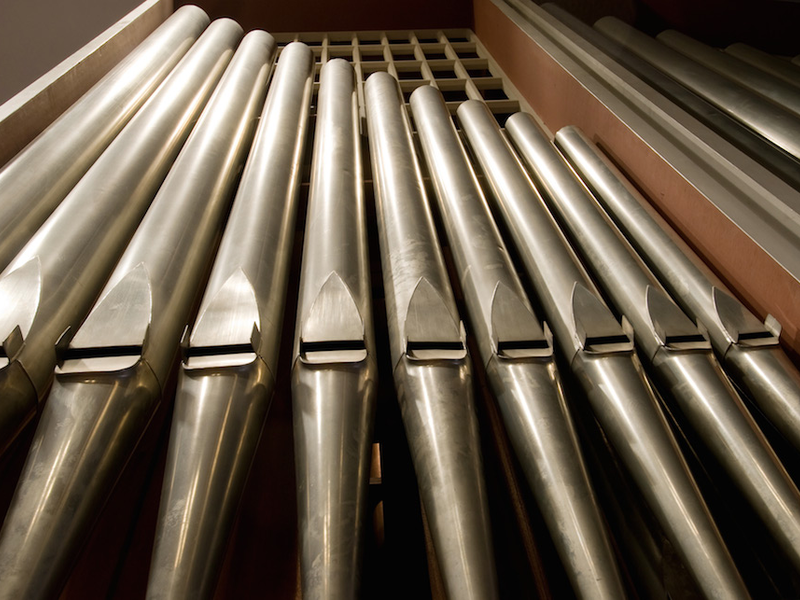
Pipes Worth Playing

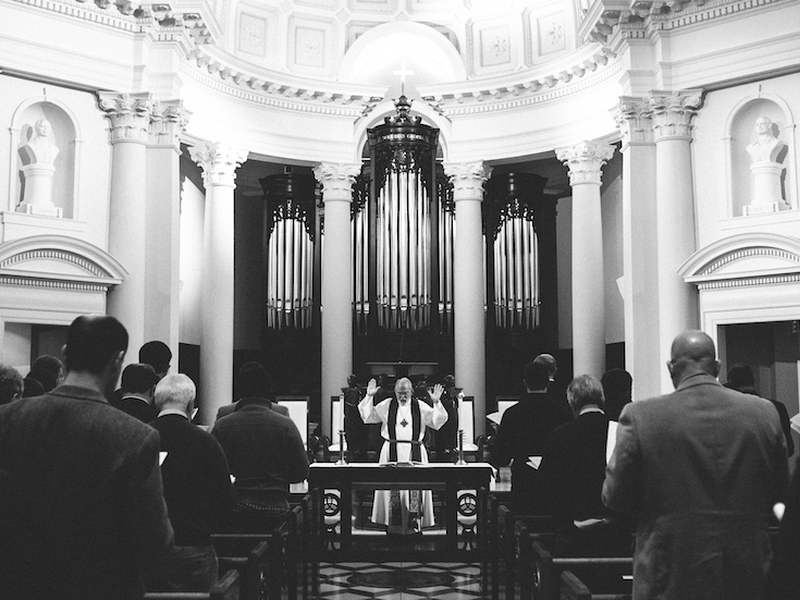
I know what you’re thinking. Organ: funeral, ball game, grand dusty cathedral. Why should modern Christians of such a technological age revisit a thousand year-old instrument? Don’t worry, I will not be trying to punch another hole in my Weird Music Preferences and Opinions card here. The truth is, our…

by Jarrod RicheyJanuary 7, 2016
tree-2
James

Do Things Have Natures?

Do things have natures? As I am posing the question, it is not simply a question of whether there are particular kinds of things in the world that have characteristic features, patterns of behavior, trajectories of growth and development. If that is what the word means, then the answer is…

by Peter LeithartJanuary 5, 2016
jim-leading-worship
Theopolis News

2016 Nevin Lectures with Father John Behr

We are excited to announce our 2016 Nevin Lectures featuring Father John Behr. Fr. John is the Dean of St. Vladimir's Seminary and Professor of Patristics, as well as the author of multiple works. He will be delivering three lectures over the course of two days dealing with "What Protestants…

by Brian MoatsJanuary 4, 2016
times-square
Creation

Time, Curse or Gift?

New Year's Day makes one reflective, at least about the past year, perhaps about life, perhaps, more broadly, about time itself. Many view time as a curse. Some see it as a curse because of missed chances. As one day or year moves on to the next, all we can…

by Peter LeithartDecember 31, 2015
nativity-2
Advent

The Manger

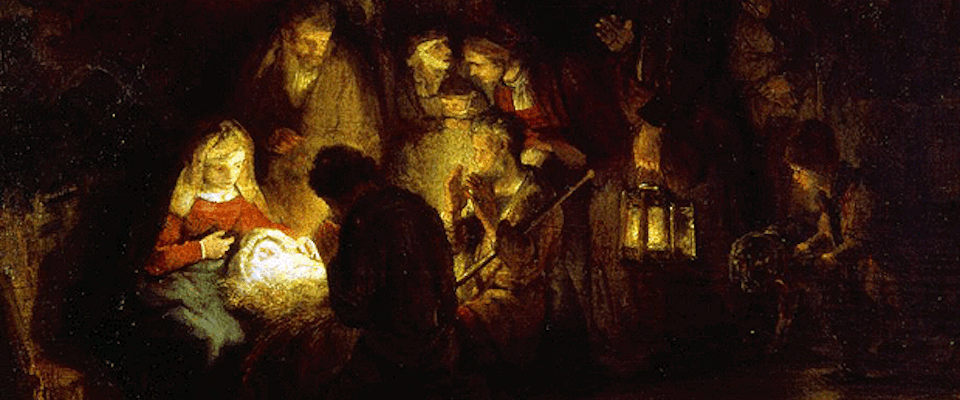
It seems a truism to say that we live in the world: that the world is outside of us. In reality the world is very much inside of us too. In fact the world passes through us as much as we pass through it. We breathe in its air, using…

by Arthur KayDecember 29, 2015

Showing page 138 of 309

See all

Showing page 31 of 43

See all

Simon, Son of John

A fter sharing a breakfast of fish at the shore of Tiberius with his disciples, Jesus speaks directly to Peter (John 21). Peter had denied Jesus three times; now Jesus confirms his love three times. Peter denied Jesus at a charcoal fire in the high priest's court; now he's restored…

May 30, 2016

Choosing Apocalyptics

I n the closing chapter of Heaven on Earth , Richard Landes considers the import of the two major apocalyptic threats of the early twenty-first century—anthropogenic global warming (AGW) and global jihad warming (GJW). Both seem to portend TEOTWAWKI, the end of the world as we know it. What we…

May 27, 2016

DysUtopian Literature

I n his study of The Dystopian Impulse in Modern Literature , Keith Booker observes that “much of the history of recent utopian thought can be read as a gradual shift from utopian to dystopian emphases, while utopian thought itself has come more and more to be seen as escapist…

May 27, 2016

God-Fearers

W e are apt to think of a deeply religious person as a ‘true believer,' writes Howard Wettstein in The Significance of Religious Experience . In the Hebrew Bible, though, “there is no expression . . . that corresponds to our term, ‘believer.' The phrase that comes closest is ‘…

May 27, 2016

Varieties of Apocalypse

R ichard Landes's Heaven on Earth is a study of millennial apocalyptic movements, that is, movements that share a belief in “ a millennial vision of the world transformed, and an apocalyptic belief in that transformation’s imminence ” (22). Though the movement he explores share a belief in the transformation…

May 26, 2016

Millennial Modernity

According to Richard Landes ( Heaven on Earth ), traditional societies are organized by a “prime divider,” a boundary between elites and commoners. He follows Ernest Gellner in called these “agro-literate” societies, since that phrase names two key technologies that mark the division. More generally, “Elites construct prime dividers along…

May 26, 2016

Showing page 285 of 2212

Browse by Category

In Medias Res

Your weekly digest for all things Theopolis.

Donate

Theopolis is nearly 100% donor-supported. Consider joining us on our mission.