Theopolis Logo

Writing

Explore our collection of theological essays, biblical studies, and reflections on faith and culture.

See all
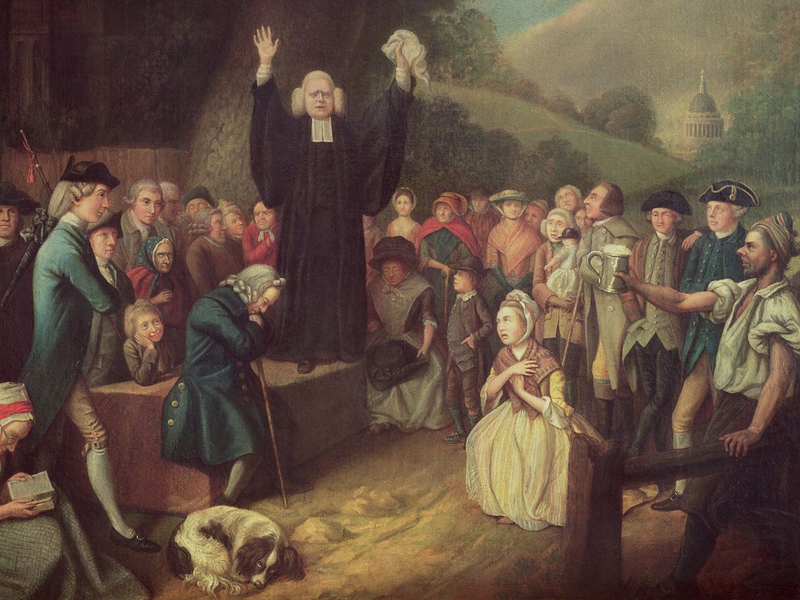
georgewhitefield-71901184-de237affa7764d6e95818a589190adf7
Biblical Horizons

The Great Awakening: A Critique

The following material was published in 1984 in Christianity and Civilization No. 4: The Reconstruction of the Church, pages 6-9, and are reprinted here as grist for the mill of the discussion of “evangelicalism.” Footnotes have not come through, of course. Though this material is offered in connection with a…

by James B. JordanJune 19, 2012

aaron-burden-1ebsmyrau-s-unsplash
Biblical Horizons

Concerning Regeneration

I wrote my beef about “regeneration” a decade ago, and I don’t really see the need to reopen what I think now. (Jordan, Thoughts on Sovereign Grace and Regeneration: Some Tentative Explorations. Biblical Horizons Occasional Paper No. 32) But. My pal Doug Wilson has been writing a series of essays…

by James B. JordanJune 19, 2012

jelleke-vanooteghem-gnxb59lgu1m-unsplash
John

Born From Above: Some Notes on John 3

Nicodemus’s conversation with Jesus in John 3:1-15 is sometimes regarded as an illustration of the tremendous stupidity of the Jews of our Lord’s day. Nicodemus is treated as just some guy who comes to Jesus at night because he doesn’t want to get into trouble by being seen with Him.…

by James B. JordanJune 18, 2012
screen-shot-2020-12-03-at-1-47-33-pm
Biblical Horizons

Is James B. Jordan an “Evangelical”?

During the last couple of weeks, Douglas Wilson has issued several posts over on his Blog and Mablog blog that deal with “evangelicalism” and who is and who is not an “evangelical.” In the course of these postings, Doug has written that while I am a fine Christian who has…

by James B. JordanJune 18, 2012
karsten-wurth-imegmbunara-unsplash
Biblical Horizons

Three Issues in Regard to Eastern Orthodoxy

Here are three issues in regard to the Eastern Church. First, here is the quote from Bavinck’s The Doctrine of God, page 317, Banner of Truth edition (1977) under the heading of Inter-Personal Relations. The Greeks derived the unity of God’s essence and the unity of the persons not from…

by Richard BledsoeJune 14, 2012
screen-shot-2020-12-03-at-1-47-33-pm
Biblical Horizons

Clerical Garb

Elsewhere on the blogosphere men are mocking the wearing of collars and albs to lead in worship. When it is pointed out that historically Reformed ministers have worn daily uniforms and robes in worship, it is replied that that was then and this is now. We ought to conform to…

by James B. JordanJune 9, 2012

Showing page 200 of 309

See all

Showing page 31 of 43

See all
Modernity

Multiple Modernities

“Classic theories of modernization, from the 1950s,” write the editors of Reflections on Multiple Modernities , “identified the core of modernity, of modern social structure, as the decomposition of older ‘closed' formations and . . . of the growing potential for social mobilization, and the concomitant development of new structural,…

May 3, 2016

Signs of the Times

In a 2009 University of Michigan dissertation, Richard Persky explores the cultural meaning of time in ancient Greece, focusing on the concept of kairos . According to Persky, “a kairos is a moment of opportunity, the right time to do some particular thing. The allegorical sculpture made by Lysippos and…

May 2, 2016

Jerusalem's Jasper Walls

Jerusalem descends from heaven a jeweled bride, with the luminosity of a precious stone, a “crystal-clear jasper” (v. 11; hos litho iaspidi krustallizonti ). She is also surrounded by a jasper wall (v. 18). How might the city be related to the wall? The structure of 21:18-22 gives us a…

May 2, 2016

Shakespeare and Chivalry

In the Weekly Standard , Paul Cantor explains that both Shakespeare and Cervantes aimed their writing at a common target: Chivalry. He describes chivalry as “a noble ideal and at its best it did much to refine an otherwise coarse and brutal world, but it rested on shaky foundations and…

May 2, 2016

Liturgy and Charity

Susan Holman ( The Hungry Are Dying ) draws on recent scholarship to argue that “food doles, communal religious feasts, public works, or subsidized public entertainment prior to the Christianization of Graeco-Roman culture did not function out of any concern to alleviate poverty per se.” These “public works” or leitourgia…

April 29, 2016

Bring Us To God

Peter tells us that Jesus was the “just” man who suffered for the sins of the “unjust,” and that the purpose of this suffering was to “bring us to God.” William Dalton ( Christ's Proclamation to the Spirits ) points out that the verb prosago has technical legal meaning in…

April 29, 2016

Showing page 294 of 2212

Browse by Category

In Medias Res

Your weekly digest for all things Theopolis.

Donate

Theopolis is nearly 100% donor-supported. Consider joining us on our mission.