Theopolis Logo

Writing

Explore our collection of theological essays, biblical studies, and reflections on faith and culture.

See all
tanner-mardis-xuxghzhibn4-unsplash-1-2
Biblical Studies

Tweets-turned-Notes on the Bible’s Chronology

Summary In what follows, I will consider the “year-stamps” employed in Scripture, i.e., statements of the form, “Such-and-such an event took place in the Xth year of Y.” In the process, I will suggest some ways in which the Biblical narrative might relate to events in the extra-Biblical world, though…

by James BejonJuly 16, 2019
durer-prodigal-son-2
Luke

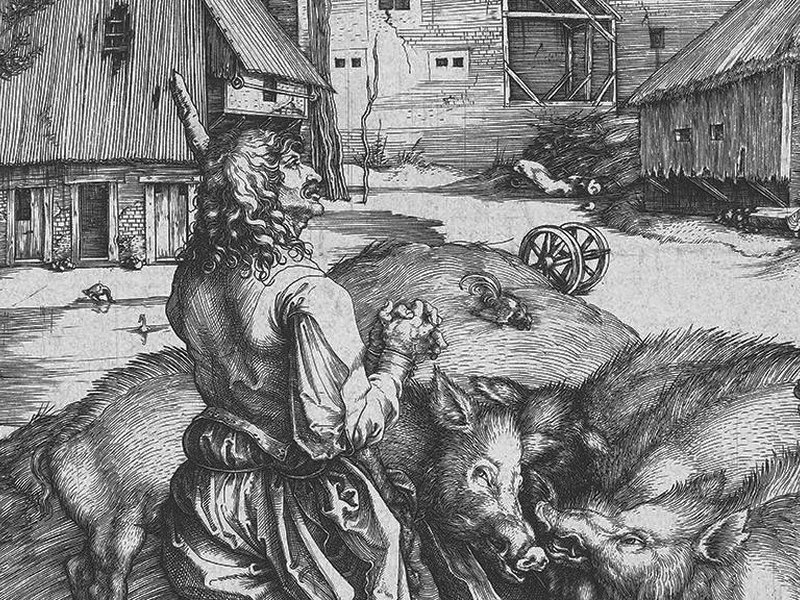
Perspectives on the Prodigal, (Part 2)

In the first essay on the parable of the Prodigal Son, I suggested that the problems commentators and others encounter in interpreting Jesus three-part parable are not accidental. These are not just problems in our ignorance of cultural background. They are intentional features of the stories —stories designed to poke…

by Ralph Allan SmithJuly 11, 2019
durer-prodigal-son-2
Luke

Perspectives on the Prodigal, (Part 1)

The story of the Prodigal Son is perhaps the most well-known story in the Bible. As others have observed, it may also be one of the most misunderstood. In two short essays, I will point out features of this story that are commonly neglected, aspects of Jesus’ parable that might…

by Ralph Allan SmithJuly 9, 2019
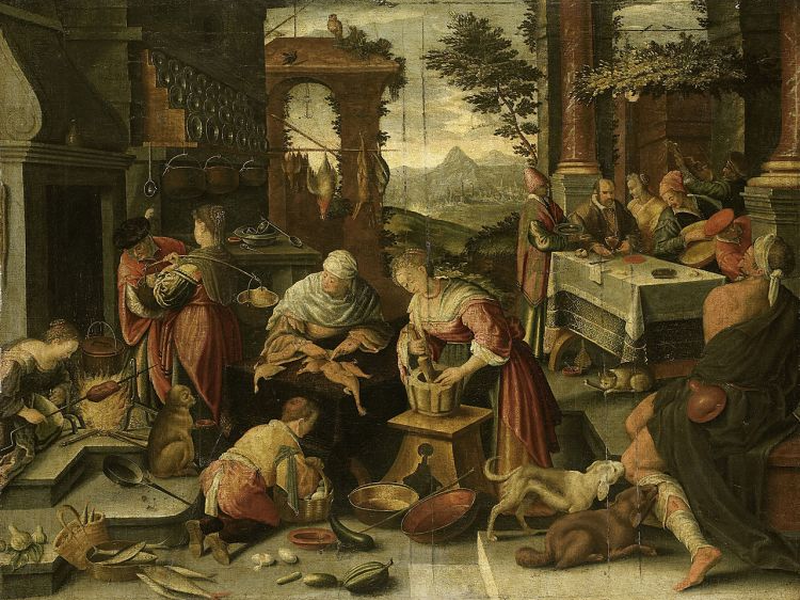
de-rijke-man-en-de-arme-lazarus-by-jacopo-da-ponte-16th-century
Luke

Lazarus and the Rich Man

The parable of Lazarus and the nameless rich man is not an independent story. It is part of a long context that begins in Luke 15:1, where Jesus is eating with tax collectors and sinners and the scribes and Pharisees grumble. In response to their hardheartedness, Jesus tells a three-part…

by Ralph Allan SmithJuly 4, 2019
aaron-burden-uynrnfdkjwg-unsplash
Luke

Everybody has Dropsy - Luke 14:1-24

The Bible is written so that even when a reader cannot pick up on what might be deeper or more detailed aspects of a text, there is virtually always a message to be heard. In the ancient world, where the “reader” of Scripture would likely be a church official facing…

by Ralph Allan SmithJuly 2, 2019
communion
Biblical Theology

Fruit Trees and Grain Plants

The distinction between garden (or vineyard) and field begins in Genesis 2. This relates to the ordering of the formless world. Plants of the field are contrasted with the garden planted by God in Genesis 2:5&8. Later on, under the Old Covenant the Israelites will be required to keep their…

by James B. JordanJune 27, 2019

Showing page 77 of 309

See all

Showing page 31 of 43

See all
Music

Romanticism and the Rhetoric of Music

Prior to the 18th century, writes Mark Evan Bonds, instrumental music was considered inferior to music that accompanied words ( Wordless Rhetoric ). According to the artistic theory developed by Johann Georg Sulzer, “instrumental music . . . can be pleasing and at times moving, but its ‘meaning' is relatively…

April 7, 2016

Areopagus in Acts

Paul's speech on the Areopagus is the second of three programmatic speeches in Acts. Robert Tannehill notes ( The Narrative Unity of Luke-Acts ) that they trace the progression of Paul's mission: “Careful planning is indicated by the fact that we have three different types of speeches addressed to three…

April 7, 2016

World Self-Revealed

In his now-classic Sources of the Self (143-4), Charles Taylor observes that Descartes is “in many ways profoundly Augustinian: the emphasis on radical reflexivity, the importance of the cogito, the central role of a proof of God's existence which starts from ‘within,' from features of my own ideas, instead of…

April 6, 2016

Pure Music

Mark Evan Bonds's Absolute Music is a study of 19th-century debates concerning the purity or absoluteness of music, the question of the possibility and/or propriety of segregating music from the rest of the world, music as a sheer aesthetic experience, an experience of pure beauty or simple form. It's a…

April 6, 2016

Pattern of Paul's Mission

Robert Tannehill points out in the second volume of his Narrative Unity of Luke-Acts that Acts 16-19 depicts a recurring “public accusation type-scene.” Prior to chapter 16, the public accusations against Paul and his associates are not highlighted. After chapter 16, they are. “In 16:20-21 Romans accuse the mission of…

April 6, 2016

Autonomy v. Independence

Matthew B. Crawford argues in The World Beyond Your Head that things discipline our attention and thus make genuine knowledge of the world possible: “ things that can serve as a kind of authority for us, by way of structuring our attention. The design of things—for example, cars and children’s…

April 5, 2016

Showing page 302 of 2212

Browse by Category

In Medias Res

Your weekly digest for all things Theopolis.

Donate

Theopolis is nearly 100% donor-supported. Consider joining us on our mission.