Theopolis Logo

Writing

Explore our collection of theological essays, biblical studies, and reflections on faith and culture.

See all
screen-shot-2023-02-24-at-1-48-41-pm
Biblical Chronology

Chronologies and Kings: Part 3

The chronology of the Kings of Judah and Israel can be divided into three periods with clearly defined boundaries. The first period begins with the death of Solomon and the accessions of Rehoboam in the south (Judah) and Jeroboam in the north (Israel). It ends with the deaths of Ahaziah…

by James B. JordanSeptember 22, 1991

johann-walter-bantz-clv9dfjlwac-unsplash-1-5
Art

Arts & Play, Part 1

Most modern people regard the arts as essentially decorative. They are hardly very important, as compared to business, politics, or religion. Yet, from a Biblical point of view, the arts lie close to the heart of human life. The universe that God created is itself an artistic masterpiece by the…

by James B. JordanSeptember 22, 1991
6273e95e0f5ac766258d8cf3_joshuasconquestoftheland-2
Exodus

Chronologies and Kings, Part 2

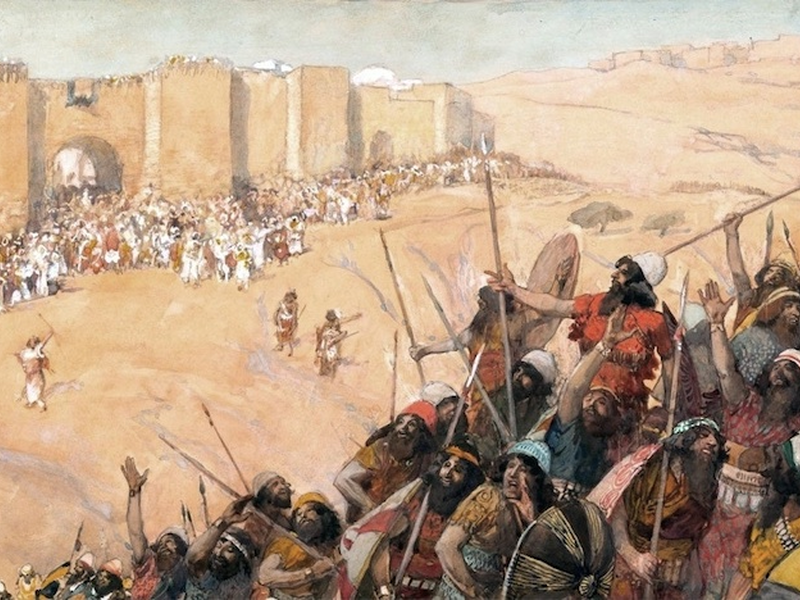
Before we move into a detailed survey of the history and chronology of the kings of Israel and Judah, let us review the chronological information that leads from creation to the kingdom. This will be helpful both to new readers of these essays, and a reminder for those who have…

by James B. JordanAugust 22, 1991
screen-shot-2023-02-24-at-1-48-41-pm
Biblical Chronology

Chronologies and Kings, Part 1

We have completed our overall survey of Biblical chronology, and now turn to a detailed examination of the Biblical information regarding the chronology of Israel’s kings. The first piece of chronological information we have regarding Israel’s kings is very cryptic, and it serves as an guide to the interpretation of…

by James B. JordanJuly 22, 1991
screenshot-2023-08-09-at-2-13-32-pm
Biblical Horizons

Book Review - To Take Place: Toward Theory in Ritual

Jonathan Z. Smith, To Take Place: Toward Theory in Ritual (Chicago: University of Chicago Press, 1987). Reviewed by Peter J. Leithart. The philosophes of the 18th century often attacked Christendom using the tools of anthropology and comparative religion. Rousseau contrasted the idyllic equality of primitive, natural peoples with the bondage…

by Peter LeithartJuly 6, 1991
screenshot-2023-08-09-at-1-47-41-pm
Biblical Horizons

Book Review: The Rise of Magic in Early Medieval Europe

Valerie I. J. Flint, The Rise of Magic in Early Medieval Europe (Princeton University Press, 1991). Reviewed by Peter J. Leithart. Valerie I. J. Flint, Professor of History at the University of Auckland, New Zealand, is refreshingly candid about her reasons for undertaking a study of The Rise of Magic…

by Peter LeithartJuly 6, 1991

Showing page 295 of 309

See all

Showing page 31 of 43

See all

Organization or Mission?

Denominations, argues Craig Van Gelder, rest on an “organizational” conception of the church that thinks of the church in “primarily functional terms” according to which “the church is responsible to do something on behalf of God in the world” (24). Citing Martin Marty, he claims that this is “a turning…

June 11, 2015

Structure in Revelation 15

Revelation 15:1 forms an inclusio with Revelation 12:1, 3: Both speak of a “great sign in heaven.” There is progression from chapter 12 to 15: At the beginning of the sequence, the dragon and woman are in heaven. In the course of chapter 12, both leave. When 15:1 returns to…

June 11, 2015

Tale of Two Sacrifices

The 144,000 martyrs of Revelation 14 are prepared for self-sacrifice. They are the firstfruits harvested in death. They offer their blood on the altar of the world, and ascend like smoke beyond the firmament. Their enemies, those who worship the beast, are also sacrifices. Worshiping the beast ultimately leads to…

June 10, 2015
Denominationalism

Denominations in Time

In a 2005 piece in Word & World , Russell Richey argues that denominationalism in the US has passed through several stages of development. Though denominationalism always exists in situations of religious pluralism and is always (like the political party, the free press and free enterprise) a “creature of modernity,”…

June 10, 2015

Transcending Agricultural Time

We live in unnatural times because of our unnatural time. We can eat foods produced on the other side of the globe. We can eat fruit out of season, partly because the fruit is in season somewhere and partly because of modern technologies of preservation. We seem to have detached…

June 10, 2015

Vine of the Land

Revelation 14 ends with a harvest scene. First grain is harvested by the son of man, then grapes are gathered by an angel with a sickle (vv. 17-19a). Three parts of the grape plant are mentioned: The clusters ( botruos ) of the vine ( ampelos ) and the individual…

June 10, 2015

Showing page 414 of 2212

Browse by Category

In Medias Res

Your weekly digest for all things Theopolis.

Donate

Theopolis is nearly 100% donor-supported. Consider joining us on our mission.